All content
Browse all articles and insights from the TrueScreen blog
Articles
The right to authenticity: positive proof of the true beyond deepfake detection
In 2026 deepfake detection is losing ground. The right to authenticity inverts the logic: positive proof of the true, sealed at the moment content is...

Renewable energy plants: how to certify evidence for incentive audits
Renewable energy incentive audits demand proof of dates and site condition. How to certify photos and documents with a certain date and integrity.

eDiscovery Platforms: What They Are, How They Work, and Why Evidence Authenticity Is the Critical Point
What eDiscovery platforms are, how the 8-phase EDRM model works, and why the authenticity of digital evidence decides its admissibility in court.
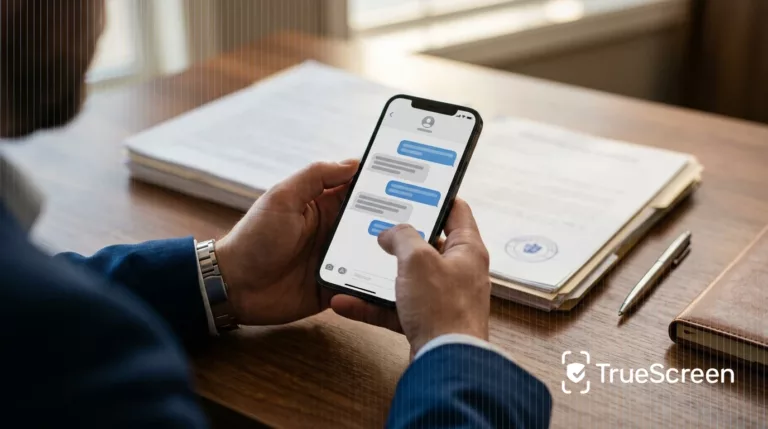
How to Certify an SMS as Legal Evidence: Text Messages That Hold Up in Court
A screenshot of a text message rarely holds up in court. Here is how forensic certification turns an SMS into evidence that survives challenge.
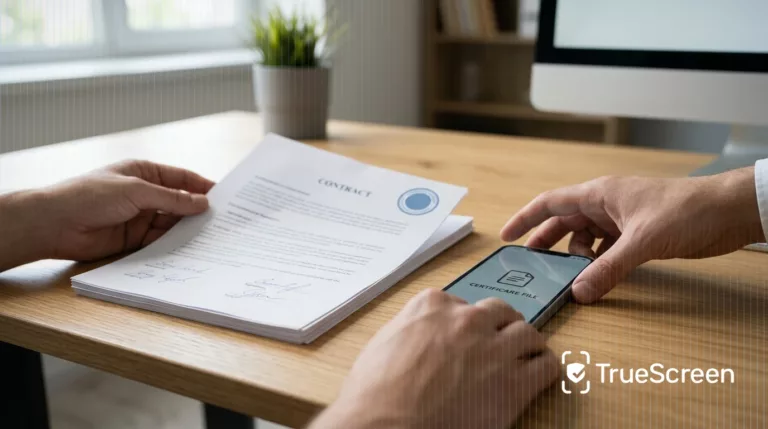
Certify a file: how to give it legal value and a trusted date
A copy proves nothing about when a file was created or whether it changed. Learn to certify any file with a hash, trusted timestamp and...
Deepfake detection: who answers for the margin of error?
Deepfake detection tools give a probability, not a certainty. Someone has to answer for the residual margin. Why authenticity must be guaranteed upstream.

Data authenticity: the competitive advantage of protecting and certifying data
Data authenticity is a lever for fraud prevention, compliance (NIS2, DORA, eIDAS 2) and efficiency, translated into measurable time and money.

Web accessibility compliance: how to prove your site meets the law
Web accessibility compliance laws by country, WCAG 2.2 AA rules, and how to create dated, certified evidence that proves your site meets the standard.
Online marketplace scams: how to certify evidence of online fraud
Scam listings and chats vanish within hours. Learn how to capture marketplace fraud evidence with legal value before it disappears for good.
Proving content authentic when labelling the fake is not enough
Proving content authenticity is the new burden as the EU AI Act labelling duty starts and deepfakes make even genuine content deniable.

AI fake news: when content provenance becomes the proof
AI fake news outruns every correction, topping a billion views before debunking. Why proving authentic content at the source beats detecting the fake.
Fake reviews and scam listings: certifying the evidence before it disappears
Fake reviews, scam listings and defamatory profiles vanish fast. Here is how to certify their content and date as legal evidence before removal.
Certifying a phone call recording as evidence in a dispute
A phone call recording can serve as evidence, but a raw file is easy to challenge. Here is when it holds up and how to...
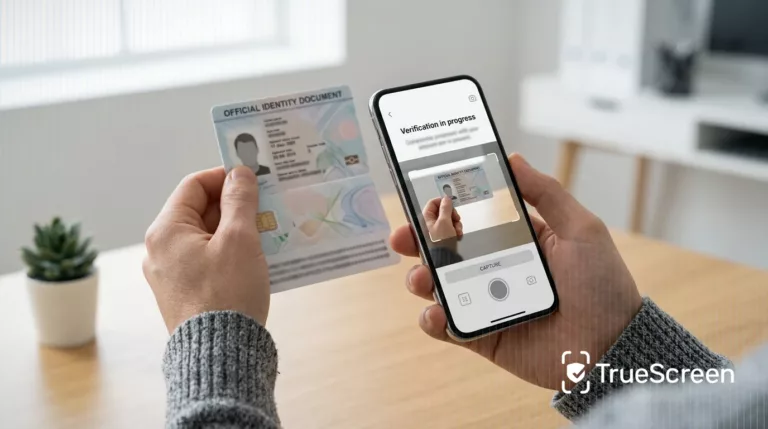
KYC for Fintech: the Minimum Compliance Stack for Remote Onboarding under AMLD5 and EBA Guidelines
Build your fintech KYC stack: document and liveness, PEP and sanctions screening, eID, certified audit trail and monitoring under AMLD5 and EBA.
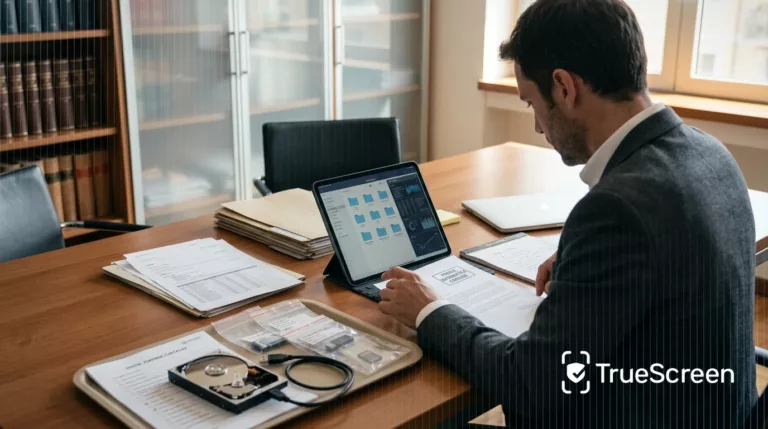
How to instruct a forensic IT expert: what to ask and how to frame your request
How to instruct a forensic IT expert: what to ask, court-appointed vs party-appointed, cost drivers and ready templates for four evidence scenarios.

PAdES, CAdES, XAdES: digital signature formats compared and how to choose
PAdES, CAdES and XAdES are the three ETSI advanced electronic signature formats. Which to use for PDF, any file or XML, plus how to verify...
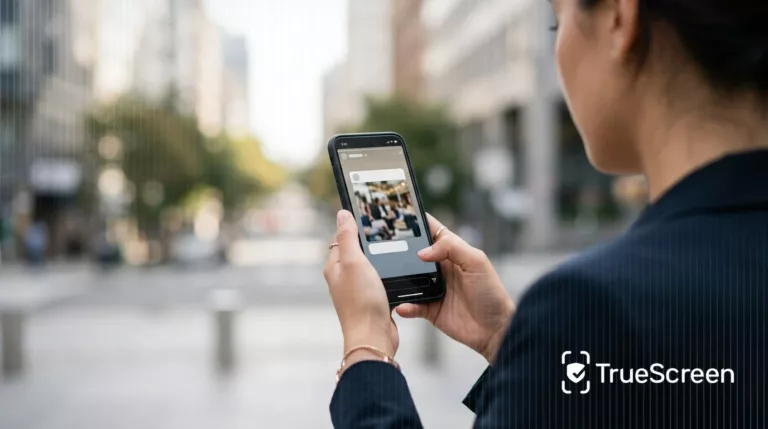
Ephemeral content as evidence: certifying Instagram Stories and WhatsApp Status before they disappear
Instagram Stories and WhatsApp Status vanish in 24 hours. How to certify ephemeral content at the source with a reliable timestamp, hash and legal value.

Facebook defamation and deleted posts: how to capture evidence that holds up
Facebook defamation and deleted posts: the evidentiary value of a screenshot and how to certify content before it is removed.
AI disinformation in 2026: when fake outpaces real and why certifying the authentic wins
AI disinformation now outpaces real content. Why certifying digital content authenticity at the source beats chasing deepfakes in 2026.
Forensic copy: what it is, how it is performed, and its evidentiary value
A forensic copy is a verifiable, bit-by-bit reproduction of digital data. Learn how it is performed and what evidentiary value it holds in court.
Insights

Mortgage property appraisal: what lenders look for and what evidence you need in 2026

Screen recording in remote work: how to protect employees and employers with certified digital evidence
Certified Web Evidence vs Wayback Machine: Three Evidentiary Scenarios

AI Act Article 50: EU Rules on Labelling Synthetic Content from 2 August 2026

How to check QTSP availability via the EU Trusted List before a critical timestamp
Synthetic identity fraud in banking: anatomy of a real case and KYC countermeasures

Enterprise Data Lineage: Models, Tools and Audit Trails for Data Governance
Italian Supreme Court 1269/2025: when WhatsApp messages become inadmissible in criminal proceedings
Italian Supreme Court 1254/2025: When Screenshots, SMS and Emails Truly Count as Evidence

Image Forensics for Business: Why Post-Facto Analysis Falls Short
WhatsApp Messages as Evidence in Divorce and Child Custody Cases

Social Media Defamation Evidence: Certified Screenshots for US Lawsuits
Digital timestamp: a complete guide to legal-grade time certification
Screenshot Evidence in Court: Objections to Legal Value and How to Overcome Them
Forensic Copy of a Website: What It Is, How It Works and Legal Value
AI Prompt Traceability: Why Certifying Instructions to AI Agents Matters
Deepfakes and criminal proceedings: the digital evidence crisis
Deepfake corporate fraud: why source certification is the real defense

Certifying AI Agent Outputs: Digital Evidence with Legal Value