
How to instruct a forensic IT expert: what to ask and how to frame your request
A WhatsApp thread arrives the night before a hearing. A client swears a contract clause was never in the signed PDF. A former employee, you suspect, copied the customer database before resigning. In each case the answer lives inside digital evidence, and in each case the answer is worthless unless someone can prove the data is authentic and was handled correctly. That someone is a forensic IT expert, and how you instruct that person decides whether the examination produces a finding a court will accept or an expensive opinion the other side can dismantle.
The complication is that most instructions are written badly. Lawyers ask open, narrative questions ("examine the phone and tell us what you find") that invite vague answers, inflate cost, and hand the opposing party an easy line of attack. A forensic IT expert works best with closed, technical, falsifiable questions tied to a recognised methodology. Get the framing right and the examination focuses on the merits of your case. Get it wrong and you pay for hours spent reconstructing what could have been certified from the start.
This guide is for the lawyer who has to commission a forensic examination of digital evidence and wants to do it well. It covers what such an examination can actually establish, the difference between a court-appointed expert and a party-appointed one, how to phrase your questions, four ready-to-use instruction templates for the scenarios that come up most often, and what really drives the cost and the calendar. The short version: certify the evidence at the source and instruct in closed questions anchored to ISO 27037, and you cut both the bill and the room for dispute.
When you need a forensic IT expert and what the examination can establish
You need a forensic IT expert whenever the authenticity, integrity, or origin of digital evidence is contested, or could be. The examination establishes whether data is what it claims to be, whether it has been altered since it was created, and who or what produced it, all on the basis of a method that another expert could repeat and verify.
The technical heart of the work is the forensic image: a bit-by-bit copy of a device or data source, taken so that the original is never modified during analysis. Each copy is fingerprinted with a cryptographic hash (commonly SHA-256, sometimes MD5). If a single byte changes, the hash changes, so the value functions as tamper-evidence: a later recomputation that matches proves the data is identical to what was acquired. This is the same logic that underpins the legal concept of authentication.
A forensic image is a complete bit-by-bit copy of a storage device or data source, captured without altering the original and verified by a cryptographic hash that acts as a digital fingerprint. ISO/IEC 27037:2012 sets out the international guidelines for identifying, collecting, acquiring, and preserving digital evidence so that its integrity is maintained from seizure to analysis (iso.org). Under US law, Federal Rule of Evidence 901 requires a party to produce evidence "sufficient to support a finding that the item is what the proponent claims it is," and hash verification is one accepted way of meeting that bar (law.cornell.edu). Put plainly, a defensible acquisition method plus a matching hash is what lets a forensic IT expert testify that the data examined is the data that existed, untouched, at the moment of collection.
What the examination cannot do is conjure proof from nothing. If evidence was screenshot off a phone, forwarded three times, and saved to a shared drive with no record of who touched it, the expert can describe what survives but cannot restore the certainty that was lost. This is why the instruction stage matters so much, and why preservation decisions made early, ideally at the point of creation, shape everything that follows. The standard reference here is the ISO 27037 standard, which most credible experts will name as their working framework.
Court-appointed vs party-appointed forensic experts: who appoints whom and when each is worth it
A court-appointed forensic IT expert is selected and instructed by the judge to give a neutral technical opinion the court will rely on; a party-appointed expert is engaged and paid by one side to analyse evidence, advise counsel, and where appropriate testify. The two roles are complementary, not interchangeable, and serious litigation often uses both.
The court-appointed forensic IT expert
When a technical question is central and contested, the court can appoint its own expert to examine the evidence and report directly to the bench. This expert is expected to be impartial: the duty runs to the court, not to whoever's case the finding happens to help. The appointment carries weight precisely because of that neutrality, and judges tend to give such reports significant deference. For a lawyer, the strategic move is not to control the court-appointed expert but to shape the questions that expert is asked and to make sure your own evidence is in a state that survives independent scrutiny.
The party-appointed forensic expert
A party-appointed expert is your own forensic resource. This person can examine evidence before you commit to a position, stress-test the other side's material, prepare you for cross-examination, and, in common-law systems, give expert testimony subject to the reliability gatekeeping of the trial judge. The value is twofold: tactical, because you learn what the evidence really shows before your opponent does, and evidential, because a well-credentialed expert applying a recognised method can authenticate digital evidence and explain it to a court that does not speak in hashes and timestamps.
Comparison table
The reliability of any expert testimony, court-appointed or not, is ultimately filtered by the trial judge. In US federal courts that gatekeeping function comes from Federal Rule of Evidence 702 and the Daubert standard, which ask whether the expert's method is testable, has a known error rate, and is generally accepted.
Federal Rule of Evidence 702 requires that expert testimony rest on sufficient facts, reliable principles and methods, and a reliable application of those methods to the case (law.cornell.edu). The Daubert standard makes the trial judge the gatekeeper of that reliability, weighing factors such as whether the technique can be and has been tested, whether it has been peer-reviewed, its known or potential error rate, and its general acceptance in the relevant field. For a forensic IT expert this is decisive: an opinion built on a documented, repeatable acquisition aligned with ISO/IEC 27037 and verified by hash comparison is far easier to defend under Daubert than one resting on screenshots of unknown origin. The lesson for counsel is to instruct in a way that produces method-based, falsifiable conclusions rather than impressions.
| Dimension | Court-appointed forensic IT expert | Party-appointed forensic expert |
|---|---|---|
| Who instructs | The judge / the court | The instructing law firm or client |
| Primary duty | Neutral, owed to the court | Advisory, owed to the client (with candour duties when testifying) |
| Typical use | Central contested technical issue needing an authoritative finding | Early case assessment, rebuttal, cross-examination prep, testimony |
| Weight with the bench | High, due to perceived neutrality | Depends on credentials and method reliability (FRE 702 / Daubert) |
| When it is worth it | High-stakes disputes where a neutral finding can settle the matter | Almost always, to understand your evidence before your opponent does |
| Cost borne by | Usually shared or allocated by the court | The engaging party |
How to frame the questions for the forensic IT expert
Frame every question as closed, technical, and falsifiable: ask whether a specific, verifiable fact is true or false, not for a general impression. A good instruction names the artefact, the property in dispute, the time window, and the method to be used, so that the answer can be checked and, if wrong, proven wrong.
Compare two ways of asking the same thing. The weak version: "Tell us if these WhatsApp messages are genuine." The strong version: "Determine whether the message database extracted from device X shows any indication of post-acquisition modification, by computing and comparing SHA-256 hashes of the acquired image against the working copy, and report the acquisition method used and whether it conforms to ISO/IEC 27037." The second question can only be answered with evidence, it produces a result the opposing expert can independently test, and it survives a reliability challenge because it is method-based.
Closed, falsifiable questions matter because admissibility of expert testimony turns on method, not confidence. Under the Daubert standard applied through Federal Rule of Evidence 702, a court asks whether the technique can be tested and has a known error rate (law.cornell.edu). A question phrased as "is this authentic?" invites an unfalsifiable opinion; a question phrased as "does the hash of the acquired image match the working copy, and was acquisition performed per ISO/IEC 27037?" forces a testable answer. Good instructions therefore specify the artefact (which device, which file, which account), the property at issue (integrity, origin, timeline), the time window, and the verification method. Vague instructions inflate cost because the expert must guess at scope; precise instructions keep the examination on the merits and make the resulting report defensible against the inevitable challenge.
A practical habit: write each question so that a clear "no" is as informative as a clear "yes." If the only acceptable answer is "yes, it is authentic," you have not written a forensic question, you have written a wish.
Ready-to-use instruction templates for four recurring scenarios
The four scenarios below cover the bulk of civil and commercial instructions. Each box is written to be lifted into a letter of instruction and adapted to the facts. They share a structure on purpose: identify the source, state the property in dispute, name the method, and demand a falsifiable conclusion.
Authenticity of disputed WhatsApp chats
Chat screenshots prove very little on their own: they are trivially edited, carry no reliable internal integrity check, and detach the messages from the device that holds the original database. When the content of a conversation is disputed, the instruction should push past screenshots to the source. This is the recurring problem behind any attempt to produce WhatsApp messages in court.
Instruction: "Acquire a forensic image of device X using a documented method consistent with ISO/IEC 27037. From the acquired image, extract the WhatsApp message database for account Y and report: (a) the messages exchanged with contact Z between [dates]; (b) for each message, the stored timestamp and direction; (c) any indication of deletion, editing, or insertion; (d) the SHA-256 hash of the acquired image and of the extracted database. State whether the acquisition and extraction methods conform to ISO/IEC 27037 and whether the data shows signs of post-acquisition alteration."
Under US law this also sets up self-authentication: FRE 902(14) allows electronic data copied from a device to be self-authenticated when verified by a qualified person through a process such as hash comparison, reducing the need for live foundation testimony (law.cornell.edu).
Integrity of audio and video recordings
Recordings are contested on two fronts: whether the file is the original and whether it has been edited, cut, or re-encoded. The instruction should separate the file's integrity from its content and ask for both. For the admissibility background, see the guidance on audio and video recordings in litigation.
Instruction: "Examine the audio/video file named [F] provided as [source]. Report: (a) container and codec metadata, including creation and modification timestamps where present; (b) any evidence of editing, splicing, re-encoding, or frame insertion/deletion; (c) whether the file is consistent with single-pass capture by the claimed device; (d) the SHA-256 hash of the file as received. State the method used and whether the file shows signs of manipulation. Where the original device is available, acquire it per ISO/IEC 27037 and compare."
Traceability of access to corporate systems
Access disputes (who logged in, from where, when, and what they did) live in logs, and logs are only as good as their preservation. The instruction should fix the systems, the accounts, and the window, and demand correlation across sources rather than a single log read in isolation.
Instruction: "For systems [S1, S2], identify all authentication and access events for account(s) [A] between [start] and [end]. Report: (a) timestamps, source IP addresses, and originating devices where recorded; (b) actions performed during each session relevant to [data/resource]; (c) any gaps, clock discrepancies, or signs of log tampering; (d) the acquisition method for each log source and its hash. Correlate events across systems and state whether the records support or contradict the proposition that [A] accessed [resource] at [time]. Indicate conformity with ISO/IEC 27037 and ISO/IEC 27042 for the analysis."
Modification timeline of files on a file server
When the question is when a file changed and by whom, the answer comes from filesystem metadata, version history, and server logs read together. Timestamps alone mislead, because they can be overwritten, so the instruction should ask the expert to reconstruct and corroborate a timeline.
Instruction: "For file [path] on server [name], reconstruct the modification timeline. Report: (a) creation, modification, and last-access timestamps from the filesystem; (b) version history, shadow copies, or backups available and their timestamps; (c) the user accounts associated with each change where recorded; (d) any inconsistency between metadata sources. Acquire the relevant data per ISO/IEC 27037, record hashes, and state, with supporting evidence, whether file [path] was modified between [dates] and by which account. Apply ISO/IEC 27042 for interpretation."
What drives the cost and duration of a forensic IT examination
Cost and time track three variables above all: how many devices and what type, how much data must be processed, and whether the evidence was preserved with a chain of custody from the start. There is no fixed international tariff; the bill is built from expert hours, and those hours are driven by complexity and by how much foundation work the evidence still needs.
The single largest, and most avoidable, cost driver is authenticity work that should never have been necessary. When evidence arrives as loose screenshots, forwarded files, and undocumented copies, the expert spends hours reconstructing provenance and defending integrity before reaching the substance. When evidence was acquired and certified at the moment of creation, with a chain of custody for digital evidence intact, the expert starts from a baseline that is hard to dispute and moves straight to the merits. This is exactly what TrueScreen, the Data Authenticity Platform, is built to deliver: evidence sealed and timestamped at the source, so the foundation phase is already paid for before the forensic IT expert is even instructed.
The cost of a forensic IT examination is dominated by expert hours, and those hours scale with the number and type of devices, the volume of data, and the condition the evidence arrives in. ISO/IEC 27037:2012 frames acquisition as either repeatable, where the same result can be obtained again from the source, or non-repeatable, where capturing the live state once is the only option (iso.org). Non-repeatable acquisitions (live memory, volatile system state, content that may vanish) carry higher risk and demand more careful, and costlier, handling, because there is no second chance. Evidence preserved with documented chain of custody from the start collapses the foundation phase: the expert can spend the engagement on analysis rather than on proving the data is genuine. This is why preservation decisions made early are the cheapest lever a lawyer has over the eventual bill.
| Driver | Lower cost / faster | Higher cost / slower |
|---|---|---|
| Number and type of devices | Single, standard device | Multiple devices, mixed and uncommon systems |
| Data volume | Targeted, scoped dataset | Full-disk, high-volume, broad scope |
| Acquisition type (ISO 27037) | Repeatable | Non-repeatable (volatile / live state) |
| Chain of custody | Documented from creation | Reconstructed after the fact |
| Source certification | Certified at the source | Loose screenshots and forwarded copies |
| Question framing | Closed, falsifiable, scoped | Open, narrative, unbounded |
How does source-certified evidence reduce the cost and time of a forensic examination?
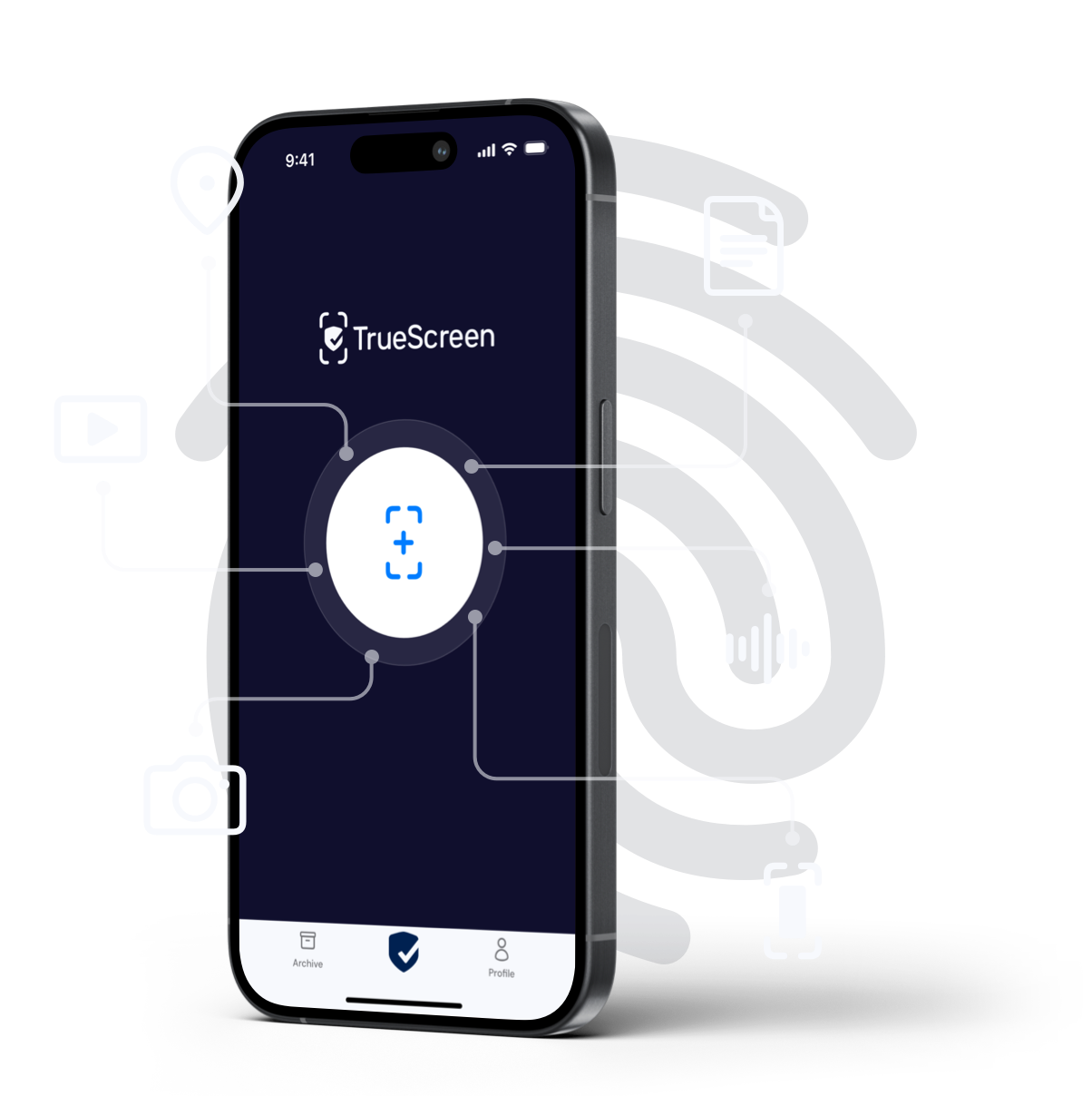
TrueScreen is the Data Authenticity Platform that certifies digital evidence by capturing it at the moment it is created, with legal value. When a screenshot, web page, chat, photo, video, or document is acquired through TrueScreen rather than saved by hand, it is sealed at the source with a digital seal, an eIDAS-compliant qualified timestamp, and context metadata (geolocation, operator identity, certified date and time). The result is data with verifiable integrity and a complete chain of custody from the first instant. For the instructing lawyer this changes the economics of the later examination: the forensic IT expert no longer has to reconstruct provenance or defend integrity from scratch, so the authenticity phase shrinks, the instructions devoted to "is this genuine?" shrink with it, and the engagement can focus on what the evidence actually means. That means fewer billable hours and a baseline the other side struggles to dispute.
The qualified timestamp and seal are delivered by a third-party QTSP integrated via API: TrueScreen integrates a qualified provider's seal rather than acting as one itself, and its acquisition method is built around ISO 27037 and eIDAS. The certification happens through tools the user already works with: the mobile App for certified acquisition in the field, the Forensic Browser for capturing web pages, chats, and video with evidentiary value, the Web Portal and underlying platform for managing and verifying material, and the API for embedding certified capture into existing workflows. Where a document needs to be signed, the digital signature is eIDAS-compliant as well.
A concrete example: a company suspects an employee is leaking internal communications. Instead of forwarding screenshots that an opposing expert will pick apart, the team captures each message through TrueScreen as it appears, sealed and timestamped. When the matter reaches a forensic IT expert, the instruction is no longer "prove these are authentic"; it is "analyse this certified set and report the timeline." The expensive part of the examination, establishing that the evidence is real, is already done. This is the same logic that gives weight to a forensic copy and to digital provenance as a discipline: authenticity established at the source, not argued after the fact. Law firms handling these matters can see the broader pattern in the lawyers use case.
FAQ: the most common questions about forensic IT experts
What questions should I ask a forensic IT expert?
Who appoints a forensic IT expert in court?
What is the difference between a court-appointed and a party-appointed expert?
What drives the cost of a forensic IT examination?
Do WhatsApp messages prove anything on their own?
How long does a forensic IT examination take?
TrueScreen editorial team
Published on · Updated on
This section is edited by the TrueScreen editorial team, which brings together expertise in digital forensics, the law of digital evidence and regulatory compliance. Every article is checked against primary sources: legislation, published rulings, technical standards and official documentation, always cited in the text.


