All content
Browse all articles and insights from the TrueScreen blog
Articles

Online marketplace scams: how to certify evidence of online fraud
Scam listings and chats vanish within hours. Learn how to capture marketplace fraud evidence with legal value before it disappears for good.
Proving content authentic when labelling the fake is not enough
Proving content authenticity is the new burden as the EU AI Act labelling duty starts and deepfakes make even genuine content deniable.

AI fake news: when content provenance becomes the proof
AI fake news outruns every correction, topping a billion views before debunking. Why proving authentic content at the source beats detecting the fake.

Fake reviews and scam listings: certifying the evidence before it disappears
Fake reviews, scam listings and defamatory profiles vanish fast. Here is how to certify their content and date as legal evidence before removal.
Certifying a phone call recording as evidence in a dispute
A phone call recording can serve as evidence, but a raw file is easy to challenge. Here is when it holds up and how to...
KYC for Fintech: the Minimum Compliance Stack for Remote Onboarding under AMLD5 and EBA Guidelines
Build your fintech KYC stack: document and liveness, PEP and sanctions screening, eID, certified audit trail and monitoring under AMLD5 and EBA.

How to instruct a forensic IT expert: what to ask and how to frame your request
How to instruct a forensic IT expert: what to ask, court-appointed vs party-appointed, cost drivers and ready templates for four evidence scenarios.

PAdES, CAdES, XAdES: digital signature formats compared and how to choose
PAdES, CAdES and XAdES are the three ETSI advanced electronic signature formats. Which to use for PDF, any file or XML, plus how to verify...
Ephemeral content as evidence: certifying Instagram Stories and WhatsApp Status before they disappear
Instagram Stories and WhatsApp Status vanish in 24 hours. How to certify ephemeral content at the source with a reliable timestamp, hash and legal value.

Facebook defamation and deleted posts: how to capture evidence that holds up
Facebook defamation and deleted posts: the evidentiary value of a screenshot and how to certify content before it is removed.
AI disinformation in 2026: when fake outpaces real and why certifying the authentic wins
AI disinformation now outpaces real content. Why certifying digital content authenticity at the source beats chasing deepfakes in 2026.
Forensic copy: what it is, how it is performed, and its evidentiary value
A forensic copy is a verifiable, bit-by-bit reproduction of digital data. Learn how it is performed and what evidentiary value it holds in court.

Digital evidence with probative value in workplace safety inspections
Digital evidence with probative value holds up only when authenticity, integrity and chain of custody are secured from acquisition to preservation.

Photovoltaic handover inspection with storage: how to certify it with legal value
What a photovoltaic-with-storage handover inspection requires: IEC 62446-1, BESS fire-safety duties and how to give the handover record legal value.
How to Prove Property Condition in Short-Term Rental Damage Disputes
Phone photos taken at check-out without a verifiable timestamp get rejected. How to document property condition with certified photos and prove guest damage.

Capturing online content as evidence before it disappears: a practical guide to forensic acquisition
How to save a web page as evidence before it disappears: why a screenshot is not enough and how forensic acquisition captures online content at...

Online reputation protection: turning harmful content into legally valid evidence
Turn defamation, fake reviews and harmful content into certified digital evidence: integrity hash, qualified timestamp, right to be forgotten and removal.
Digital evidence in workplace disputes: email and chat that hold up in court
How email, chat and screenshots become evidence of demotion or disciplinary action: evidentiary weight, ISO/IEC 27037 chain of custody, eIDAS timestamps.

When AI agents talk to each other: the provenance problem in multi-agent chains
In AI agent chains every handoff loses the data's origin. What multi-agent provenance is and how to certify every link at the source.
Screenshot editing: legal risks and how to certify them at the source as evidence
Editing a screenshot takes seconds. Learn why an edited screenshot loses value as evidence and how to certify it at the source.
Insights
EXIF Metadata and Proving the Date of a Photo in Court

Bounded autonomy for AI agents: the prerequisite for insurable governance

Data provenance vs data lineage: differences, standards, and why governance needs both
Timestamp vs digital signature: what each one proves and why you need both

AI training data provenance: how to prove dataset authenticity under the AI Act

Digital surveillance and GPS tracking in private investigations: the legal framework and how to certify evidence

Superbonus fraud and digital evidence: certifying attestations after Vicenza

Image provenance in public procurement: how authorities verify BIM renderings and site photos
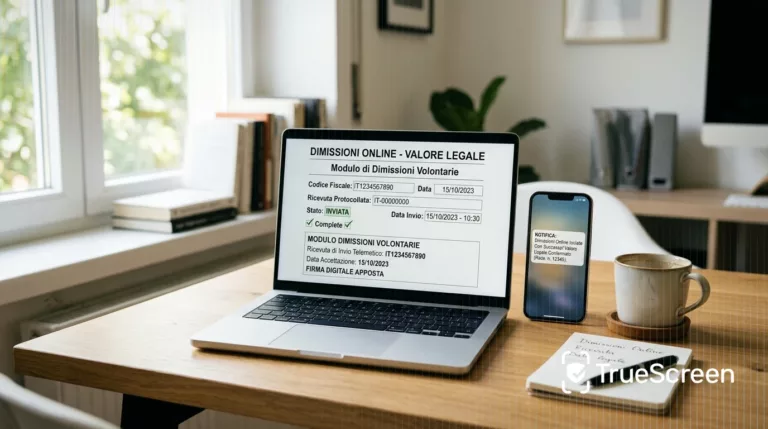
Online resignations: how to give legal value to formal employee communications

ANAC 2026 Whistleblowing Guidelines: Certifying Reports and Internal Channels Ahead of Privacy Authority Inspections
Hash SHA-256 and qualified eIDAS timestamping: the forensic language every law firm should master
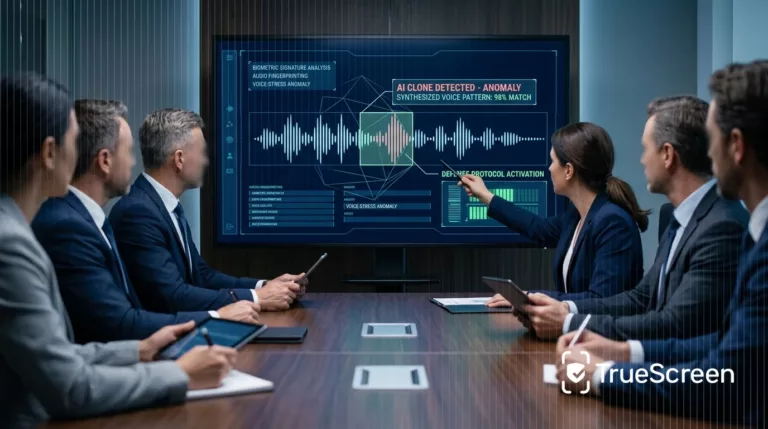
Voice cloning CEO defense: stopping BEC 2.0 with source-certified corporate audio

Work progress photo evidence: building site documentation that holds up in appellate court

Storm 1516: anatomy of Russia’s AI disinformation machine in 2026
How to timestamp a document: practical guide and method comparison

B2B formal demand: how to prove emails, registered delivery and screenshots in court
Certifying audio recordings as court evidence: chain of custody and qualified timestamp
Remote-work information notice: how to prove delivery and meet EU compliance

Content provenance in newsrooms: a six-step verification workflow