
Trade secret protection: proving your know-how existed without disclosing it
What the law requires for a trade secret, why disputes over know-how come down to evidence, and how to build a dated record of your documents before anyone contests them.
In trade secret protection, evidence is one of the main obstacles: the owner has to show what the know-how was, and since when, without giving it away in the process. TrueScreen gives you that answer before any dispute begins, certifying with legal value the fingerprint of the documents that hold your know-how, so you can show they existed in that form on a certain date while the files never leave your company. The certification does not make information secret, and it works alongside confidentiality agreements, access controls and your lawyer’s advice rather than in place of them.
Key takeaways
- A trade secret is information that is secret, has commercial value because it is secret and has been subject to reasonable steps to keep it secret (Directive (EU) 2016/943, Article 2(1); TRIPS, Article 39(2)).
- Of the defendants in roughly 700 EU trade secret judgments analyzed for 2017 to 2022, 38% were explicitly identified as former employees (EUIPO, Trade Secrets Litigation Trends in the EU, 2023).
- Trade secret holders face a trade-off between describing their claim specifically enough to succeed and the risk of disclosures that destroy the secret (EUIPO, 2023).
- A fingerprint certification is a certification with legal value that guarantees the immutability of the data from the moment of certification: TrueScreen receives only the SHA-256 fingerprint, never the file (TrueScreen, certification by hash).
- The certification proves that a document existed in that form at a certain date; it does not make information secret, prove who created it or show that the measures taken were reasonable (TrueScreen, certification by hash).
38%
defendants in EU trade secret cases explicitly identified as former employees, 2017 to 2022
52.3%
innovative firms in the 24 Member States covered using trade secrets to protect their innovations, 2010 to 2012
EUIPO, Protecting Innovation through Trade Secrets and Patents, 2017
31.7%
innovative firms in the 24 Member States covered using patents to protect their innovations, 2010 to 2012
EUIPO, Protecting Innovation through Trade Secrets and Patents, 2017
Plenty of what makes a company hard to copy never goes near a patent office. A formulation, a process sheet with the exact settings, a pricing model, a customer list, a module of source code: businesses keep these to themselves on purpose. In the EU, Directive (EU) 2016/943 sets the common rules for the trade secret protection of such information, provided the holder took reasonable steps to keep it secret.
Trouble starts when the information walks out the door. An engineer joins a competitor, a supplier starts selling something that looks familiar, a partner in a licensing negotiation receives confidential documents and then walks away. To claim trade secret protection, you have to show that the information existed, in that form, before the other side used it, and you have to do it without exposing it any further. Emails, shared folders and file dates help less than most people expect, and most companies start looking for evidence only after the dispute has begun.
So how do you build proof of your know-how ahead of time, without revealing it? In trade secret protection, the answer is a record made before anyone contests the information, and that record has to prove existence without disclosure. Certifying the fingerprint of the documents that hold the know-how gives them a certain date and proof of integrity, and the files themselves are never transmitted. When the know-how has to be shared, every action of every user can be recorded in a certified audit trail.
What is a trade secret, and when does trade secret protection apply?
A trade secret is information that is secret, has commercial value because it is secret, and has been subject to reasonable steps to keep it secret; trade secret protection applies only while every one of those conditions holds. TrueScreen does not decide whether your information passes that test; it gives the documents that hold the information a certain date and proof that they have not changed since. The definition comes from Article 2(1) of Directive (EU) 2016/943, and Recital 14 makes clear it covers know-how, business information and technological information.
The same recital draws a line that matters in disputes with a former employee: the definition “excludes trivial information and the experience and skills gained by employees in the normal course of their employment.” A recipe written down in a process sheet can be a trade secret. The general skill of the technician who ran the process cannot.
Trade secret protection is not a niche tool. An EUIPO study from 2017, built on Community Innovation Survey data covering almost 200,000 firms, found that 52.3% of innovative companies in the Member States covered used trade secrets to protect their innovations, against 31.7% that used patents (2010 to 2012 data).
Secrecy, commercial value and reasonable steps: what the law requires
Article 2(1) of the Directive sets out the requirements for trade secret protection in full. The information must be “secret in the sense that it is not, as a body or in the precise configuration and assembly of its components, generally known among or readily accessible to persons within the circles that normally deal with the kind of information in question.” It must have “commercial value because it is secret.” And it must have “been subject to reasonable steps under the circumstances, by the person lawfully in control of the information, to keep it secret.”
At international level, Article 39(2) of the TRIPS Agreement, which binds WTO members, sets the same requirements for “undisclosed information.” National trade secret laws can word and apply them differently, so a lawyer in your jurisdiction is the right person to tell you how they apply to your case.
The Directive speaks of “reasonable steps” and does not list them. Examples commonly cited include confidentiality agreements with staff and partners, access limited to the people who need the information, personal credentials, written internal policies and documents marked as confidential, and what is reasonable depends on the circumstances. The EUIPO 2023 litigation study notes that courts treat the requirement as “flexible and context-specific, based on the value of a trade secret, as well as the size and business sector of the trade secret holder.” It adds that when protection rests on confidentiality agreements, “it is crucial for the specific objects of protection to be clearly identified.”
Trade secret vs patent: what each one protects, and for how long
A patent buys a fixed term of exclusivity in exchange for publication; trade secret protection lasts as long as the information stays secret and gives no exclusive right.
| Trade secret | Patent | |
|---|---|---|
| What it protects | Know-how, business and technological information that meets the definition in Article 2(1) of the Directive | An invention, described in an application filed with a patent office |
| Duration | No fixed term: protection can continue as long as the secret is not revealed to the public (WIPO) | 20 years from the filing date for a European patent (EPC, Art. 63(1)) |
| Publicity | Nothing is published and no registration is needed (WIPO) | The application is published, as a rule, 18 months after filing or priority (EPC, Art. 93(1)) |
| What you need to act | Evidence that the information met the definition, identified precisely, and that it was acquired, used or disclosed unlawfully | A granted patent covering the invention |
The trade-off is sharper than the table suggests. Recital 16 of the Directive states that independent discovery of the same know-how remains possible and that reverse engineering of a lawfully acquired product is a lawful way to obtain information, unless a contract says otherwise. WIPO adds that someone who reaches the same invention independently can obtain a patent on it. Choosing trade secret protection over a patent is a legitimate choice, but it leaves the burden of proof with you.
Why trade secret litigation is decided on evidence
Trade secret litigation turns on evidence: the holder has to identify the information, show that it qualified for protection and show that the other side obtained or used it unlawfully, sometimes years after the documents were written. The EUIPO 2023 study, based on about 700 judgments handed down in the EU between January 2017 and October 2022, found that 38% of defendants were explicitly identified as former employees.
The pattern shows up in real cases too. In 2020 the Taiwanese foundry United Microelectronics Corporation (UMC) pleaded guilty in the United States to criminal trade secret theft and was sentenced to pay a $60 million fine, after two of the people it had hired from Micron’s Taiwan subsidiary brought Micron’s confidential information to UMC. Its co-defendant, Fujian Jinhua, was acquitted on February 27, 2024 after a bench trial.
What is often called trade secret misappropriation is, in the words of the Directive, the unlawful acquisition, use or disclosure of a trade secret, and the obstacles to proving it are well documented. The EUIPO report recalls the difficulties already flagged in 2018: “the burden of proof to demonstrate that the misused information qualifies as a trade secret” and the “difficulty of securing evidence and high related costs.” Integrity and a documented timeline are also central to whether digital evidence is admissible and how much weight it carries.
Proving the information existed first, without showing it
Anyone who seeks trade secret protection in court faces a dilemma that the EUIPO study puts plainly: a “trade-off between the specificity of filed claims (and therefore the likelihood of the acceptance of such claims before the court), and the risks of unintentional secrecy-destroying disclosures.” Describe the secret too vaguely and the claim may fail; describe it too precisely and you may destroy what you are defending.
Article 9(1) of the Directive eases part of the problem. It requires Member States to ensure that parties, their lawyers, court staff, witnesses, experts and anyone else taking part in proceedings on the unlawful acquisition, use or disclosure of a trade secret, or with access to the court documents, may not use or disclose any trade secret or alleged trade secret that the court, on a duly reasoned application by the party concerned, has identified as confidential. Confidentiality in court does not answer the earlier question, though: what existed, and when.
A record made at the time changes the picture. If you can show that a specific document existed in a specific form on a specific date, you can establish that fact without disclosing its content at that stage, while whether and how the document itself is produced remains for your lawyer and the court. When the know-how is source code, proof of existence for software works the same way, with a certain date for every version.
Emails, shared folders and file dates: why they carry little weight
File dates, email threads and shared folder histories are weak evidence of when know-how existed, because each of them depends on systems the parties themselves control. TrueScreen moves the proof away from those systems: it certifies the fingerprint of the document, and from the moment of certification any change to the file becomes detectable. A file’s modified date can be changed in seconds with ordinary tools, which is why showing that a file existed on a date takes an independent record.
Emails have their own limits. An email shows that something was sent on a given day, yet attachments get replaced, threads get forwarded without them, and the server belongs to whoever runs it. A shared folder is only as reliable as its administrator and its retention settings. None of these records is worthless, but each can be questioned.
Sharing with partners and suppliers: the most delicate moment
Know-how is most exposed when it has to leave the company on purpose. A licensing negotiation, a due diligence review, a new supplier who needs the specifications to quote: each of these requires handing over confidential material to people outside your access controls.
Confidentiality agreements matter first in trade secret protection, and the EUIPO study stresses that it is crucial for the protected information to be clearly identified in them. Just as important is a record of exactly what was shared, with whom and when, kept somewhere other than the inbox of the person who sent it.
What certifying a document proves, and what it leaves out
Certifying a document’s fingerprint proves that the file existed in that exact form at a certain date and has not changed since; it does not prove that the content is secret, who created it, or that your measures were reasonable. TrueScreen issues that certification without ever receiving the file: only its SHA-256 fingerprint is transmitted, so the document holding the know-how stays where it is. That narrow scope is what makes it useful for trade secret protection: the evidence concerns the document, not the secret it contains.
Existence and integrity of the document at a certain date
A fingerprint certification is a certification with legal value that guarantees the immutability of the data from the moment of certification. A SHA-256 hash changes completely if a single character of the file changes, so the fingerprint ties the certification to one exact version of the document.
Verification needs the original. Whoever verifies keeps the original file, recomputes its SHA-256 fingerprint with any standard tool and compares it with the certified one; if they match, the file is the one that existed on the certified date. The certification itself can be checked on the public verification page at truescreen.io/verify-certifications. The certified date comes from a qualified timestamp, and the certification carries the qualified electronic seal of TrueScreen Srl.
What the certification does not prove
A certification does not make information secret, and it is not a secrecy measure. It says nothing about who created the document, how the know-how was developed or whether your confidentiality measures were adequate. Through the API, available from TrueScreen Business, TrueScreen certifies each fingerprint exactly as it is submitted, without checking which algorithm produced it, and on either route it never sees the file.
A series of certifications gives you a documented timeline of the know-how: which documents existed, in which version, on which date. Secrecy, value and reasonable steps still have to be shown with other evidence, such as your confidentiality agreements, access logs and internal policies. Like any evidence, a certification can be challenged, and TrueScreen does not guarantee the outcome of any proceeding.
How do you prepare proof of your know-how before you need it?
TrueScreen lets you prepare proof of your know-how by certifying the fingerprint of the documents that hold it, version by version, long before anyone disputes them. The SHA-256 fingerprint is certified through the Forensic Browser, available from TrueScreen Standard, or through the API and MCP server, available from TrueScreen Business: the file is not transmitted, and whoever verifies it later recomputes the fingerprint on the original you kept. When the know-how has to be shared, the Certified Data Room, a paid option of TrueScreen Business, records every document on upload and every action of every user in a certified audit trail.
Certifying key documents by fingerprint, without sending them
The Forensic Browser, available from TrueScreen Standard on macOS and Windows, certifies files stored on your computer by their SHA-256 fingerprint. It suits a team that certifies a handful of documents at the moments that count: a recipe finalized, a process sheet revised, a design frozen before production.
Teams that version often can automate the same step. The API and the MCP server, available from TrueScreen Business, take a title and a list of file names with their fingerprints in a single request, and no file is uploaded. Which files go into each certification, and how a project archive is assembled, remains your decision; TrueScreen certifies the fingerprints it receives.
Sharing confidential material in the Certified Data Room
The Certified Data Room, a paid option of the TrueScreen Business plan, records every document on upload with its fingerprint and puts every action of every user, viewing and downloading included, into an audit trail certified with periodic certification. Where a room has document certification turned on, the documents recorded on upload are then certified with periodic certification as well. Intellectual property is one of the scenarios TrueScreen names for this Business option, together with contract negotiations. How it differs from a standard virtual data room is covered in our comparison of virtual and certified data rooms.
Sharing a confidential document in a data room is a choice to weigh alongside your other secrecy measures; certification is not a secrecy measure. Your lawyer can help you decide what a partner really needs to see and how to cover it with an agreement before you upload anything.
-
Identify the documents that hold the know-how
List the documents where the know-how actually lives: formulations, process sheets, drawings, test results, pricing models, the source archive. Name each one specifically, because a claim, like a confidentiality agreement, is more likely to succeed when the protected information is clearly identified.
-
Certify their fingerprint at every version that matters
Certify each document when it reaches a version worth defending, and again when it changes in substance. Use the Forensic Browser, included from TrueScreen Standard, or the API, which starts with TrueScreen Business: the steps are the same for a recipe, a process sheet or a source archive.
-
Keep each original with its proof of certification
Store each original, unchanged, next to the proof of its certification. TrueScreen keeps no copy of a file it never received, and the file matches its fingerprint only as long as you keep it exactly as it was certified.
-
Share with partners in the Certified Data Room
If a licensing partner, an investor or a supplier needs to see confidential material and you decide to share it, you can do it in the Certified Data Room, which comes as a paid option with TrueScreen Business, so that what each person viewed or downloaded ends up in the certified audit trail. Whether to share at all, and under which agreement, is a decision for you and your lawyer.
Hypothetical cases: the engineer who joins a competitor and the licensing deal that falls through
In the scenarios below, which are hypothetical, the certified documents do not win the case; they give the company and its lawyer a dated record to work from instead of a reconstruction.
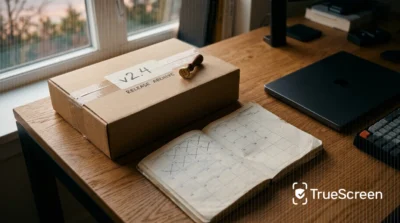
Picture a food manufacturer whose senior process engineer leaves for a competitor. Eight months later the competitor launches a product with a strikingly similar texture. The manufacturer has certified its recipe and process sheet at every revision for three years. Its lawyer and technical expert can work from certifications showing that each version existed on a given date and has not been changed since, while the decision on whether and how to produce the documents themselves stays with the lawyer and the court, where Article 9(1) of the Directive requires Member States to provide for the confidentiality of material the court has identified as confidential. Documenting the leak itself, after the fact, is a separate corporate espionage question; the point here is the record built before.
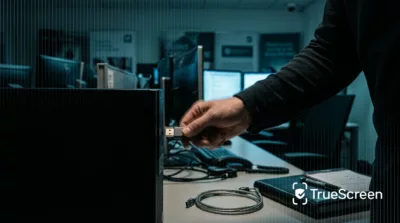
Now picture a sensor company negotiating a license with a larger manufacturer. During due diligence it shares calibration methods and test data through the Certified Data Room, the paid option it added to its TrueScreen Business plan. Talks collapse, and a year later the manufacturer announces a sensor with the same calibration approach. The company can show which documents were in the room, when they were uploaded and who viewed or downloaded them. Whether that amounts to unlawful use is for its lawyer to argue.
Conclusion
A trade secret is protected only while it stays secret, keeps its commercial value and is covered by reasonable steps, and when it is contested, the holder has to show what the know-how was and since when without giving it away. Records you control, such as file dates, emails and shared folders, can be questioned. TrueScreen gives you a dated record built before the dispute: it certifies the fingerprint of the documents that hold your know-how, with the files staying inside your company, and when the know-how has to be shared, the actions of every user can go into a certified audit trail. That documented timeline works alongside confidentiality agreements, access controls and your lawyer’s advice, and it does not replace them.
FAQ
What counts as a trade secret?
Under Article 2(1) of Directive (EU) 2016/943, a trade secret is information that is not generally known or readily accessible to people who normally deal with that kind of information, has commercial value because it is secret, and has been subject to reasonable steps to keep it secret. It can be technical know-how, such as a recipe or a process, or business information, such as a customer list. Recital 14 excludes trivial information and the general skills employees gain at work.
How do you prove trade secret misappropriation?
You have to show that the information qualified for trade secret protection and that the other side acquired, used or disclosed it unlawfully. The court assesses the evidence case by case. TrueScreen helps with one part of that proof: by certifying the fingerprint of the documents that hold the know-how, it lets you show they existed in that form on a certain date, without disclosing them. Secrecy, reasonable steps and the unlawful conduct need other evidence.
What are reasonable measures to protect trade secrets?
Reasonable measures, or reasonable steps in the wording of Directive (EU) 2016/943, commonly include confidentiality agreements, access limited to people who need the information, personal credentials, internal policies and documents marked as confidential. The EUIPO 2023 study on trade secret litigation found that courts treat the requirement as flexible and context-specific, depending on the value of the secret and the size and sector of the company. A certification of documents is not one of these measures.
Trade secret vs patent: which is better?
Neither is better in general. A European patent lasts 20 years from filing under Article 63(1) of the European Patent Convention and requires publication of the invention. Trade secret protection needs no registration and can last indefinitely, but only while the information stays secret, and others may still develop the same information independently. A 2017 EUIPO study found that, in the 24 Member States covered, 52.3% of innovative companies used trade secrets and 31.7% used patents (2010 to 2012).
Can you take a trade secret case to court without revealing the secret?
Article 9(1) of Directive (EU) 2016/943 requires EU Member States to ensure that parties, lawyers, court staff, witnesses and experts in trade secret proceedings may not use or disclose information the court has identified as confidential on a reasoned application. The EUIPO 2023 study still describes a trade-off between describing the claim precisely enough to succeed and the risk of disclosures that destroy the secret. Whether and how this works in a given case depends on the court and the procedural rules that apply, so ask a lawyer in the jurisdiction concerned.
Sources and verification
Every figure and principle cited here links to its source, listed with type and date. Links checked on the publication date.
| Source | Type | Date | What it supports |
|---|---|---|---|
| Directive (EU) 2016/943, Article 2(1) | Law | 08/06/2016 | Definition of trade secret: secrecy, commercial value, reasonable steps |
| Directive (EU) 2016/943, Recital 14 | Law | 08/06/2016 | Know-how, business and technological information covered; trivial information and employees’ experience and skills excluded |
| Directive (EU) 2016/943, Recital 16 | Law | 08/06/2016 | No exclusive right; independent discovery and reverse engineering remain lawful |
| Directive (EU) 2016/943, Article 9(1) | Law | 08/06/2016 | Confidentiality of trade secrets in the course of legal proceedings |
| TRIPS Agreement, Article 39(2) | Law | 1994 | Protection of undisclosed information with the same requirements |
| European Patent Convention, Article 63(1) | Law | 2020 | Term of the European patent: 20 years from filing |
| European Patent Convention, Article 93(1) | Law | 2020 | Publication of the application 18 months after filing or priority |
| EUIPO, Trade Secrets Litigation Trends in the EU | Survey | 2023 | Former employees as defendants (38%), reasonable steps as a flexible requirement, trade-off between specific claims and disclosure, evidence obstacles |
| EUIPO, Protecting Innovation through Trade Secrets and Patents | Survey | 2017 | Share of innovative firms using trade secrets (52.3%) and patents (31.7%) |
| WIPO, Frequently Asked Questions: Trade Secrets | Document | 27/11/2026 | No time limit and no registration for trade secrets |
| WIPO, Trade Secrets | Document | 27/11/2026 | Someone who reaches the same invention independently can patent it |
| U.S. Department of Justice, UMC guilty plea | Case law | 28/10/2020 | UMC pleaded guilty to criminal trade secret theft involving Micron’s confidential information, $60 million fine |
| The Register, Fujian Jinhua acquitted | Case law | 28/02/2024 | Fujian Jinhua acquitted after a bench trial on February 27, 2024 |
Give the documents that hold your know-how a certain date
Certify the fingerprint of your key documents with the Forensic Browser, available from TrueScreen Standard, or with the API, available from TrueScreen Business: the files never leave your company. To share confidential material with partners, see the Certified Data Room, a paid option of TrueScreen Business, and send your request through the contact form.
TrueScreen editorial team
Published on · Updated on
This section is edited by the TrueScreen editorial team, which brings together expertise in digital forensics, the law of digital evidence and regulatory compliance. Every article is checked against primary sources: legislation, published rulings, technical standards and official documentation, always cited in the text.
Editorial Team and Methodology →


