
All content
Browse all articles and insights from the TrueScreen blog
Articles
eIDAS 2.0: 21 May 2026 deadline for remote digital seals
On 21 May 2026 the eIDAS 2.0 deadline for remote qualified signature and seal devices expires. Technical obligations for QTSPs and downstream businesses.
Italy’s deepfake law 132/2025: what changed after the Meloni case
Italy's law 132/2025 introduces a criminal offence for non-consensual AI deepfakes. What the law covers, the Meloni case, and how corporations should respond.
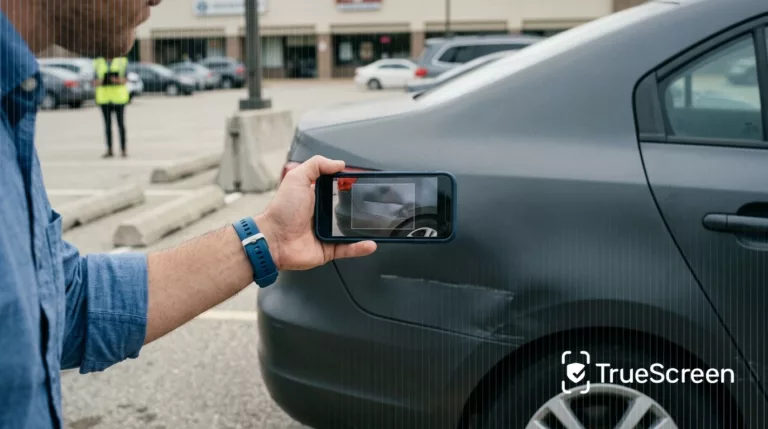
Virtual vehicle inspection: how certified photos prevent insurance fraud
Virtual vehicle inspections relying on uncertified photos are structurally vulnerable to AI manipulation. Learn how source-side certification protects insurers.

Trust by design: building SaaS products with verifiable integrity from the first line of code
Trust by design for SaaS: five architectural primitives for verifiable integrity, forensic audit trail and GDPR, NIS2, AI Act compliance in a single layer.

Deepfakes: what they are, how they work, and how to defend against them
What deepfakes are, how they are made, real fraud examples, and how to tell a manipulated video from an authentic one, plus source-certification defenses.
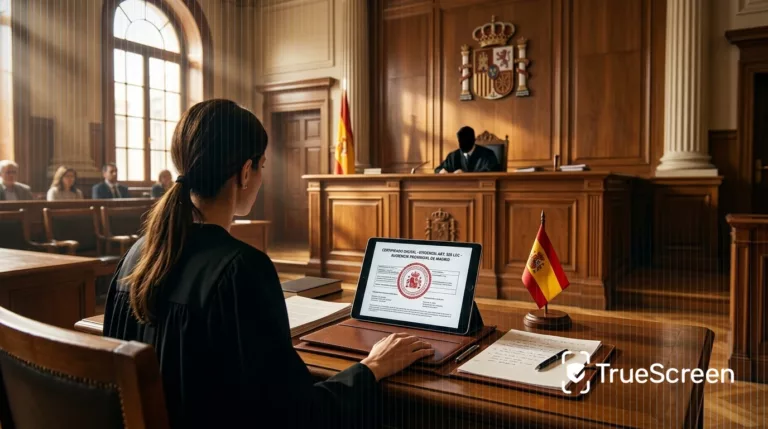
Digital evidence in Spanish civil procedure: cadena de custodia under article 326 LEC and eIDAS
How article 326 LEC, Ley 6/2020 and eIDAS shape digital-evidence admissibility in Spanish civil courts: presumption, chain of custody, QTSP integration.
PEC in court: legal weight, challenges and source-level certification
PEC probative value in court: what it proves, how it can be challenged, how to certify attachments at the source with forensic methodology and QTSP...

Short-Term Rental Documents: The Complete Guide for Hosts in 2026
Short-term rental documents hosts must collect, sign and archive: ID, contract, privacy, condition photos, AirCover and Booking claims.

Digital evidence in German civil procedure: chain of custody under § 371a ZPO and eIDAS
Verbatim explainer of § 371a ZPO, eIDAS Article 25, GoBD and Beweiskette: how digital evidence holds up in German civil and criminal courts.
How chain of custody for digital evidence works in UK proceedings
How chain of custody for digital evidence works under ACPO Principle 3, CPR Part 31 and Practice Direction 31B in UK courts and tribunals.

Image authentication for enterprises: the four levels that secure your visual assets
How enterprises authenticate images: from EXIF checks to qualified timestamps and chain of custody, and which method actually holds up as evidence.
Voice cloning corporate fraud: the verifiable defense for CFOs after the Arup case
After the Arup 25.6M deepfake fraud, voice cloning targets corporate finance: the defense for CFOs with certified voice baseline and out-of-band rules.

Data integrity in the AI era: why source certification rewrites the paradigm
Classic data integrity falls short in the generative AI era. Source certification extends the guarantee to the moment data is born.

EU e-Evidence Regulation for Service Providers: Obligations, Orders, and Cross-Border Cooperation
TSTrueScreen editorial teamPublished on April 21, 2026 · Updated on [...]
PageFreezer vs TrueScreen: web archiving or forensic certification?
PageFreezer archives websites continuously for compliance. Forensic certification produces single pieces of evidence usable in court. How to choose.
The 5 best forensic web capture tools in 2026: honest comparison
How to choose forensic web capture software: what to look for to preserve web pages and online content as digital evidence with legal value.
Screenshots as Criminal Evidence: Italian Supreme Court Ruling and Forensic Acquisition
When screenshots become admissible evidence in criminal proceedings: forensic acquisition, hash, qualified timestamp per ISO 27037 and eIDAS.

What the ACPO Guide Requires for UK Digital Evidence
The ACPO Good Practice Guide for digital evidence: the four principles for handling digital evidence in the UK and how to apply them in practice.
Synthetic identity fraud: defending onboarding from AI-driven attacks
Synthetic identity fraud is outpacing traditional KYC. Why financial institutions need documents certified at the source against AI-generated identities.

Certified Data Room: how forensic audit trails turn a data room into admissible evidence
Standard VDRs track access but cannot prove document authenticity. A certified data room seals both content and interactions for legally admissible evidence.
Insights
AI Prompt Traceability: Why Certifying Instructions to AI Agents Matters
Deepfakes and criminal proceedings: the digital evidence crisis

Deepfake corporate fraud: why source certification is the real defense

Certifying AI Agent Outputs: Digital Evidence with Legal Value

NIS2 and AI Data Integrity: What Essential Services Must Do

E-Evidence Regulation: a practical implementation guide for European businesses

Digital Provenance in the Energy Sector: Certifying Field Inspections and Audits

Certifying the AI Agent Knowledge Base: Data Integrity and Provenance

EU AI Act Record-Keeping Requirements: A Practical Guide for Businesses
How to Make Digital Evidence Admissible: Step-by-Step Guide for Legal Professionals

Agentic AI Liability: Who Is Responsible When the Agent Fails
Chain of custody in the legal sector: a guide for lawyers and law firms

Self Check-in for Short-Term Rentals: What Changes After the Italian Ruling

Enterprise digital provenance: integrating data certification into business processes
Digital chain of custody: technical requirements for valid evidence in court
Email certification for insurance: claims, complaints and disputes
Challenging email evidence in court: authentication and preventive certification
Email certification for law firms: workflow and evidence collection

Email chain of custody: from sending to courtroom evidence