All content
Browse all articles and insights from the TrueScreen blog
Articles
Independent Verification: Why a Result Nobody Can Recheck Is Not Evidence
Independent verification of digital evidence: why a result nobody can recheck is a technical opinion, not proof that survives cross-examination.
Digital signature used without the holder’s knowledge: what verification actually proves
Verifying a digital signature confirms a valid certificate and an intact file, not who held the device. Where the burden of proof lands in a...

Authentic photos, false context: the fake no detector can find
Out of context images are authentic, so no file analysis flags them. The manipulation sits in the when and the where, not inside the photo.

Pharmaceutical serialisation: what the Data Matrix code proves and what it does not
Serialisation proves a pack is registered as genuine. It does not prove who received it, how it was stored or how it travelled.

Labeling AI content made for a client: who has to disclose it
Whoever generates content with AI is the deployer under the AI Act and stays obliged to disclose it, even when the client publishes and the...
Fake surety bonds: how to verify a guarantee and prove what you received
Fake surety bonds circulate on real insurers' letterhead: how to check the issuer against supervisory registers and keep proof of what you received.
Digital evidence in estate litigation: what survives a challenge
Digital evidence in estate litigation is attacked on authenticity before the merits. What certifying it at the moment of capture actually changes.
Event data recorder: what vehicle data is worth when a crash is disputed
Event data recorder data is admissible in the EU but carries no presumption of accuracy: what decides its weight is how it was acquired and...
How AI assistants choose their sources: verifiability as the new currency of trust
Query fan-out, retrieval and final selection: the criteria generative engines use to decide which sources to cite, and why verifiability now decides.
Data breach notification: what you must be able to prove
A data breach notification requires evidence: detection time, scope, decisions and measures taken. What holds up when the regulator asks.
The Claude Text Watermark: What It Proves and What It Cannot
Claude's AI watermark marks generated text from 2 August 2026. How the signal works, what the AI Act requires, and why rewriting erases it.
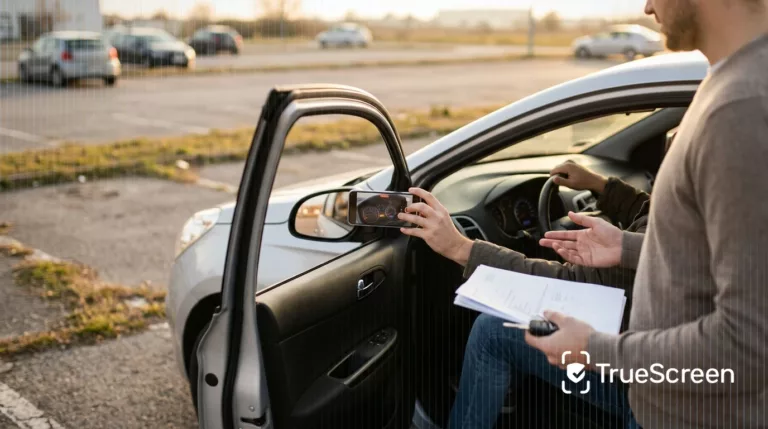
Hidden defects in a used car: how to prove its condition at handover
Hidden defects in a used car become a dispute over evidence. How to document vehicle condition at handover with certified, time-stamped photos and video.
AI Slop: Why a Web Flooded With Synthetic Content Rewards Verifiable Sources
AI slop is low-quality synthetic content produced at scale. Detection scales poorly and the AI Act labels the artificial without proving the authentic.
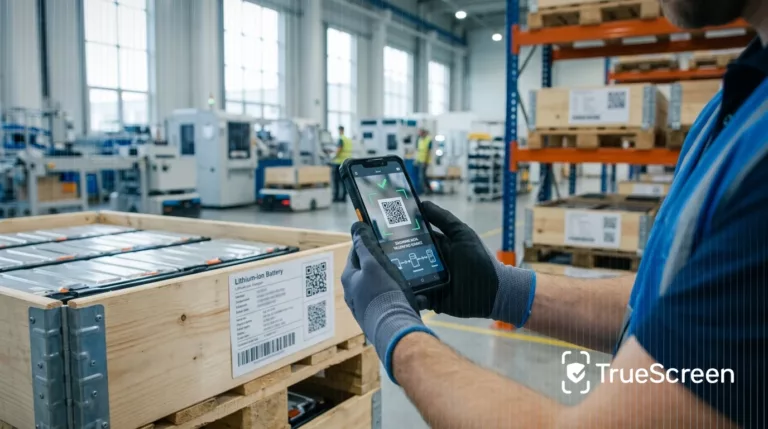
Digital product passport: certified supply chain data under the ESPR
The ESPR introduces the digital product passport. What data it requires, from the battery passport in 2027, and how to certify supply chain evidence.
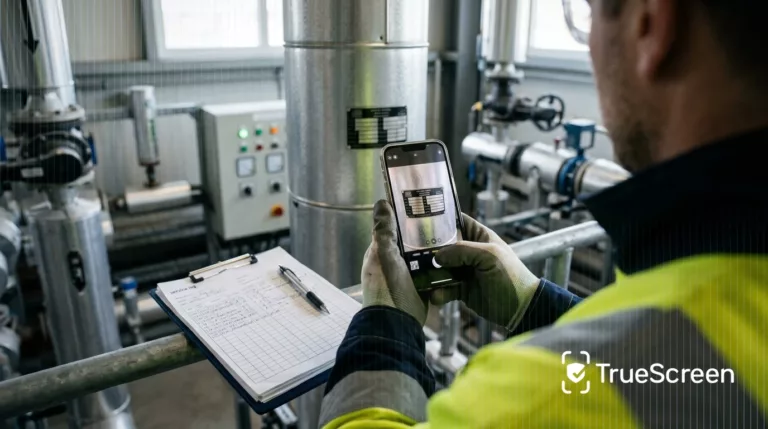
Plant logbook and maintenance records: the data provenance that holds up in an audit
Maintenance records written after the fact carry little weight. What makes each entry datable, located and verifiable by a third party.

CCTV footage as evidence: from system export to certification
Exported CCTV recordings lose date, continuity and quality. How certifying the export fixes camera ID, system time and file integrity.
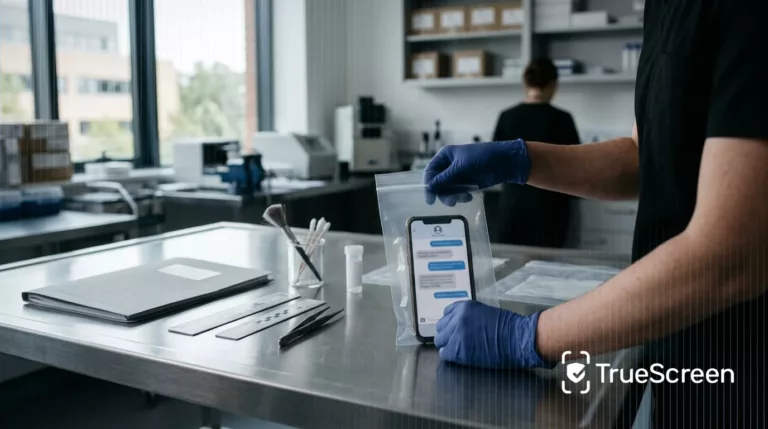
ISO 21043: The Forensic Sciences Standard and Digital Evidence
ISO 21043 sets requirements for the forensic process from scene to courtroom. Where it applies, how it relates to ISO/IEC 27037 and what changed in...
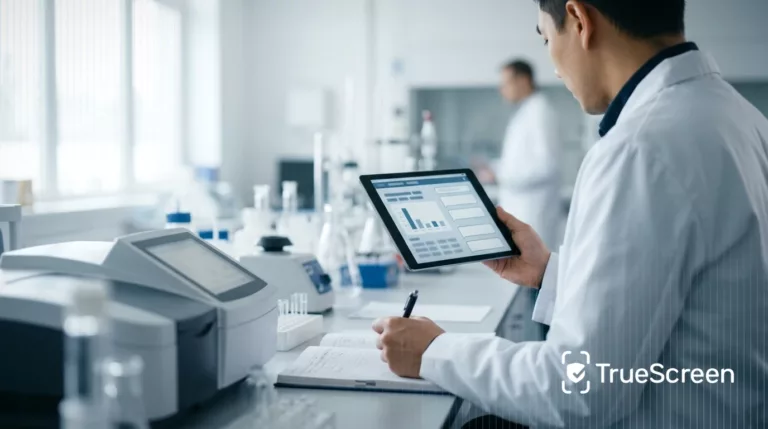
ISO/IEC 17025 and laboratory data integrity: from measurement to test report
ISO/IEC 17025 is still the 2017 edition, and it already asks for control of information. What that means for measurement data and test reports.

ISO/IEC 17020:2026: what changes for inspection evidence
ISO/IEC 17020:2026 strengthens control of data and information. What changed, when 2012 accreditations expire, and how to defend field evidence.
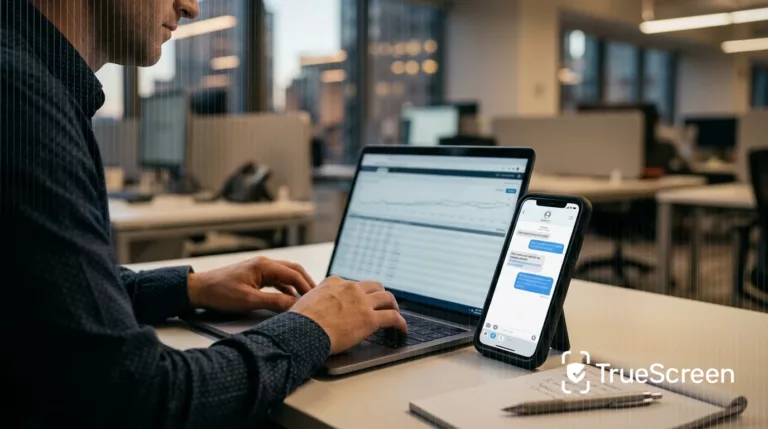
Phishing and clone sites: capturing the evidence before the page disappears
Phishing evidence disappears within hours. How to capture and certify a clone site while it is live so the proof holds after the domain is...
Insights
Spoliation of evidence: what courts do when digital evidence disappears

How to fake a screenshot: date, place and messages that were never there
How to remove C2PA Content Credentials from an image, a video or a PDF, and what you actually gain
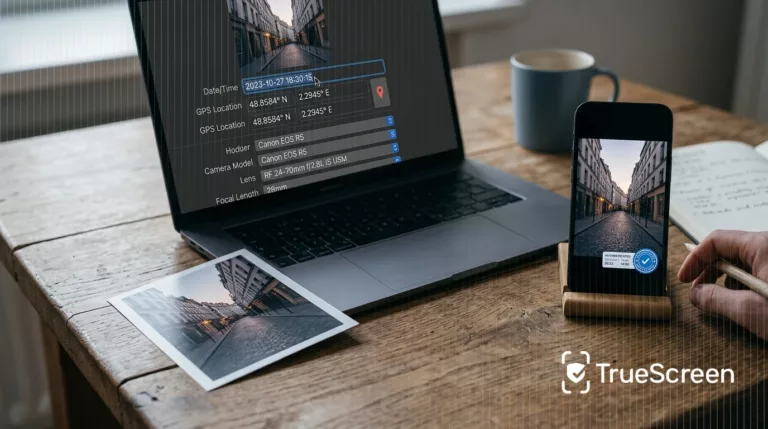
How to change a photo’s date, location and camera in the metadata, and why it proves nothing
How to edit (or wipe) the metadata of an MP4 or a PDF, and what a forensic reader still sees
FRE 902(13) and 902(14): When an Electronic Record Authenticates Itself
APP Fraud Evidence: What to Secure When a Hacked Account Asks You for Money
Challenging the authenticity of an electronic document: what actually shifts the burden
Education Verification in Hiring: What a Registry Check Cannot Prove
Move-out inspection report: how to prove rental damage

Vacation rental scams: certify the listing, chat and payments before they vanish
Unauthorized account access: what to document before you reset credentials
Forensic Capture of Password-Protected Web Pages: Portals and Private Areas
Submitting video evidence to police: what to hand over and in what format
WhatsApp voice notes as court evidence: legal value and how to certify audio messages
Advanced electronic signature with national eID: legal value for businesses and professionals
Certified email formal demand: evidentiary value and common challenges
AI liability insurance: why data certification is a prerequisite for coverage
eIDAS 2.0 Timestamp Requirements: What Changes for QTSPs and Businesses