All content
Browse all articles and insights from the TrueScreen blog
Articles

Construction draw inspections: legally valid photo reports for faster disbursements
Photo reports for construction draw inspections that withstand disputes and speed disbursements: FRE 901 requirements, fraud patterns, field workflow.
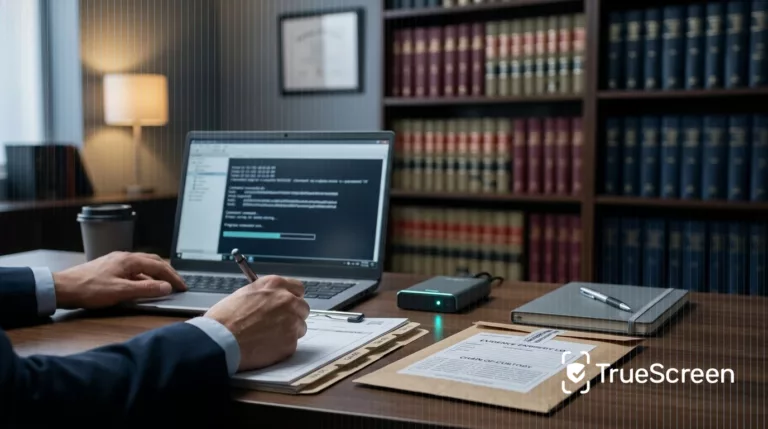
Web Evidence Acquisition: An ISO 27037 Forensic Guide
What to capture from a webpage (DOM, MHTML, SSL, IP, hash) and how to do it under ISO 27037 to produce digital evidence admissible in...
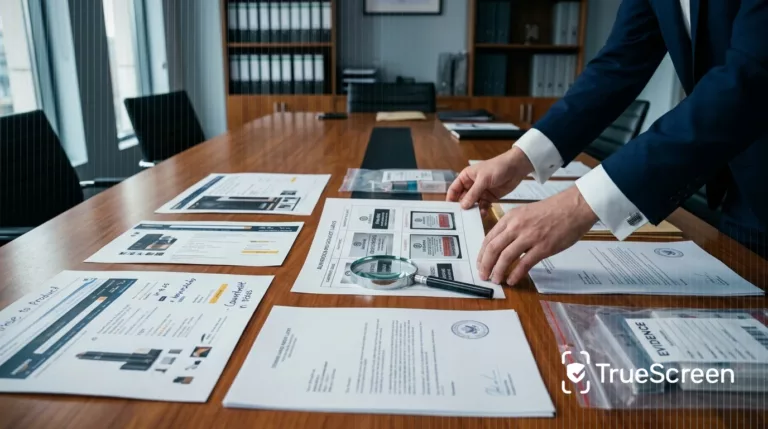
Digital Evidence for Brand Protection: How to Collect Certified Proof of Online IP Violations
Brand protection online requires court-admissible evidence, not screenshots. Learn SHA-256 certified capture for counterfeits and IP violations.
Article 2712 Italian Civil Code: The Rule Governing Digital Evidence in Italy
Article 2712 Italian Civil Code treats digital reproductions as full proof unless disclaimed: Cass. 1254/2025 and United Sections 11197/2023.

Proof of Creation Date for Intellectual Property: Digital Certification Guide
How to establish proof of creation for intellectual property: timestamping and certifying authorship to defend copyright, designs, and prior art.
Page Vault Alternative: Forensic Web Evidence Capture
How TrueScreen compares to Page Vault for capturing web pages as court-ready evidence: forensic metadata, chain of custody and cross-border legal validity.
When Real Looks Fake: the Authenticity Paradox in the AI Era
The liar's dividend reverses the burden of proof on authentic content. Why cryptographic certification at the source is the only structural answer.

Mobile Inspection App for Insurance: Certified Field Evidence for Claims
Tamper-proof photo and video evidence for insurance field inspections: chain of custody, eIDAS timestamp, FRE 901/902 admissibility from capture to court.
Digital Evidence Preservation Standards: ISO 27037, SWGDE and NIST Compared
ISO/IEC 27037:2012 is still the current edition and is under review. How it compares with SWGDE and NIST IR 8387 for preserving digital evidence.

Deepfakes in the 2026 Elections: Why Certified Proof Matters More Than Fact-Checking
How deepfake videos threaten democratic elections and why certified digital evidence provides stronger protection than fact-checking alone.

Property condition report: how digital certification transforms real estate documentation
Property condition report with source-certified photos eliminates post-sale disputes. Regulations, standards and solutions for tamper-proof appraisals.
Digital Notarization: Why Forensic Methodology Matters More Than Blockchain
Digital notarization verifies who signs, not what is signed. Learn why forensic methodology solves the content authenticity gap blockchain cannot.
Wayback Machine as Evidence: Legal Limits and Certified Alternatives
Can Wayback Machine screenshots stand as legal evidence? The admissibility limits of web archives and how to certify web pages with real legal value.
MiFID II Recording Obligations: Requirements, Penalties and Compliance Guide
MiFID II recording obligations for financial communications: regulatory requirements, penalties for non-compliance and certified solutions.
Document dematerialization: from scanning to legally certified digitization
Complete guide to document dematerialization: from scanning to legally certified digitization with blockchain timestamping.
Advanced Electronic Signature: What It Is, How It Works, and eIDAS Regulation
Advanced electronic signature (AES) under eIDAS: the 4 requirements, legal validity across EU, and how to integrate AES in business workflows.
Social Media Evidence in Court: How to Capture and Authenticate Posts
How to use social media evidence in court: capturing posts, the authentication requirements, and certifying content so it holds up as legal evidence.
FRE 901: How to Authenticate Digital Evidence Under Federal Rules
How FRE 901 applies to emails, screenshots and video: the 901(b) methods courts accept, when 902(13) and (14) help, and where the AI rules stand...
Video Evidence with Altered Timestamps: Court Admissibility Standards
Can video with an altered or tampered timestamp be used in court? How courts assess metadata and how to certify video so its date holds...
Digital Chain of Custody: What It Is and How It Protects Evidence
How the digital chain of custody protects evidence: what to document, the common mistakes, and how to preserve integrity from acquisition to court.
Insights
AI Prompt Traceability: Why Certifying Instructions to AI Agents Matters
Deepfakes and criminal proceedings: the digital evidence crisis

Deepfake corporate fraud: why source certification is the real defense

Certifying AI Agent Outputs: Digital Evidence with Legal Value

NIS2 and AI Data Integrity: What Essential Services Must Do

E-Evidence Regulation: a practical implementation guide for European businesses

Digital Provenance in the Energy Sector: Certifying Field Inspections and Audits

Certifying the AI Agent Knowledge Base: Data Integrity and Provenance
EU AI Act Record-Keeping Requirements: A Practical Guide for Businesses
How to Make Digital Evidence Admissible: Step-by-Step Guide for Legal Professionals
Agentic AI Liability: Who Is Responsible When the Agent Fails
Chain of custody in the legal sector: a guide for lawyers and law firms

Self Check-in for Short-Term Rentals: What Changes After the Italian Ruling

Enterprise digital provenance: integrating data certification into business processes
Digital chain of custody: technical requirements for valid evidence in court
Email certification for insurance: claims, complaints and disputes
Challenging email evidence in court: authentication and preventive certification
Email certification for law firms: workflow and evidence collection
Email chain of custody: from sending to courtroom evidence