All content
Browse all articles and insights from the TrueScreen blog
Articles
Data breach notification: what you must be able to prove
A data breach notification requires evidence: detection time, scope, decisions and measures taken. What holds up when the regulator asks.
The Claude Text Watermark: What It Proves and What It Cannot
Claude's AI watermark marks generated text from 2 August 2026. How the signal works, what the AI Act requires, and why rewriting erases it.
Hidden defects in a used car: how to prove its condition at handover
Hidden defects in a used car become a dispute over evidence. How to document vehicle condition at handover with certified, time-stamped photos and video.
AI Slop: Why a Web Flooded With Synthetic Content Rewards Verifiable Sources
AI slop is low-quality synthetic content produced at scale. Detection scales poorly and the AI Act labels the artificial without proving the authentic.
Digital product passport: certified supply chain data under the ESPR
The ESPR introduces the digital product passport. What data it requires, from the battery passport in 2027, and how to certify supply chain evidence.
Plant logbook and maintenance records: the data provenance that holds up in an audit
Maintenance records written after the fact carry little weight. What makes each entry datable, located and verifiable by a third party.

CCTV footage as evidence: from system export to certification
Exported CCTV recordings lose date, continuity and quality. How certifying the export fixes camera ID, system time and file integrity.
ISO 21043: The Forensic Sciences Standard and Digital Evidence
ISO 21043 sets requirements for the forensic process from scene to courtroom. Where it applies, how it relates to ISO/IEC 27037 and what changed in...
ISO/IEC 17025 and laboratory data integrity: from measurement to test report
ISO/IEC 17025 is still the 2017 edition, and it already asks for control of information. What that means for measurement data and test reports.
ISO/IEC 17020:2026: what changes for inspection evidence
ISO/IEC 17020:2026 strengthens control of data and information. What changed, when 2012 accreditations expire, and how to defend field evidence.
Phishing and clone sites: capturing the evidence before the page disappears
Phishing evidence disappears within hours. How to capture and certify a clone site while it is live so the proof holds after the domain is...

The limits of the EU AI Act: what transparency cannot guarantee
The EU AI Act limits stop at the perimeter: who is bound, why markers break, and what it takes to prove content is authentic.
Data Authenticity Clauses: What B2B Contracts Now Require
Data authenticity clauses now appear in tenders and supply agreements: what they require, where they come from and which evidence must be verifiable.
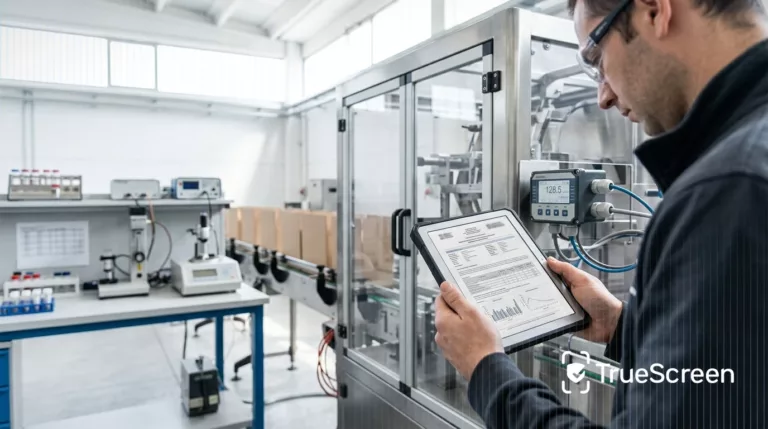
Test report and acceptance records: proving the provenance of measurement data
How a test report holds up in a quality audit or a supply dispute: ISO/IEC 17025 records, FAT and SAT evidence, measurement data provenance.
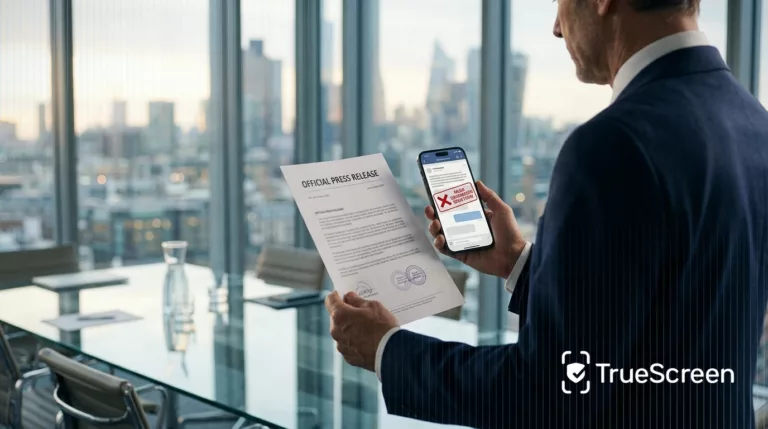
Fake corporate announcements: proving what the issuer published
A fake corporate announcement moves the price before the denial. How the Market Abuse Regulation frames financial disinformation and why proof matters.
Escrow: what it is, how it works and which tools it takes
Escrow is a conditional deposit held by a neutral third party: how it works, who acts as agent, and what it takes to prove what...

Invoice fraud and the IBAN swap: how to prove which email is the original
Business email compromise and the IBAN swap are settled on proof: what a bank, an insurer and a supplier argue, and how the original email...

Audit evidence for publicly funded projects: proving the work was done
Public funding audits check whether work was actually done. Site photos, inspection reports and attendance logs need verifiable time and place.
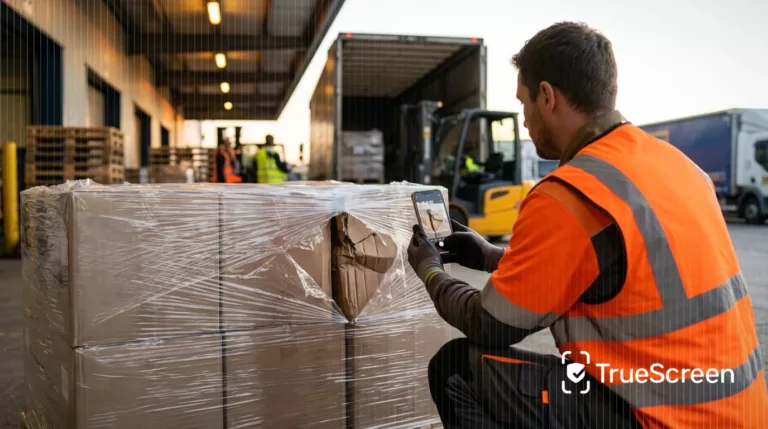
Cargo damage in transit: how to document the condition of a shipment
Cargo damage in transit: how to document the condition of a shipment so CMR reservations, the seven-day window and dock photographs actually hold.

Labelling AI content is not enough: the case for proof of authenticity
From 2 August 2026 the AI Act requires labelling synthetic content, but flagging the fake doesn't prove the true. Certification at the source completes it.
Insights
AI Prompt Traceability: Why Certifying Instructions to AI Agents Matters
Deepfakes and criminal proceedings: the digital evidence crisis
Deepfake corporate fraud: why source certification is the real defense
Certifying AI Agent Outputs: Digital Evidence with Legal Value
NIS2 and AI Data Integrity: What Essential Services Must Do

E-Evidence Regulation: a practical implementation guide for European businesses
Digital Provenance in the Energy Sector: Certifying Field Inspections and Audits

Certifying the AI Agent Knowledge Base: Data Integrity and Provenance
EU AI Act Record-Keeping Requirements: A Practical Guide for Businesses
How to Make Digital Evidence Admissible: Step-by-Step Guide for Legal Professionals
Agentic AI Liability: Who Is Responsible When the Agent Fails
Chain of custody in the legal sector: a guide for lawyers and law firms

Self Check-in for Short-Term Rentals: What Changes After the Italian Ruling

Enterprise digital provenance: integrating data certification into business processes
Digital chain of custody: technical requirements for valid evidence in court
Email certification for insurance: claims, complaints and disputes
Challenging email evidence in court: authentication and preventive certification
Email certification for law firms: workflow and evidence collection
Email chain of custody: from sending to courtroom evidence