Independent Verification: Why a Result Nobody Can Recheck Is Not Evidence
Updated on
Independent verification of digital evidence means that someone who trusts neither party can repeat the check on their own machine and reach the same result. If only the author of a report can reproduce the finding, what you have is a technical opinion. It becomes evidence when method, inputs and reference data travel with the file, so the other side can run the check for itself.
The distinction stays invisible while nobody is arguing. It surfaces the moment a file gets challenged and a screenshot filed in a dispute becomes the case itself. What settles it is not who vouches for the file, but whether the opposing expert, working alone, arrives at the same answer.
Most of what circulates as proof of authenticity fails that test: a detection score, a dashboard badge, a paragraph in a report. None of them hand the recipient the material that Federal Rule of Evidence 901 assumes will be there to inspect.
Why a verification you can only believe moves trust instead of grounding it
An unrecheckable verification does not remove the trust problem, it relocates it. You stop having to trust the file and start having to trust whoever examined it, which is the weaker position. A file leaves traces you can measure. An opinion leaves the authority of whoever signed it.
The pressure behind all this is measurable. The ENISA Threat Landscape 2025, published in October 2025, analyzed 4,875 incidents recorded between July 2024 and June 2025 and found that more than 80% of global phishing campaigns now use AI-generated or AI-enhanced content, with synthetic voice and video turning up in information manipulation operations. The old default has quietly reversed. Content is no longer credible just because nothing contradicts it, so credibility has to be established deliberately, where the content is created, in a form a stranger can inspect later.
From trusting the document to trusting whoever examined it
Every after-the-fact analysis adds a party you have to believe. The consultant ran their tools, applied their judgment, wrote their conclusion. The reasoning is in the report; the raw material usually is not. Without the exact bytes they analyzed, their conclusion is not something you can test, only something you can accept or reject. That is how disputes over digital records end up as disputes over credentials.
Who verifies the verifier
The question sounds like a debating trick until you look at what an automated verdict hands you. A 2026 peer-reviewed evaluation in the International Journal for Educational Integrity measured the two leading tools that claim to identify AI-generated text at 69% and 61% overall accuracy, falling to near zero on hybrid human-AI text and producing systematic false positives against writers working in a second language. The format of the answer matters more here than the numbers do. A score with no reproducible basis cannot be cross-examined, because you cannot ask a percentage what it measured.
What separates a technical opinion from a recheckable result
Independent verification becomes possible when a third party obtains the same output from the same inputs, using published methods and reference data neither side controls. Everything else is testimony about a computation.
The three requirements that make independent verification possible
Three things have to be in the recipient’s hands: the data and its hash, a time reference from outside both parties, and a record of what happened in between. Put yourself on the receiving end: a file, a claim about it, and no reason to trust the sender.
First, the exact bytes that were checked and the cryptographic hash calculated over them. You recompute the hash locally and compare. One altered bit produces a different value, so it matches or it does not.
Second, a time reference that comes from neither side. A qualified electronic timestamp under eIDAS is issued by a provider on the EU Trusted List, and its status is something you look up rather than something you are told.
Third, a record of what happened to the file between capture and delivery. A documented digital chain of custody shows whether anything could have been substituted. Without it, a matching hash proves only that nothing changed since somebody sealed it.
Opaque verification and independent verification compared
| What the recipient gets | Opaque verification | Independent verification |
|---|---|---|
| Form of the answer | A verdict or a score | Values you recompute yourself |
| Inputs | Held by whoever ran the check | Delivered with the artifact |
| Method | Proprietary or described in prose | Published algorithms, open standards |
| Time reference | Asserted by the tool | Qualified timestamp, EU Trusted List |
| What the other side can do | Challenge the person | Reproduce the same values |
| If the file was altered | Depends what the tool caught | The hash does not match |
| Who has to be trusted | The verifier | Nobody |
What a court asks when the other side challenges the record
Courts do not ask whether a file feels genuine. They ask the proponent to show enough to support a finding that the item is what it is claimed to be, the standard in Federal Rule of Evidence 901. Rules 902(13) and 902(14) go further: records generated by an electronic process, and copies of data authenticated by a hash, are self-authenticating on a qualified certification, with no witness called to confirm mechanics.
The European framework reaches a comparable position from the other direction. Under Regulation (EU) 910/2014, a qualified electronic timestamp carries a presumption of the accuracy of the date and time it indicates and of the integrity of the data linked to it, while a qualified electronic seal carries a presumption of integrity and of correctness of origin. Neither presumption is conclusive. Each shifts the burden onto whoever disputes the record.
Both regimes reward the same property. Independent verification turns cross-examination into a demonstration that matches or fails in the room, and that is why the admissibility standards applied to blockchain-anchored records have focused on what a neutral party can confirm alone. The wider criteria sit in the guide to what makes digital evidence admissible in court.
How to check a verification without trusting whoever signed it
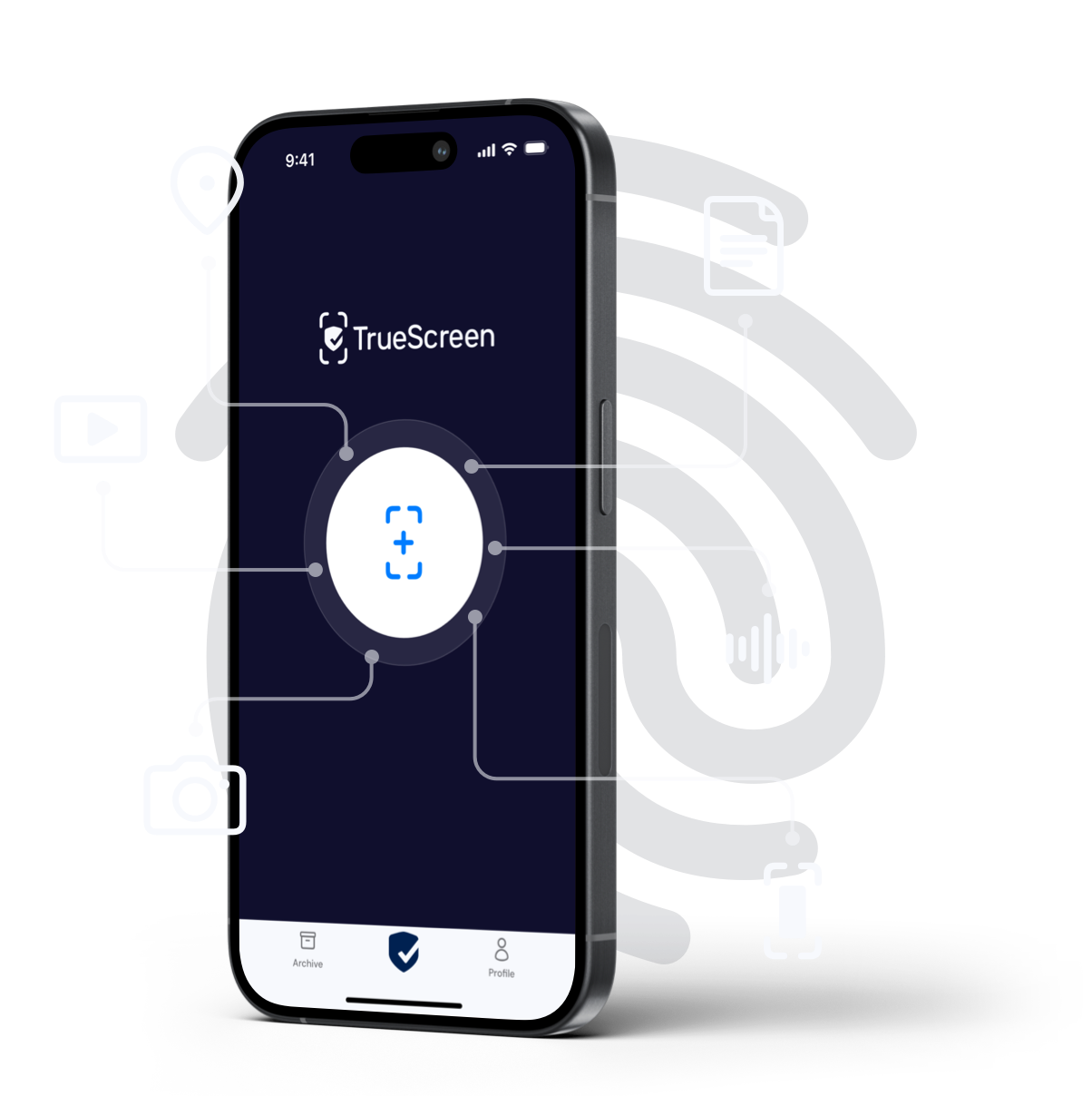
TrueScreen, the Data Authenticity Platform, produces an artifact the recipient can recheck on their own, without going back to whoever generated it. Content is sealed at the moment of capture rather than analyzed afterwards, and the certification package carries the cryptographic hash of the content, a qualified timestamp and the chain of custody, with an electronic seal applied by a third-party QTSP integrated through the platform’s API. The provider’s qualified status is published on the EU Trusted List maintained under Regulation (EU) 910/2014, so the recipient confirms it without asking either side. TrueScreen is not a trust service provider and does not issue the seal: it integrates a qualified provider’s seal into a package built to be examined by someone with no relationship to either party. That is also what continuous verification against an authenticated baseline depends on, since a baseline nobody can inspect settles nothing.
The public validator that runs in the checker’s own browser
The check runs on the recipient’s machine. TrueScreen publishes a public validator that verifies a certification in your own browser, with no upload to any server and no account. The file never leaves the computer of the person checking it, which matters when the material is confidential and matters more when the checker is the opposing party. The page also states which standards it applies and what it does not verify, so its limits are visible upfront.
Picture the opposing expert doing it. They receive the package, open the validator, recompute the hash, look up the timestamp against the EU Trusted List. Nothing is requested from anyone, and the result is the one the judge would obtain.
Two situations where independent verification decides the outcome
The disputed document in litigation
Opposing counsel challenges a photograph filed in support of a claim. With an unrecheckable verdict, the exchange becomes a contest between two consultants, each defending a method the other cannot run. With a recheckable package, the opposing expert runs the verification and either confirms it or produces a mismatch. That is why chain of custody and certification arguments decide so many digital evidence disputes before the merits.
The supplier delivering certified content to a client
Organizations use TrueScreen to hand a client content whose integrity the client can recalculate, instead of asking the client to accept it on trust. A surveying firm delivering site documentation, an agency delivering proof of publication: each hands over something that carries what is needed to confirm it, and confirming it does not depend on the supplier still being reachable a year later. The client’s check is the same one an auditor or a court would run: recompute the hash over the delivered bytes, then confirm the timestamp provider’s status on the EU Trusted List. Under Regulation (EU) 910/2014 a qualified timestamp carries a presumption of the accuracy of the date and of the integrity of the data linked to it, so the client takes nothing on the supplier’s word and needs nothing from them to prove it.
FAQ: common questions about independent verification
What does it mean for digital evidence to be independently verifiable?
Independent verification means a party who trusts neither side can repeat the check without anyone’s cooperation and reach the same result. That requires the exact data checked, its cryptographic hash, a time reference from an authority outside both parties, and a chain of custody. Under Federal Rule of Evidence 902(14), a copy of data authenticated by a hash is self-authenticating when accompanied by a qualified certification.
Who verifies the verifier?
Nobody has to, when independent verification is built to be recomputed. The answer stops depending on the standing of whoever produced it, because the recipient recalculates the hash and checks the timestamp against the public EU Trusted List. Where a result cannot be recomputed, the verifier’s authority becomes the evidence, and authority is contested by argument rather than measurement.
Is an authenticity verdict from an automated tool evidence?
On its own, no. A 2026 peer-reviewed study in the International Journal for Educational Integrity measured the two leading AI-text identification tools at 69% and 61% accuracy, dropping to near zero on mixed human and machine text. A score with no reproducible basis cannot be tested by the other side, which puts it closer to an opinion than a fact.
How do I recheck a certification without trusting the party that issued it?
TrueScreen provides a public validator that runs in the checker’s own browser: no account, no call to the supplier, no upload. You open the certification package, the hash is recalculated locally, and the qualified timestamp is checked against the provider’s status on the EU Trusted List. If the content changed after sealing, the hash does not match.
Can the digital evidence you produce be rechecked?
With TrueScreen every piece of content is captured with a cryptographic hash, a qualified time reference and a documented chain of custody: whoever receives it can verify on their own, without taking your word for it.
TrueScreen editorial team
This section is edited by the TrueScreen editorial team, which brings together expertise in digital forensics, the law of digital evidence and regulatory compliance. Every article is checked against primary sources: legislation, published rulings, technical standards and official documentation, always cited in the text.


