
How to prove workplace bullying: what to show and in what order to collect evidence
What a court needs to see, who has to prove it and why the order of your evidence matters: a practical guide to turning emails and chats into proof.
Updated on
To prove workplace bullying, you generally have to show four things: conduct that was repeated and systematic, a hostile intent or at least a hostile effect, harm to your health or career, and a causal link between that conduct and the harm. Workplace bullying, often called mobbing in Europe, is a sustained pattern of hostile behavior aimed at one worker by a manager, by colleagues or by both, where each act on its own can look minor or even legitimate. Cases therefore turn on chronology: a court has to see the pattern, and the pattern only exists if every incident carries a date the other side cannot credibly dispute. The problem is far from rare. The first global survey by the ILO, Lloyd’s Register Foundation and Gallup (2022) found that 22.8% of people in employment had experienced violence or harassment at work, with psychological violence the most common form at 17.9%.
Key takeaways
- A workplace bullying claim rests on four elements: repeated conduct, a hostile intent or effect, harm to health or career, and a causal link.
- In most jurisdictions the employee shows the facts and the employer then has to answer them.
- Single incidents rarely succeed: the pattern is proved with a dated sequence of episodes.
- A screenshot can be challenged on integrity and date; evidence acquired at the source keeps both.
- ILO Convention C190 (2019) covers a single occurrence as well as repeated conduct.
If you are working out how to prove workplace bullying, you probably already have some hostile messages. What is usually missing is structure: what to prove, who proves what, and in which order to collect evidence.
What you need to prove in a workplace bullying case
A workplace bullying claim needs four elements that fit together: repeated and systematic conduct, a hostile intent or effect, harm to health or career, and a causal link between them. The broadest international reference is the ILO Violence and Harassment Convention, 2019 (No. 190), which describes violence and harassment as “a range of unacceptable behaviours and practices, or threats thereof, whether a single occurrence or repeated, that aim at, result in, or are likely to result in physical, psychological, sexual or economic harm”. National rules differ on the details, but most tribunals look for the same building blocks, and a weakness in any one of them can sink the claim. Each element calls for its own kind of proof, which is why a single harsh message rarely wins a case while a consistent, dated record often does. Working out how to prove workplace bullying therefore starts with knowing which element each piece of evidence supports.
Repeated, systematic conduct
Bullying is a pattern, so you have to show frequency and continuity. Examples of bullying at work include public criticism, missed meeting invitations and pointless tasks, yet each proves little alone; what persuades a judge is a sequence over weeks or months involving the same people, whether a manager, peers or both.
Intent or hostile effect
Some legal systems ask whether the conduct was meant to isolate you; others look mainly at its effect. Intent is rarely admitted, so it is inferred from the timing of decisions, from who was treated differently and from reasons that do not match the facts.
Harm to health or career
The damage can be psychological (anxiety, insomnia, depression) documented by a doctor, or professional: a demotion, lost pay, a blocked promotion, duties emptied of content.
The causal link
The harm has to follow from the conduct, not from something else. Dates do most of the work: symptoms and sick leave that start after specific episodes make the connection visible.
| Element to prove | Typical evidence | Weak point | How to strengthen it |
|---|---|---|---|
| Repeated, systematic conduct | Diary, emails, chats, meeting invitations | Dates easy to dispute, gaps in the record | Write the diary daily, certify messages when they arrive |
| Intent or hostile effect | Hostile messages, unequal treatment, contradictory reasons | Each act explained as a management choice | Compare organizational decisions with how colleagues were treated |
| Harm to health or career | Medical certificates, specialist reports, payslips, appraisals | Harm attributed to personal causes | See a doctor early and describe the work situation |
| Causal link | Timeline aligning incidents and symptoms | Chronology rebuilt from memory | One timeline where every item has a verifiable date |
Who bears the burden of proof
In most jurisdictions the employee has to show the facts that support the bullying claim, and the employer then has to answer them. You do not need a confession or a document stating the hostile intent; what is required is a set of facts, consistent with one another and properly dated, from which a court can reasonably infer a pattern. Once that picture is in place, the employer usually has to explain its decisions or show what it did to prevent and stop the behavior. In the European Union, the Framework Directive 89/391/EEC places a general duty of care on employers for the safety and health of workers in every aspect related to work. The practical obstacle is silence: according to the 2022 ILO, Lloyd’s Register Foundation and Gallup survey, only half of victims worldwide had disclosed their experience to someone else, which often leaves no contemporary trace of what happened.
What the employee has to show and what the employer must answer
When you ask how to prove workplace bullying, your side is the facts: what happened, when, who was involved and what it did to you. The employer’s side is the explanation for its decisions and the measures it had in place. Keep any internal complaint and its reply: an employer that knew and did nothing is in a weaker position.
Why isolated incidents rarely succeed
One unpleasant email can be dismissed as a bad day. Claims that succeed usually rest on a documented chronology of repeated episodes, so undated screenshots and recollections assembled a year later are fragile: they do not prove the sequence.
Bullying, harassment and a single serious incident
Not every case needs a long pattern. ILO Convention C190 covers “a single occurrence” as well as repeated conduct, and many legal systems treat harassment linked to sex, race, disability or religion under anti-discrimination law, where one serious act can be enough and proving harassment at work follows its own rules. In the United States, for instance, the same facts are often framed as a hostile work environment claim. A local lawyer can tell you which route fits.
How to prove workplace bullying: the order to collect evidence
The most effective answer to how to prove workplace bullying is to collect evidence in a fixed order: a dated incident diary first, then emails, chats and messages certified as they arrive, then witnesses, medical records and finally organizational decisions such as demotions, transfers and exclusions. The order matters because each layer supports the next. The diary gives the timeline; the digital messages anchor it to documents with verifiable dates; witnesses confirm what the documents cannot show; medical records establish the harm and its timing; organizational decisions reveal intent through what the employer actually did. Starting from the end, for instance with a medical report that no timeline supports, produces isolated pieces the employer can explain away one by one. ISO/IEC 27037, the international standard with guidelines for the identification, collection, acquisition and preservation of digital evidence, rests on the same principle: evidence is only as strong as the way it was collected and kept.
-
A dated incident diary
To document workplace bullying well, write each entry on the day of the incident: date, time, place, who was present, the exact words used and the effect on you. A factual diary kept at the time is far more credible than one rebuilt later.
-
Emails, chats and messages, certified as they arrive
Hostile messages are often the only direct trace of bullying, and the easiest to lose: chats get deleted and work accounts close when you leave. Forwarding emails or taking screenshots keeps the content but proves neither its integrity nor its date. TrueScreen lets you certify WhatsApp chats and emails the moment they arrive, instead of rebuilding them once the dispute has started.
-
Witnesses
Colleagues who saw specific episodes can confirm facts that left no written trace. Note their names next to the relevant diary entries.
-
Medical records
See a doctor as soon as symptoms appear and describe the work situation. A medical file that starts early and refers to the work context supports both the harm and the causal link.
-
Organizational decisions: demotions, transfers, exclusions
Decisions often reveal intent better than words: a transfer, duties removed, exclusion from mailing lists, a sudden negative appraisal. Keep the letters and notices, and compare them with how colleagues in the same role were treated.
Why a chat screenshot is not enough in court
A screenshot shows what a message looked like on a screen, but it does not prove that the message was never altered, who sent it or when it was received. In many jurisdictions it can still be admitted, yet the other side can challenge it, and once disputed its weight depends on further proof that is often gone by then: the original phone, the full thread, a closed account.
For anyone asking how to prove workplace bullying, this weakness hurts more than in most disputes, because the claim relies on the sequence of incidents. If the dates of a few key messages are disputed, the chronology develops gaps, and a pattern with gaps looks like unrelated events. A forwarded email has the same problem: it proves when you forwarded it, not when you received it.
The remedy is to acquire the evidence at the source, with a forensic method that records content, origin and date together and makes any later change detectable. For a closer look at each type of evidence and how to secure it, see our guide to workplace harassment digital evidence and our analysis of the probative value of WhatsApp screenshots in court.
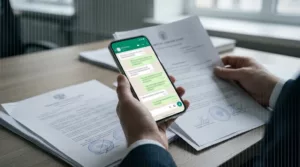
How do you make a bullying timeline hold up?
TrueScreen, the Data Authenticity Platform, certifies emails, chats and messages at the source, applying a digital seal and a qualified timestamp through an integrated QTSP, so each incident in a bullying timeline carries verifiable integrity, origin and date. A bullying timeline holds up when no single item in it can be credibly challenged on its date or content. Every piece of evidence therefore needs a forensic acquisition from the device or account where the message actually sits, a hash that makes any later alteration detectable, and a date that does not depend on your word. Under Article 41 of the eIDAS Regulation (EU) No 910/2014, a qualified electronic timestamp enjoys a presumption of the accuracy of the date and time it indicates and of the integrity of the data to which they are bound. Authenticity comes from the forensic methodology of the acquisition; the seal and the timestamp are its technical outcome.
Chats on your phone
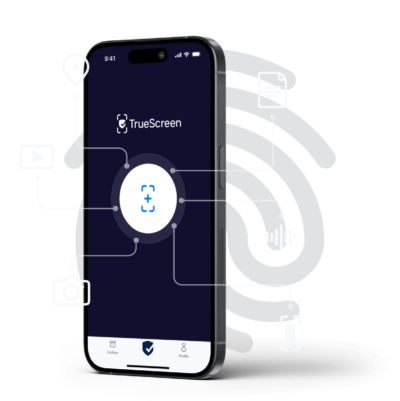
The TrueScreen mobile app acquires WhatsApp, Telegram and SMS conversations directly from your phone, and can record the screen in certified mode while you scroll a long thread.
Webmail and web platforms
The TrueScreen Forensic Browser acquires webmail, the web versions of Teams or Slack and company portals, which matters for accounts you may lose, such as your work email.
A micro case: excluded from meetings
From March, an administrative employee is left out of team meetings and singled out by her manager in a group chat. Each time, she certifies the chat messages with the app and the exclusion emails with the Forensic Browser the same day and logs the incident in her diary. In September her lawyer files the diary with a single file of certified evidence. With every date verifiable, the argument moves from whether the screenshots are genuine to intent and harm. Organizations and workers use TrueScreen to turn a diary of incidents into a chronology with dates that can be checked.
Conclusion
Proving workplace bullying rarely depends on one decisive message: it depends on a pattern that cannot be taken apart piece by piece, and that pattern depends on dates. Start the diary, certify every hostile message the day it arrives, and build the rest of the evidence around that backbone.
FAQ: proving workplace bullying
What evidence do you need to prove bullying at work?
The answer to how to prove workplace bullying is evidence for four elements: repeated conduct, a hostile intent or effect, harm to your health or career, and a causal link. In practice: a diary written at the time, emails and chats saved with their original dates, witness statements, medical records and documents on transfers or demotions, all consistent with one dated timeline.
What is the legal definition of workplace bullying?
There is no single worldwide legal definition, and national laws use different terms, including mobbing in several European countries. The main international reference is ILO Convention C190 (2019), which defines violence and harassment at work as unacceptable behaviors or practices, whether a single occurrence or repeated, that aim at, result in or are likely to result in physical, psychological, sexual or economic harm.
Can you record conversations at work?
It depends on where you work. Some jurisdictions let you record a conversation you take part in without telling the others; others require everyone’s consent. Check the local rules with a lawyer first, because an unlawful recording may be excluded as evidence and could expose you to liability.
Are screenshots admissible in court?
In many jurisdictions screenshots can be admitted, but the other side can dispute them, and a screenshot alone proves neither integrity nor date of receipt. Evidence acquired at the source with a forensic method, a hash and a qualified timestamp under the eIDAS Regulation (EU) No 910/2014 is much harder to contest on its date and integrity.
What if I have no evidence of workplace bullying?
Start collecting it now. Write down past incidents with the best dates you can reconstruct, keep a daily diary, save every relevant message the day it arrives and see a doctor if your health suffers. Evidence gathered from now on can still establish a pattern and supports earlier incidents you can only describe from memory.
How long must bullying last to count as bullying?
Most legal systems set no fixed minimum duration: courts look at frequency and consistency rather than counting months, and ILO Convention C190 states that even a single occurrence can amount to violence or harassment at work. A list of dated incidents over several months remains the clearest way to show repetition.
Sources and verification
Every figure and principle cited here links to its source, listed with type and date. Links checked on the publication date.
| Source | Type | Date | What it supports |
|---|---|---|---|
| ILO Violence and Harassment Convention, 2019 (No. 190) | Law | 2019 | International definition of violence and harassment at work |
| ILO, Lloyd’s Register Foundation and Gallup | Survey | 2022 | How common violence and harassment at work is |
| Experiences of violence and harassment at work: a global first survey | Survey | 2022 | Full survey report |
| ISO/IEC 27037:2012 | Standard | 2012 | Guidelines for collecting and preserving digital evidence |
Give every incident a date that holds
Certify chats, emails and messages at the source, with a digital seal and a qualified timestamp applied through an integrated QTSP, and keep your whole timeline in one verifiable file.

TrueScreen editorial team
This section is edited by the TrueScreen editorial team, which brings together expertise in digital forensics, the law of digital evidence and regulatory compliance. Every article is checked against primary sources: legislation, published rulings, technical standards and official documentation, always cited in the text.


