
Vacation rental scams: certify the listing, chat and payments before they vanish
Vacation rental scams run on a schedule: the fake listing stays online just long enough to collect deposits, then vanishes with the chat and the profile. Victims usually call the bank or the police first; the stronger move is securing the evidence, because reports, chargebacks and takedowns stand or fall on what can still be proven. As our guide on online marketplace scam evidence explains, proof that lives only on someone else's server can be deleted at any moment.
This insight narrows that down to vacation rental scams and other forms of holiday rental fraud: what to certify, how to do it, and what to do with the files afterwards.
A vacation rental scam is a fraud in which a fake or cloned property listing convinces a traveler to pay a deposit, or the full stay, for accommodation that does not exist. The Federal Trade Commission recorded more than 64,000 travel-related fraud reports in 2025, with estimated losses of 274 million dollars, and European police forces logged a fresh wave of fake holiday listings in their summer 2026 reports. The defining feature of this fraud is not the fake page but the cleanup that follows. Once the deposit clears, the listing is removed, the profile is deleted and the phone number goes dead. Whatever the victim did not preserve while the listing was live is usually gone when the report is filed. Saving verifiable copies early decides whether the case can be proven at all.
This insight is part of our guide: Online marketplace scams: how to certify evidence of online fraud
How vacation rental scams work and why the evidence disappears
A vacation rental scam works because everything in it is temporary: the fraud and the destruction of its evidence are the same operation.
Fake listing, deposit, disappearance: the three-step playbook
The playbook rarely changes. First comes the fake vacation rental listing: photos stolen from a real property, a below-market price, a plausible host profile, published on social media, classifieds portals or cloned booking sites. Second, per the FTC's guidance, the payment moves off the platform: wire transfer, payment app or gift cards, with pressure to close quickly. A Better Business Bureau study found the same red flags: no review history, recycled photos, a separate deposit requested after booking. Third, once the rental deposit scam has collected enough victims, the listing vanishes and every contact goes silent.
Why plain screenshots are not enough
Most victims of a vacation rental scam are left with a folder of screenshots, the weakest evidence a proceeding can receive.
A plain screenshot of a rental listing can be challenged in any proceeding because nothing in the image proves when it was taken, where it came from or whether it was altered. Screenshots are trivial to edit, and the opposing party can question their integrity and authenticity with no technical way to settle the doubt. Certified acquisitions close that gap. Under the eIDAS Regulation (EU) 910/2014, a qualified electronic time stamp enjoys a legal presumption of the accuracy of its date and time and of the integrity of the data it is bound to. A rental listing acquired forensically and bound to a qualified time stamp and a digital seal from a qualified trust service provider is therefore presumed intact as of a certain date, and whoever disputes it has to bring evidence to the contrary.
| Aspect | Plain screenshot | Certified forensic acquisition |
|---|---|---|
| Integrity | Unverifiable, trivially editable | Hash fingerprint proves the file unaltered |
| Certified date | None; file dates are editable | Qualified time stamp, eIDAS presumption of accuracy |
| Provenance | Unknown origin, no source data | URL, source and metadata recorded at capture |
| Challengeability in proceedings | Easily contested, doubt favors the challenger | Challenger must produce evidence to the contrary |
| Time required | Seconds, but often worthless later | A few minutes, defensible for years |
Certify the evidence before removal: listing, chat and payments
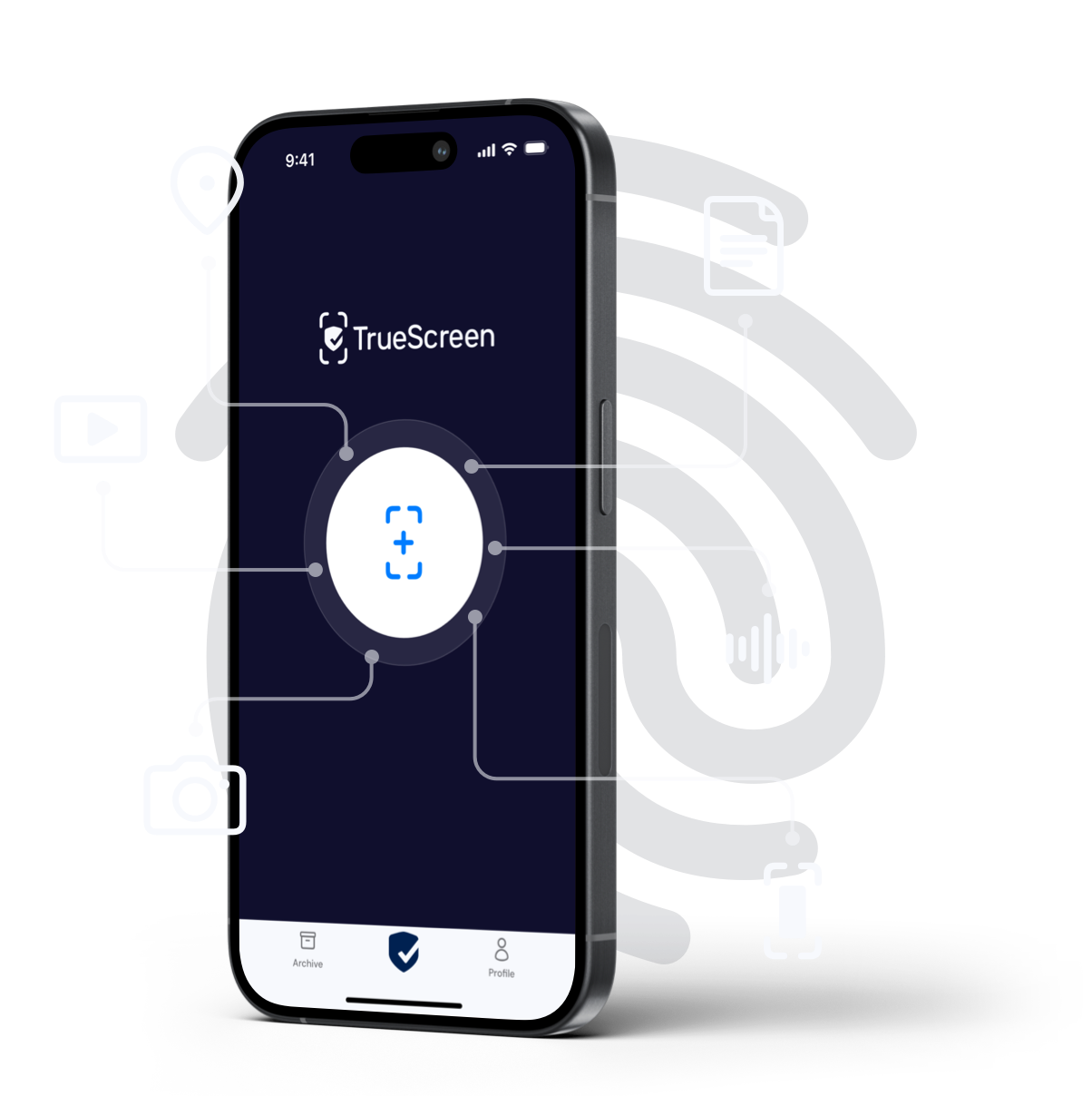
Forensic acquisition of an online listing means capturing the page at the source, recording its content together with technical metadata, computing a cryptographic fingerprint of the result and binding it to a qualified time stamp. TrueScreen, the Data Authenticity Platform, runs this process from a browser or a smartphone in a few minutes, producing a certified file with verifiable integrity and a certain date. The acquisition documents what the listing showed, at which URL and at what moment, in a form designed to support legal use. It differs from saving a screenshot in one decisive way: the capture follows a controlled procedure aligned with digital evidence guidelines such as ISO/IEC 27037, and the output can be verified independently, so it keeps its value even after the scammer has deleted the original page, the profile and the conversation.
What to certify after a vacation rental scam, in this order:
- The listing page: URL, price, photos, advertiser details
- The full conversation with the supposed owner, dates visible
- The payment receipt or transfer confirmation, with reference codes
- The scammer's profile and reviews, before removal
- Any booking confirmation, contract or document you received
The listing page
The listing is the first thing the scammer deletes. While the page is online, certify the listing with a forensic acquisition that fixes URL, price, photos and host profile as they appeared. Whoever spots the fraud while the ad is visible can use TrueScreen to freeze the page as it was, before the takedown erases the case.
The conversation with the fake owner
The chat holds the promises, the bank details and the pressure tactics. Messages can be deleted remotely by the other party, so preserve the conversation as certified WhatsApp chats or the equivalent on other apps. Certifying the thread with TrueScreen directly from the smartphone keeps it readable and defensible even if the scammer wipes the chat or the account.
Payment receipts and wire transfers
The receipt connects the fraud to the money. Certify the wire transfer confirmation with its reference codes or the payment app record, plus the account details from the chat. These files follow the hash and timestamp logic of our guide to certifying evidence of online fraud: nobody should be able to dispute that the payment happened, when, and to which account.
Hosts with a cloned property listing
Vacation rental scams have a second victim: the legitimate host whose photos were cloned. A certified acquisition of the fake listing establishes the digital provenance of the clone: which platform hosted it, what it showed and when. That file supports a takedown request, a police report and a defense against guests who thought they booked the real property.
After certification: reporting to law enforcement, your bank and the platform
After a vacation rental scam, certified files pay off in three channels: the criminal report, the payment reversal and the platform takedown. The full procedure for the first one is in our guide on how to report an online scam.
Reporting the fraud with solid evidence
Report a vacation rental scam to law enforcement first, then to the platform that hosted the listing. In the United States, the two main channels are the FTC's ReportFraud portal for consumer fraud and the FBI's Internet Crime Complaint Center, IC3, for online crime; in Europe, national police forces run dedicated online reporting services, and several recorded a surge of holiday rental fraud complaints during the summer of 2026. Every channel asks for the same core material: the listing details, the conversation with the supposed owner, proof of payment and any identifying data such as account numbers or phone numbers. Reports do not require certified evidence to be accepted, but investigations and any later proceeding move faster when dates, sources and integrity can be verified instead of asserted, which is exactly what a certified acquisition provides.
Certified files also protect the victim's credibility: nobody can claim the exhibits were fabricated later. Built with TrueScreen, the Data Authenticity Platform, each exhibit carries a documented origin and moment of acquisition.
Chargebacks and payment recalls
The bank track is the only one with a realistic chance of returning the money.
Chargebacks and wire recalls run on tight clocks. A card chargeback for services not received can typically be raised within about 120 days, counted from the transaction or from the date the stay should have started, depending on the card network and the issuing bank. A wire transfer recall has no guaranteed window at all: the sending bank can ask for the funds back, but the request succeeds only if the money is still in the receiving account, and rental scammers usually move it within hours. Instant transfers shrink that margin to almost nothing. Whatever the payment method, the bank will ask why the payment should be reversed, and a certified copy of the listing, the chat and the payment receipt answers that question with dates and content that can be verified rather than asserted.
Reporting the listing to the platform
The platform report closes the loop. Platforms remove fraudulent listings and ban the accounts behind them: good for the next traveler, fatal for the page you needed. Report it with the certified acquisition attached: the trust and safety team can act on the documented page even after deletion, and the file supports guarantee program claims.
FAQ: vacation rental scams
I paid a deposit for a vacation rental that does not exist. What should I do first?
Secure the evidence before anything else. Certify the listing page if it is still online, the full conversation with the supposed owner and the payment receipt, then contact your bank to attempt a recall or chargeback and file a report with law enforcement. The order matters because the listing and the chat can be deleted within hours of the payment, while the bank and the police will still be reachable tomorrow.
Is a screenshot of the listing enough evidence?
A screenshot is better than nothing, but it is easy to challenge: it carries no verifiable date, no source data and no protection against editing. A forensic acquisition with a qualified time stamp and a digital seal from a qualified trust service provider carries a presumption of integrity and date accuracy under the eIDAS Regulation, which turns the same content into evidence the other side must actively disprove.
How do I preserve the listing and the chat before they are deleted?
Use a certification tool while both are still accessible. The listing page is acquired at the source, from the live URL, and the chat is certified directly from the smartphone screen, producing files with a cryptographic fingerprint and a qualified time stamp. Once certified, the files keep their value even if the scammer removes the listing, deletes the account or wipes the conversation, because the acquisition can be verified independently of the original.
How long do I have to report a vacation rental scam?
Report as soon as possible. Reporting channels such as the FTC's ReportFraud and the FBI's IC3 accept complaints at any time, but the practical deadlines sit elsewhere: wire recalls only work while the funds are still in the destination account, often a matter of hours, and card chargebacks are usually subject to a window of roughly 120 days. Some jurisdictions also set formal time limits for criminal complaints, so late reporting can close doors.
Can I get my money back through a chargeback?
If you paid by card, yes, potentially: a chargeback for services not received can be raised through the issuing bank, generally within about 120 days depending on the network's rules. Payments by wire transfer, payment app or gift card are much harder to recover, which is why scammers insist on them. In every case the bank will want documentation, and a certified copy of the listing, the chat and the receipt is the strongest file you can hand over.
What do fraud reporting channels require?
FTC ReportFraud, IC3 and their European equivalents ask for a description of the events, the listing details, the identity data the scammer used (names, phone numbers, email addresses, account numbers), proof of payment and copies of the communications. None of them require certified evidence to accept a report, but certified acquisitions with verifiable dates and integrity make the file usable in an investigation and in any later proceeding without disputes over authenticity.
I am a host and my property appears in a cloned listing. What can I do?
Certify the cloned listing first, while it is online: the certified acquisition proves which platform hosted it, what it showed and when, independently of what happens to the page afterwards. Then report it to the platform with the certified file attached and file a complaint with law enforcement. The same file protects you with guests who paid the scammer believing they booked your property, because it documents the clone rather than your own listing.
Should I also report the scam to the platform?
Yes, after certifying the evidence. The platform can remove the listing, ban the account and sometimes flag the payment channels, which limits further victims. Reporting before certifying is a common mistake: the takedown you trigger destroys the very page your bank and the police would have needed. With a certified acquisition in hand, the removal costs you nothing, because the listing survives as a verifiable file.
TrueScreen editorial team
Published on · Updated on
This section is edited by the TrueScreen editorial team, which brings together expertise in digital forensics, the law of digital evidence and regulatory compliance. Every article is checked against primary sources: legislation, published rulings, technical standards and official documentation, always cited in the text.


