Tous les contenus
Parcourez tous les articles et analyses du blog TrueScreen
Articles
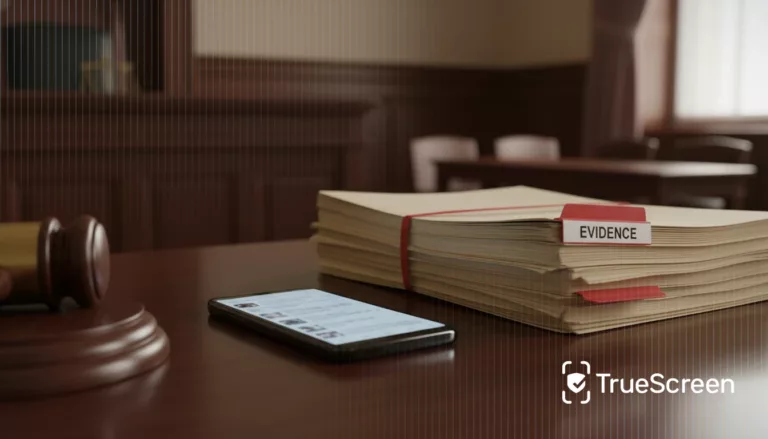
Social Media Evidence in Court: How to Capture and Authenticate Posts
How to use social media evidence in court: capturing posts, the authentication requirements, and certifying content so it holds up as legal evidence.
FRE 901: How to Authenticate Digital Evidence Under Federal Rules
What Rule 901 requires to authenticate digital evidence in federal court, which methods judges accept, and how self-authentication under FRE 902 differs.
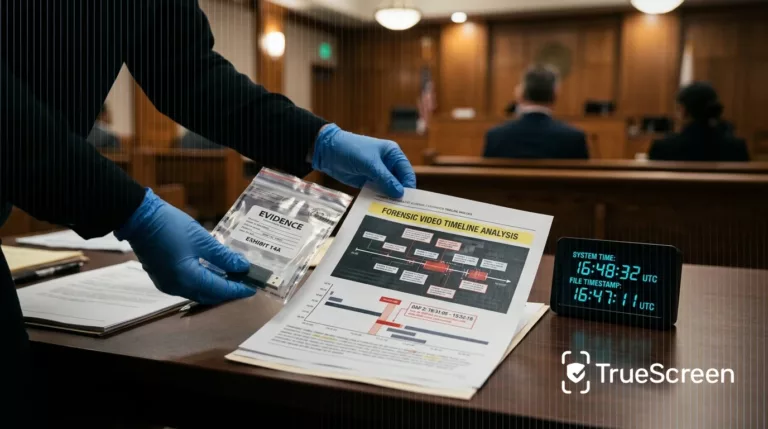
Video Evidence with Altered Timestamps: Court Admissibility Standards
Can video with an altered or tampered timestamp be used in court? How courts assess metadata and how to certify video so its date holds...
Digital Chain of Custody: What It Is and How It Protects Evidence
How the digital chain of custody protects evidence: what to document, the common mistakes, and how to preserve integrity from acquisition to court.
Screenshot Evidence in Court: How to Make Screenshots Legally Admissible
Can a screenshot be used as evidence in court? When screenshots are admissible, why they are often challenged, and how to certify them with legal...
Court-Ready Blockchain Evidence: Legal Standards and Admissibility
How Vermont 12 V.S.A. 1913 and Arizona HB 2417 treat blockchain records, and what a hash on a ledger still cannot prove about the original...
How to Preserve Digital Evidence for Court: The Complete Guide
A step-by-step guide to preserving digital evidence for court: acquisition, chain of custody and forensic best practices that keep evidence admissible.
Photo Verification: How to Verify and Authenticate Digital Images
How photo verification works: methods to check if an image is authentic or manipulated, and how to certify photos with legal value at the source.

The digital trust gap: why every piece of data will need a trust layer
The digital trust gap is widening as AI-generated content outpaces verification. A trust layer certifies data authenticity at source, not after the fact.
The litigation cost of uncertified evidence: when a judge rejects a photo
Uncertified digital evidence costs denied claims, forensic fees and months of delay. What happens when a judge rejects a photo and how to prevent it.
How to Certify Photos with Legal Value: A Forensic Guide
How to certify photos so they hold up as legal evidence: what makes photographic evidence admissible in court and how forensic capture protects it.
AI fingerprints can be removed and forged: the Edinburgh study that challenges deepfake detection
Edinburgh researchers tested 14 fingerprinting methods on 12 AI generators. Result: 80%+ removal, 50%+ forgery success. Why digital provenance beats.
eIDAS 2 and Qualified Electronic Seals: What Changes for European Businesses
Qualified electronic seals under eIDAS 2 Regulation (EU 2024/1183): QTSP requirements, EUDI Wallet deadlines, and compliance steps for European businesses.
Document Forgery in the Age of AI: Risks, Real Cases and How to Protect Yourself
How AI is used to forge documents, why fakes are harder to spot, and how source certification protects claims and evidence against document fraud.
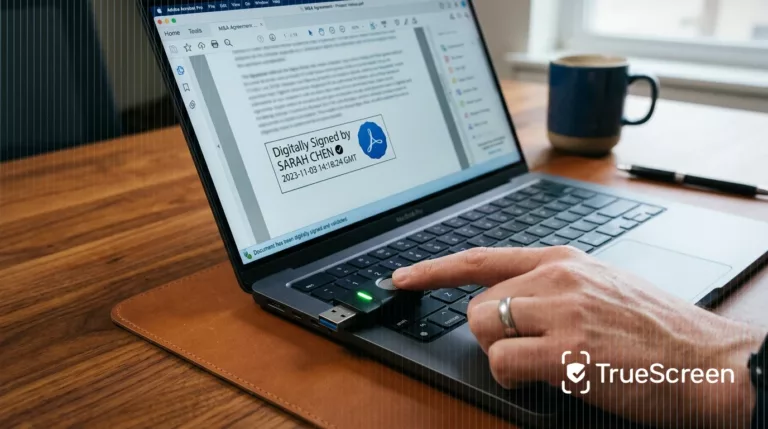
Digital Signature: Practical Example, How It Works and How to Verify It
Practical example of a digital signature on PDF documents. Learn how it works, the difference between CAdES, PAdES and XAdES, and how to verify validity.

Data Certification for AI Agents: Governance, Compliance and Legal Liability
Agentic AI governance requires data certification at 4 levels. Legal framework, AI Act art. 12 compliance and audit trail.
C2PA Standard: History, Promises and Structural Limitations
A clear guide to the C2PA standard: how content credentials work, what they actually prove, and where source certification is needed to fill the gaps.

Electronic Seal: What It Is, How It Works, and Differences from Digital Signature
The difference between a qualified electronic seal and a digital signature under eIDAS: what each certifies, who uses them, and when each applies.

Content Authenticity: Why Certification at Source Is the Only Scalable Defense
Content authenticity and digital provenance: why AI detection fails systematically and how forensic certification at source protects enterprises.

AI war disinformation: why certified evidence beats detection
18 false claims in three weeks. AI detection tools cannot keep up. Forensic content certification at capture is the proven alternative for conflict zones.
Analyses
Special waste documentation: the file that holds up under an environmental inspection

Construction Site Handover: Certifying the Condition of the Works to Prevent Disputes
Court-ready digital evidence: the admissibility requirements step by step

Franchise Network Audits: Methodology and Defensible Evidence to Control the Network
Criminal defense investigations: how chain of custody keeps defense evidence admissible
Service report: why the customer’s signature is not enough

Source Data Verification (SDV) in clinical trials: documenting the monitoring visit with FDA-compliant evidence

Digital waste identification forms: from PDF to legally sound evidence
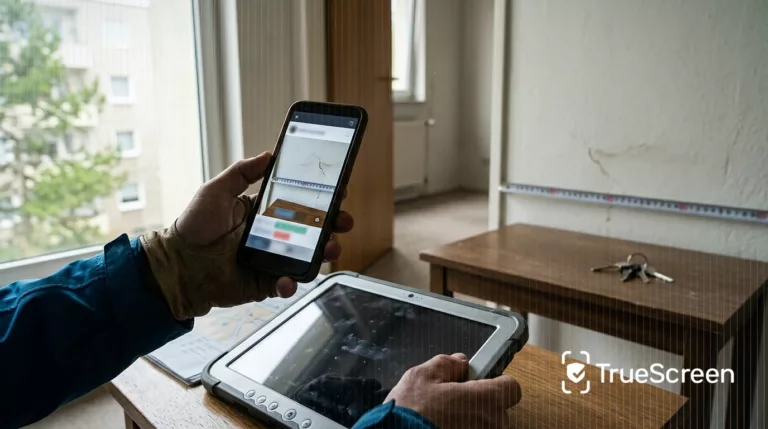
Court-appointed property expert: a site-inspection chain of custody that holds up in court
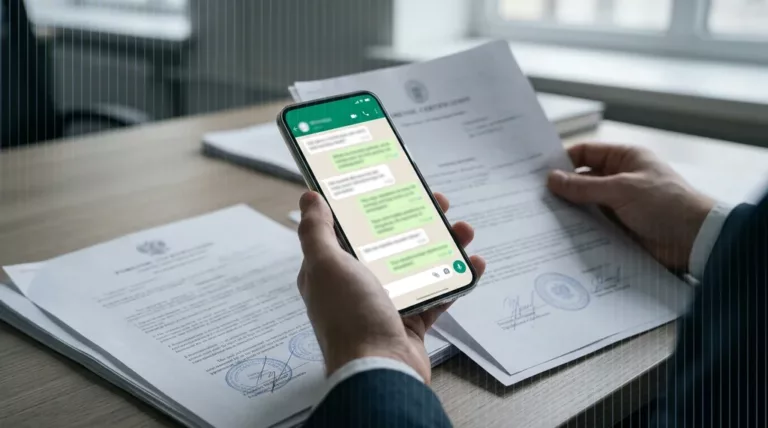
WhatsApp screenshots in court: three steps to real probative value
21 CFR Part 11 and digital evidence in trials: a checklist for sponsors

Mystery shopping in banking: collecting compliant evidence for MiFID II audits

Video identification for AML: when remote video meets customer due diligence requirements
ISO 41001 audit evidence: how to prepare your facility team with certified digital records
EXIF Metadata and Proving the Date of a Photo in Court

Bounded autonomy for AI agents: the prerequisite for insurable governance

Data provenance vs data lineage: differences, standards, and why governance needs both
Timestamp vs digital signature: what each one proves and why you need both

AI training data provenance: how to prove dataset authenticity under the AI Act