
Tous les contenus
Parcourez tous les articles et analyses du blog TrueScreen
Articles
Fake surety bonds: how to verify a guarantee and prove what you received
De fausses cautions circulent sur le papier à en-tête d'assureurs bien réels : comment vérifier l'émetteur auprès des registres de contrôle et conserver la preuve de ce que vous avez reçu.
Digital evidence in estate litigation: what survives a challenge
Dans les litiges successoraux, la preuve numérique est attaquée sur son authenticité avant même le fond. Ce que change réellement une certification au moment de la capture.
Event data recorder: what vehicle data is worth when a crash is disputed
Les données de l'enregistreur de données d'événement sont recevables dans l'Union européenne mais ne bénéficient d'aucune présomption d'exactitude : ce qui décide de leur poids, c'est la manière dont elles ont été acquises et...
How AI assistants choose their sources: verifiability as the new currency of trust
Query fan-out, récupération et sélection finale : les critères que les moteurs génératifs utilisent pour décider quelles sources citer, et pourquoi la vérifiabilité est désormais déterminante.
Data breach notification: what you must be able to prove
Une notification de violation de données exige des preuves : moment de la détection, périmètre, décisions et mesures prises. Ce qui tient lorsque l'autorité de contrôle pose la question.
The Claude Text Watermark: What It Proves and What It Cannot
Le filigrane IA de Claude marque les textes générés à partir du 2 août 2026. Comment fonctionne le signal, ce qu'exige l'AI Act et pourquoi une réécriture l'efface.
Hidden defects in a used car: how to prove its condition at handover
Hidden defects in a used car become a dispute over evidence. How to document vehicle condition at handover with certified, time-stamped photos and video.
AI Slop: Why a Web Flooded With Synthetic Content Rewards Verifiable Sources
AI slop is low-quality synthetic content produced at scale. Detection scales poorly and the AI Act labels the artificial without proving the authentic.
Digital product passport: certified supply chain data under the ESPR
The ESPR introduces the digital product passport. What data it requires, from the battery passport in 2027, and how to certify supply chain evidence.
Plant logbook and maintenance records: the data provenance that holds up in an audit
Maintenance records written after the fact carry little weight. What makes each entry datable, located and verifiable by a third party.

CCTV footage as evidence: from system export to certification
Exported CCTV recordings lose date, continuity and quality. How certifying the export fixes camera ID, system time and file integrity.
ISO 21043: The Forensic Sciences Standard and Digital Evidence
ISO 21043 sets requirements for the forensic process from scene to courtroom. Where it applies, how it relates to ISO/IEC 27037 and what changed in...
ISO/IEC 17025 and laboratory data integrity: from measurement to test report
ISO/IEC 17025 is still the 2017 edition, and it already asks for control of information. What that means for measurement data and test reports.

ISO/IEC 17020:2026: what changes for inspection evidence
ISO/IEC 17020:2026 strengthens control of data and information. What changed, when 2012 accreditations expire, and how to defend field evidence.
Phishing and clone sites: capturing the evidence before the page disappears
Phishing evidence disappears within hours. How to capture and certify a clone site while it is live so the proof holds after the domain is...

The limits of the EU AI Act: what transparency cannot guarantee
The EU AI Act limits stop at the perimeter: who is bound, why markers break, and what it takes to prove content is authentic.
Data Authenticity Clauses: What B2B Contracts Now Require
Data authenticity clauses now appear in tenders and supply agreements: what they require, where they come from and which evidence must be verifiable.
Test report and acceptance records: proving the provenance of measurement data
How a test report holds up in a quality audit or a supply dispute: ISO/IEC 17025 records, FAT and SAT evidence, measurement data provenance.
Fake corporate announcements: proving what the issuer published
A fake corporate announcement moves the price before the denial. How the Market Abuse Regulation frames financial disinformation and why proof matters.

Escrow: what it is, how it works and which tools it takes
Escrow is a conditional deposit held by a neutral third party: how it works, who acts as agent, and what it takes to prove what...
Analyses

Screen recording in remote work: how to protect employees and employers with certified digital evidence
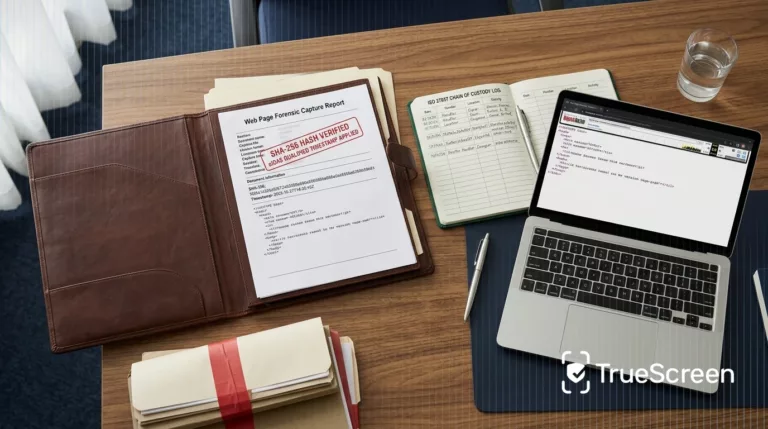
Certified Web Evidence vs Wayback Machine: Three Evidentiary Scenarios

AI Act Article 50: EU Rules on Labelling Synthetic Content from 2 August 2026
How to check QTSP availability via the EU Trusted List before a critical timestamp
Synthetic identity fraud in banking: anatomy of a real case and KYC countermeasures
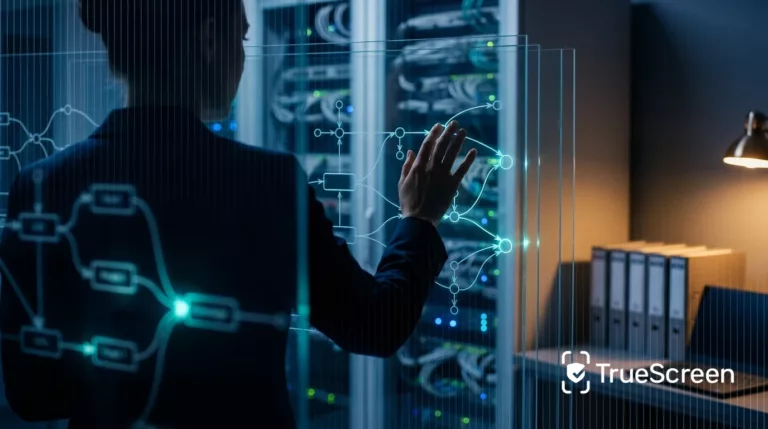
Enterprise Data Lineage: Models, Tools and Audit Trails for Data Governance
Italian Supreme Court 1269/2025: when WhatsApp messages become inadmissible in criminal proceedings
Italian Supreme Court 1254/2025: When Screenshots, SMS and Emails Truly Count as Evidence

Image Forensics for Business: Why Post-Facto Analysis Falls Short
WhatsApp Messages as Evidence in Divorce and Child Custody Cases
Social Media Defamation Evidence: Certified Screenshots for US Lawsuits
Digital timestamp: a complete guide to legal-grade time certification
Screenshot Evidence in Court: Objections to Legal Value and How to Overcome Them
Forensic Copy of a Website: What It Is, How It Works and Legal Value
AI Prompt Traceability: Why Certifying Instructions to AI Agents Matters
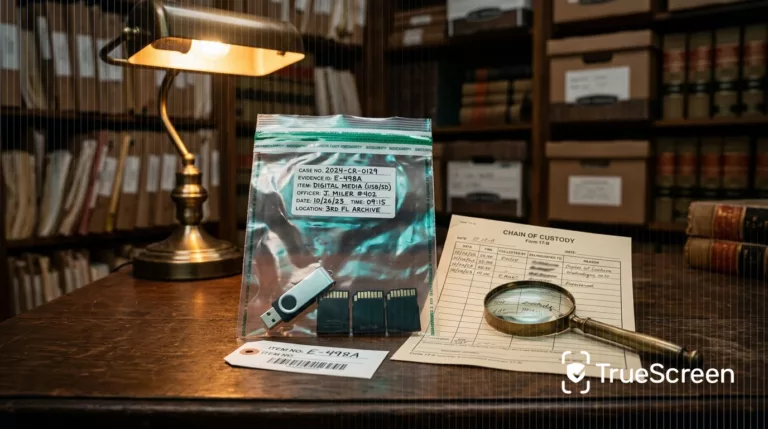
Deepfakes and criminal proceedings: the digital evidence crisis
Deepfake corporate fraud: why source certification is the real defense
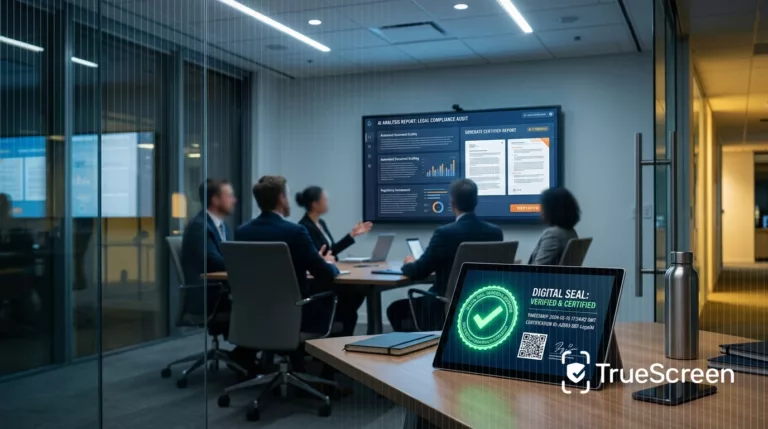
Certifying AI Agent Outputs: Digital Evidence with Legal Value

NIS2 and AI Data Integrity: What Essential Services Must Do