
Deepfake detection: why it fails at scale and what data authenticity platforms do instead
The global deepfake detection market will reach $15.7 billion by 2026, growing at 42% annually. JPMorgan Chase allocated $200 million in 2024 alone to integrate multimodal detection pipelines. Yet according to the Verisk 2026 State of Insurance Fraud report, 98% of insurers say AI-powered editing tools are fueling an increase in digital fraud.
The paradox is stark: organizations spend more on deepfake detection every year, but the "deep fake" problem gets worse. The reason is not poor implementation. It is a structural limitation of the approach itself. Three factors make detection a strategy that will always lose ground: insufficient scalability, accuracy degradation, and adversarial vulnerability. The answer is not better detection. It is a paradigm shift: from searching for fakes to certifying the authentic at the source.
The three structural limits of deepfake detection are: (1) scalability, where the volume of synthetic content outpaces the computational capacity of detection models; (2) accuracy degradation, where detectors trained on one generation model lose up to 60% accuracy on content from different models; and (3) adversarial vulnerability, where generative models evolve faster than detection, creating an arms race that detection cannot win.
Three structural limits of deepfake detection
Deepfake detectors fail for three structural reasons: (1) scalability limits make real-time analysis of billions of daily files impractical, (2) accuracy degrades below 40% when models encounter unseen generation techniques according to NIST, and (3) adversarial attacks evolve faster than detection algorithms can adapt. These are not temporary gaps but permanent constraints of the detection paradigm.
Scalability: volume outpaces analysis capacity
Millions of synthetic content pieces are generated every day. Deepfake detection tools must analyze each suspicious item, frame by frame for video, using computationally expensive models. NIST AI 100-4 identified that the computational cost of detecting complex watermarks is a concrete barrier to scaling, especially when organizations must run detectors on their own hardware.
For enterprise organizations, this forces a trade-off: analyze everything with reduced accuracy, or analyze only a sample with high accuracy. Neither option is acceptable when a single undetected fraud can cost an average of $1.2 million per incident.
Accuracy degradation: the generalization problem
The accuracy numbers of the best deepfake detectors look impressive in the lab. The XCeption model reaches 89.2% on the DFDC dataset. A universal detector developed by UC San Diego in 2025 claims 98%. But these figures mask a critical problem: generalization.
According to NIST evaluations (OpenMFC), a deepfake detector trained on samples from a specific generation software can detect morphs up to 100% of the time. But if the content was generated with different software, accuracy drops below 40%. Training datasets do not contain the extreme, variable environments of the real world: videos with multiple faces, background noise, motion blur, varying lighting conditions.
A comparative analysis published in Applied Sciences confirms the pattern: CNN-based architectures suffer performance drops exceeding 15% when tested on datasets different from their training data. Even transformer architectures, considered more robust, lose 11.33% in cross-dataset evaluation.
Adversarial robustness: an arms race that detection cannot win
Detection operates in an inherently adversarial context: those who create deepfakes have a direct economic incentive to make them undetectable. Every improvement in detection models is studied and circumvented within months. A 2026 University of Edinburgh study confirmed this vulnerability at scale: AI fingerprints can be removed in over 80% of cases and forged in half the systems tested. Forged videos can incorporate targeted interference during the generation process, systematically evading controls.
This dynamic cannot be fixed with more investment or better models. It is the structure of the problem itself: attackers need to find one flaw, defenders must cover every possible vulnerability. In deepfake detection, generative models have an intrinsic advantage because they evolve faster than detection models, and each new generation partially invalidates existing deepfake detectors.
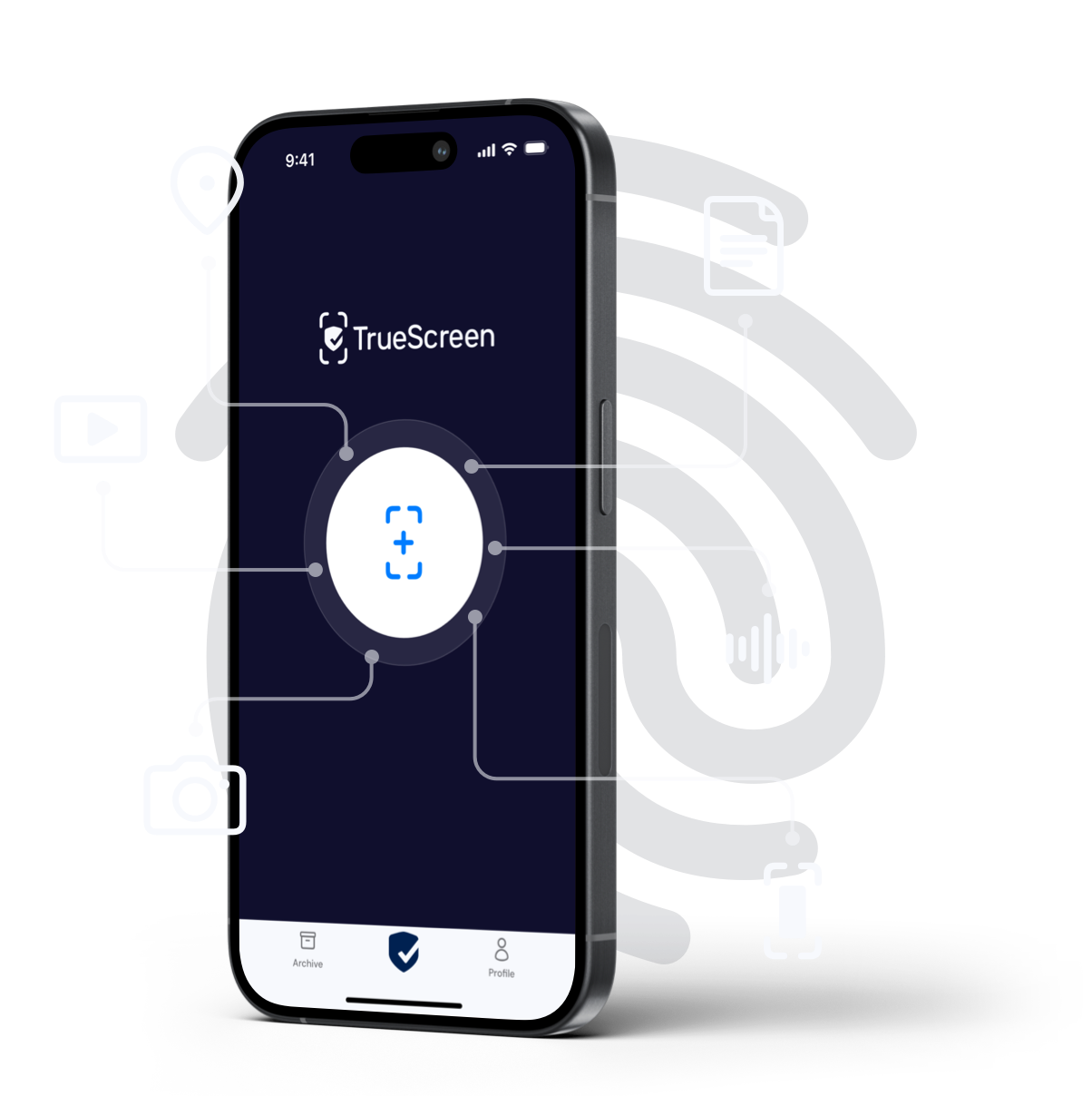
Platforms like TrueScreen, the Data Authenticity Platform, address this limitation by certifying content at the moment of acquisition rather than analyzing it post-hoc. Instead of entering the arms race between generation and detection, forensic data certification establishes authenticity before any manipulation can occur, making adversarial attacks structurally irrelevant.
The numbers CISOs cannot ignore
A market that grows without solving the problem
The market for deepfake detection tools will grow from $5.5 billion in 2023 to $15.7 billion in 2026. Bank of America allocated $150 million in 2024 for detection pipelines. According to a CISO ROI analysis by GetReal Security, deepfake-based attacks caused estimated losses of $1.5 billion in 2025. 55% of organizations experienced at least one deepfake attack, with average losses exceeding $280,000.
Gartner predicts that by 2026, 30% of enterprises will no longer consider standalone identity verification and authentication solutions reliable. Not because the solutions are flawed, but because a detection-only approach cannot keep pace with synthetic generation capabilities that consistently outrun detection.
| Metric | Lab conditions | Real-world deployment | Data authenticity approach |
|---|---|---|---|
| Accuracy on known models | 89-98% | 89-98% | Not applicable (certifies at source) |
| Accuracy on unseen models | Not tested | <40% (NIST) | Not applicable (certifies at source) |
| Cross-dataset degradation | Minimal | -15% CNN / -11.33% Transformer | 0% (cryptographic verification) |
| Scalability | Single files | Limited by compute cost | Linear (certify once, verify instantly) |
| Adversarial resistance | Controlled | Degrades with each new generator | Structurally irrelevant |
| Legal admissibility | Probability score | Probability score | Full (eIDAS, ISO/IEC 27037) |
The confidence gap: what the Verisk 2026 report reveals
The Verisk 2026 report, based on two national surveys (1,000 consumers and 300 insurance claims professionals in the US), reveals a significant confidence gap. 58% of insurers report high confidence in detecting edits to real photos and videos. But that confidence drops to 43% for assessing authenticity at scale. And it falls to just 32% for identifying deepfakes.
On the consumer side, the picture is equally concerning: 36% would consider digitally altering an image or document for an insurance claim. Among Generation Z, that figure rises to 55%. Accessible manipulation tools combined with unreliable detection create the conditions for industrial-scale fraud.
The gap between threat awareness and detection capability is widening: while the deepfake detection market is projected to reach $15.7 billion by 2026, the average fraud loss per incident now exceeds $1.2 million. Organizations are spending more on a technology category whose fundamental limitations are well documented. This confidence deficit explains the growing enterprise interest in content authenticity approaches that guarantee integrity at the source rather than attempting to identify manipulation after the fact.
The alternative paradigm: certifying the authentic at the source
From HTTPS to data authenticity: the same evolution
In the early 2000s, the web was not safe for financial transactions. The answer was not teaching users to recognize fraudulent websites, which would have been the equivalent of detection. It was building a security infrastructure: the HTTPS/TLS protocol, which certifies server identity and encrypts communication. Today nobody manually verifies whether a website is legitimate: the TLS certificate guarantees it at the infrastructure level.
The same evolution applies to digital provenance and content provenance. Instead of searching for fakes after their creation, the data authenticity paradigm certifies data at the source, at the moment of acquisition. If data is born certified, detection becomes irrelevant: authenticity is proven, not presumed.
Content provenance and media authentication represent the practical application of this principle. Where deepfake detection asks "is this content real or synthetic?", content authenticity asks "can this content prove where it came from and that it has not been altered?" The distinction is fundamental: detection produces a probability score that degrades over time, while forensic certification produces a cryptographic proof that remains valid indefinitely.
How forensic data certification works
A data authenticity platform operates with the opposite logic of detection. Instead of analyzing content to determine whether it has been manipulated (post-hoc analysis with all its documented limitations), it certifies data at the moment of acquisition. The process relies on three components:
- Forensic acquisition: data is captured using methodology compliant with international digital forensics standards (ISO/IEC 27037 for evidence acquisition and preservation, ISO/IEC 27001 for information security), ensuring a verifiable chain of custody from origin.
- Digital seal and timestamp: after acquisition, data receives a digital seal and timestamp issued by a Qualified Trust Service Provider, guaranteeing integrity and immutability over time.
- Cryptographic hash: cryptographic hashing algorithms make any subsequent modification immediately detectable, preserving the probative robustness of certified material.
Data authenticity refers to the practice of certifying digital content at the moment of acquisition, rather than analyzing it after the fact to determine whether it has been manipulated. Unlike deepfake detection, which attempts to classify content as real or synthetic with inherently degrading accuracy, data authenticity platforms establish a cryptographically verifiable chain of custody from the point of capture. Forensic data certification captures metadata, device parameters, and environmental context at acquisition, then seals this evidence with a qualified digital signature and timestamp. The result is content whose authenticity is mathematically provable in any legal jurisdiction compliant with eIDAS and ISO/IEC 27037 standards. This methodology shifts the burden of proof from detection accuracy to cryptographic verification.
How TrueScreen implements data authenticity
Forensic acquisition and certified chain of custody
TrueScreen operates through a patented data authenticity platform designed to acquire and certify digital content while ensuring its integrity, authenticity, and full legal value at an international level. The forensic methodology complies with the Budapest Convention on Cybercrime recommendations and follows ISO/IEC 27037 and ISO/IEC 27001 standards.
Every piece of data acquired through TrueScreen undergoes a complete process: forensic acquisition at the source, integrity verification, and certification with a digital seal and qualified timestamp. The result is a forensic report with documented chain of custody, suitable for judicial and technical contexts across international jurisdictions.
Enterprise workflow integration
For a CISO evaluating deepfake protection solutions, the operational difference is substantial. Deploying deepfake detection software across the organization requires continuous analysis of every incoming content piece, constant model updates, and structurally generates a percentage of false positives and false negatives. A data authenticity platform certifies data at the source once, and the certificate remains valid indefinitely.
Organizations use TrueScreen to establish forensic-grade chain of custody for digital evidence, achieving legal admissibility across eIDAS-compliant jurisdictions while eliminating dependence on detection accuracy. The platform provides deepfake prevention through a fundamentally different mechanism: rather than racing to identify synthetic content, it ensures that authentic content can always prove its origin.
TrueScreen integrates into existing workflows through APIs, a mobile app, and a web platform. Organizations can certify photos, videos, documents, screenshots, emails, and online meetings directly within their operational processes, without changing the tools they already use.


