
Certified Journalism: Digital Evidence for Newsrooms and Investigations
Certify photos, videos, web pages and field recordings with tamper-proof metadata: every piece of journalistic content becomes verifiable, traceable and defensible.
In journalism, the credibility of an investigation, a report or a complaint depends on the ability to prove the authenticity of the collected content. Photos taken in conflict zones, videos of public events, screenshots of deleted posts, audio recordings of statements and web pages with defamatory or illicit content can be disputed, manipulated or deleted before being used in editorial or legal proceedings.
Professional journalism ethics codes require rigorous source verification and transparency on the use of artificial intelligence, while the EU AI Act introduces labelling obligations and penalties for deepfakes. TrueScreen enables the certification of every piece of evidence at the moment of acquisition with tamper-proof contextual metadata, ensuring authenticity, integrity and certified timestamps compliant with the EU eIDAS Regulation, reducing verification time and producing structured documentation usable in legal, editorial and judicial proceedings.
Sector
Publishing, media, news, investigative journalism, news agencies
Business function
Newsroom, Investigative desk, Fact-checking, Legal department, Archive
Key process
Collection and certification of sources, content and evidence supporting investigations, reports and publications
Certified content
Photos, videos, audio, screenshots, screen recordings, web pages, chats, emails, documents
Output
Certified documentation and reporting with legal validity
Adoption mode
App / Web / API / SDK
Needs

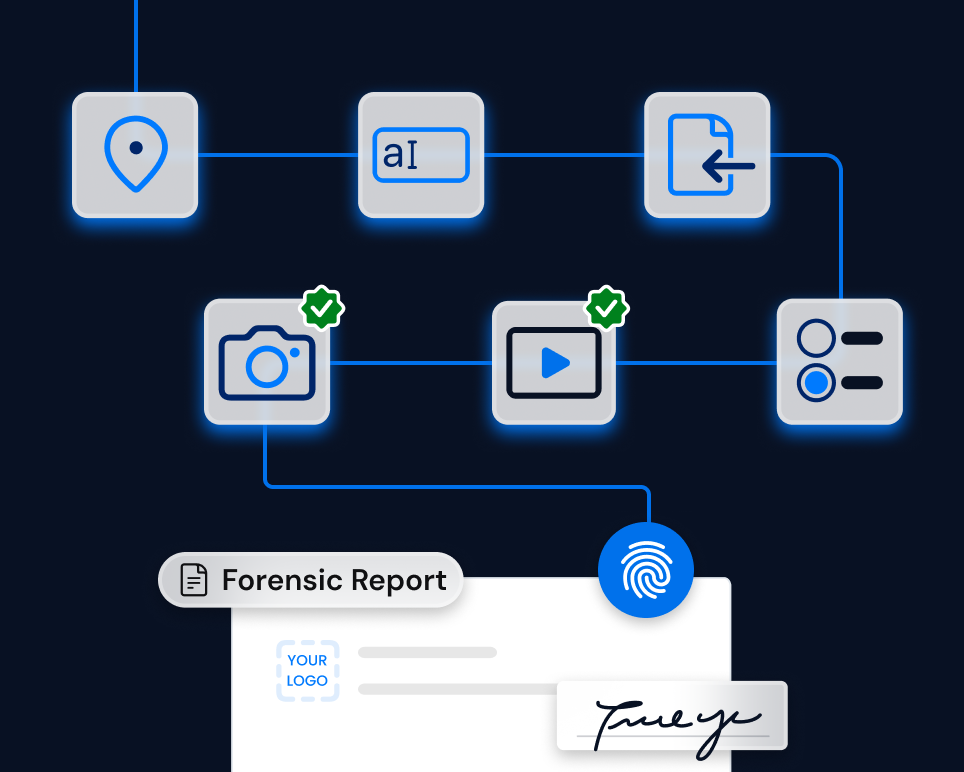
Solution
TrueScreen enables journalists and correspondents to certify photos, videos, audio and documents directly in the field, or web pages, screenshots and screen recordings from the web platform.
Each piece of content receives tamper-proof metadata: certified timestamp, GPS coordinates and digital signature, attesting authenticity and provenance.
Certified content is organized into digital dossiers per investigation, shareable with the newsroom and legal department. The guided process reduces source verification time and standardizes collection when delegated to freelancers.
In an era of synthetic media and AI-generated content, source verification has become the foundation of credible journalism. TrueScreen enables newsrooms to authenticate photos, videos and web pages at the moment of capture, creating a verifiable provenance trail that proves when, where and how each piece of content was originally recorded. This media authentication process transforms journalism evidence verification from a manual, error-prone task into an automated, forensic-grade workflow that protects editorial credibility.
What gets certified
Field photos and videos
Reports, events, site visits, conflict zones and demonstrations certified with timestamp and geolocation.
Audio recordings of interviews and statements
Interviews, statements and conversations certified with timestamp and author identity.
Web pages and online content
Articles, social posts, ads and illicit content captured before removal using forensic methods.
Screenshots, documents and investigative material
Chats, emails, confidential documents, leaks and investigative material with timestamp and chain of custody.
Partners
News outlets, press agencies, investigative newsrooms, TV and radio broadcasters, digital publishers, fact-checking organizations, law firms specializing in media and press law, press freedom associations, NGOs and international human rights organizations.
Integrations
TrueScreen integrates with editorial CMS, newsroom management platforms, digital archiving systems and DAM via API and SDK. Certified reports are exportable in PDF and JSON format, compatible with major document archives, legal case management systems and fact-checking platforms.

FAQ: certified digital evidence for journalism and investigations
1) How can a journalist certify photos and videos captured in the field?
2) Is it possible to certify a web page before it gets removed?
3) Does TrueScreen-certified evidence hold up in court?
4) How is evidence collection managed with external contributors and freelancers?
5) How does TrueScreen help comply with journalist ethics codes?
6) Can certified evidence be organized by investigation?
Request a free demo
Talk to our experts and discover TrueScreen for certified journalism.


