
Digital waste tracking: how producers and carriers prove compliance in 2026
Waste management has always run on paper. Loading and unloading registers stamped at a public office, identification forms in quadruplicate, copies kept on file for years. For decades this was the accepted way to show where a waste stream originated, who moved it, and where it ended up.
That model is breaking down. Across the European Union, national systems are moving the entire documentary chain of waste management into electronic form, and 2026 is the year digital waste tracking becomes the operating standard rather than a pilot. Forms are generated electronically, registers are validated online, and waste movements are logged in national registries that connect to companies' existing management software. For any business that produces, collects, or transports waste, the question is no longer whether to digitize, but how to prove what actually happened once the data is digital.
Here is the distinction that matters: registering a movement in a national system and proving that the movement happened as declared are two different things. A digital register records what a company states. It does not certify the reality of what occurred in the field, during the journey, at delivery. When a hazardous waste shipment is questioned in an inspection or a dispute, the declared record is rarely enough. The company needs verifiable evidence of the load, the route, and the delivery, captured at the source and protected from later alteration.
What digital waste tracking changes for producers and carriers
Digital waste tracking is the shift from physically stamped paper to a national electronic registry covering registration of obligated parties, the chronological loading and unloading register, the waste identification form, and its validation. The stated goal across EU member states is to make traceability simpler, interoperable with corporate systems, and auditable end to end.
This is not the first attempt. Earlier electronic tracking schemes, built around dedicated hardware on vehicles, failed under their own complexity and were abandoned. The current generation deliberately avoids that trap: less hardware, more software, and integration with the management systems companies already run. The lesson learned is that traceability succeeds when it fits existing workflows instead of replacing them with a parallel, brittle infrastructure.
Digital waste tracking replaces stamped paper with a national electronic register that logs the origin, movement, and destination of every waste stream. Unlike earlier hardware-based schemes that collapsed under operational complexity, the 2026 generation relies on software interoperability: the identification form is generated electronically, validated online without a physical visit to an authority, and transmitted to a central registry. Producers keep a digital chronological register and issue the form when handing waste to a third party. Carriers manage the digital form during transport and, for hazardous waste, provide vehicle geolocation. Destination operators close the loop by recording receipt. Each step leaves a trace, but the quality of that trace depends on what the company can document at the source.
From the quadruplicate form to the electronic identification form
The most visible change is the waste identification form. For years it was a paper document filled in by hand, stamped, and split between producer, carrier, and recipient. In the digital model the form is generated electronically, validated online without visiting a chamber or authority, and transmitted to the national registry. The carrier holds a digital copy during the journey, and the destination operator confirms receipt in the same system.
The transition is phased. Electronic forms become the reference for registered parties, but a paper form, digitally validated, often remains available as a fallback during a defined window. That overlap exists to give companies time to align their processes and management software before the paper option is withdrawn and penalties for incomplete electronic transmission take effect.
Who must comply: the scope of obligation
Not every waste producer is obligated to register. The scope is defined by national transposition of EU waste framework rules, and recent budget legislation in several member states has narrowed the population of obligated parties compared with initial plans.
Typically obligated are entities that treat waste, producers of hazardous waste, and those who collect, transport, trade, or broker hazardous waste on a professional basis. Exemptions commonly cover collective management consortia for specific waste and packaging categories, small agricultural producers below a turnover threshold, and initial producers of hazardous waste who do not operate as an organized entity. Because the exact perimeter shifts with national rules and periodic updates, companies should verify their status against the official national registry rather than assume. The practical takeaway is that obligation is risk-based: hazardous waste and professional transport almost always trigger it, while marginal producers may not be in scope.
Producers, carriers, operators: who does what
Digital waste tracking touches every link in the chain, but with different responsibilities. The producer keeps the digital chronological register and generates the identification form when handing waste to a third party. The carrier manages the digital form during the journey and, for hazardous waste, must provide vehicle geolocation, a requirement increasingly tied to professional registration. The destination operator closes the cycle by recording receipt. Every handoff leaves a trace in the national registry, yet that trace reflects only what was declared, not what physically moved.
Deadlines and penalties: the timeline that matters
Digital waste tracking deadlines are staggered by category and risk level. Knowing them is the first step to avoiding contested transports. Registration windows for obligated parties have been opening in phases through late 2025 and early 2026, with electronic forms becoming the reference shortly after.
A typical 2026 timeline sets a hard date from which the digital identification form is the reference for all registered parties and hazardous waste producers, regardless of headcount. A paper form, digitally validated, often remains permitted for several more months as an alternative. Penalties for missing or incomplete electronic transmission of form data usually apply from the end of that overlap window. National administrative penalties for traceability failures remain the enforcement backbone, with amounts that scale with the severity and hazard level of the waste involved.
The fine is not the only exposure. An incomplete register or a contested form can block a delivery, suspend a transport, or escalate into an allegation of illegal waste trafficking when significant quantities or hazardous materials are involved. This is where documentation of what happens in the field becomes a concrete defense rather than an administrative afterthought.
Why registry compliance does not prove traceability on its own
A national waste registry certifies that data was declared and transmitted. It does not certify that the data matches the reality of the transport. That distinction is decisive for companies handling hazardous waste, cross-border shipments, or flows with a high risk of dispute.
Consider a hazardous waste shipment heading to a treatment plant. The digital form lists codes, quantities, sender, and recipient. But if a discrepancy appears at delivery between what was loaded and what arrives, or if the vehicle's route is questioned, the form alone does not tell the story of the journey. The same applies to a cross-border shipment, where authorities in multiple countries may demand independent proof of the load, the route, and the delivery. The registry is the declarative source. Proof of what actually occurred requires evidence collected in the field and protected against later tampering, which means a verifiable digital chain of custody.
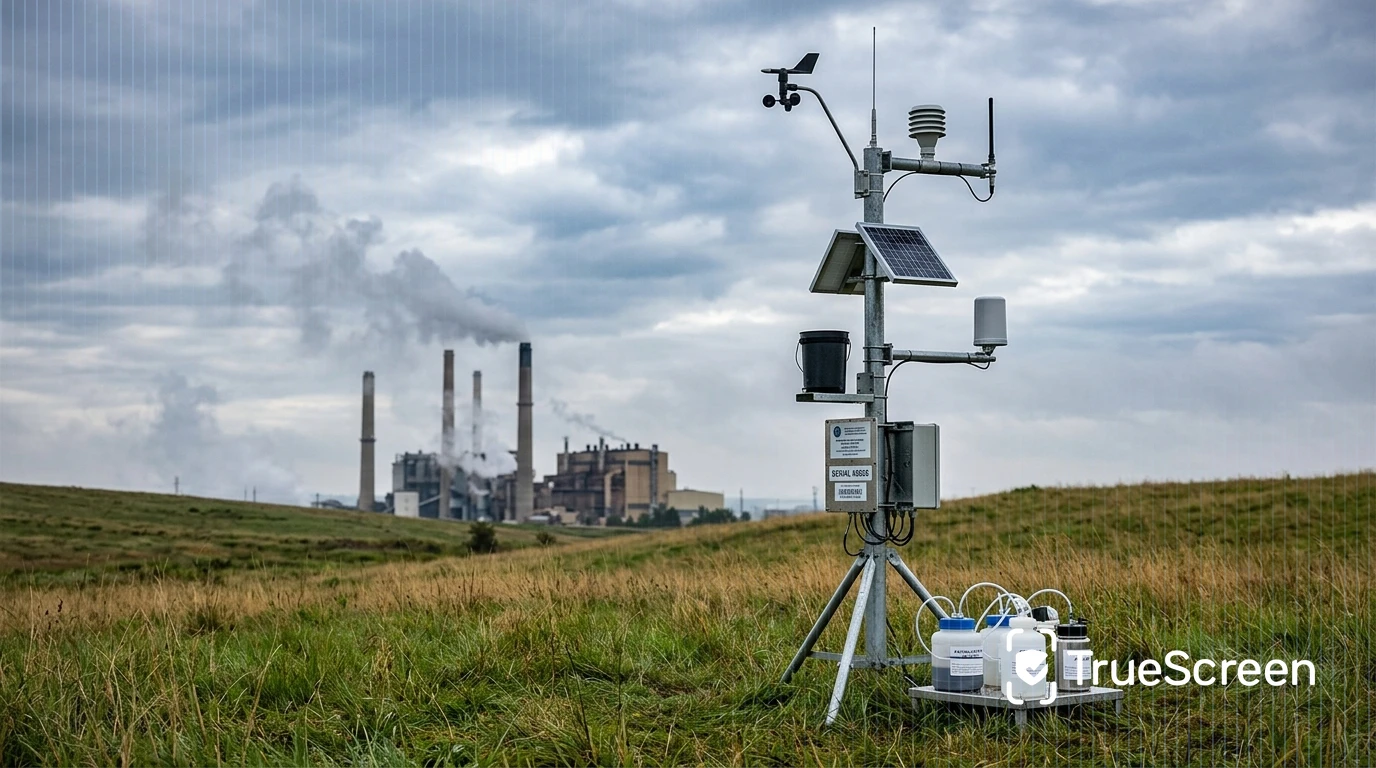
How do you certify waste transport documentation beyond the registry?
Certifying waste transport documentation means capturing photos of the load, the vehicle's position, and proof of delivery with a forensic methodology at the source, so each element is verifiable and tamper-evident. That is what TrueScreen does: it acquires digital content at the moment it is generated, verifies its integrity and authenticity, and certifies it by integrating a qualified third-party QTSP's qualified timestamp and electronic seal through its API. For a company that must prove the traceability of a hazardous waste shipment, this turns a photo taken at the loading bay into legally valid evidence, defensible in an inspection or a dispute. It does not replace the national registry: it sits alongside it, adding proof of what truly happened where the registry stops at the declaration.
Load photos certified at the source
A load photo documents what is actually placed on the vehicle before departure. With the TrueScreen capture app, the operator takes the image directly in the field: the file is certified at the moment of capture, with a qualified timestamp and context data, so no one can substitute or alter it afterward. If a discrepancy surfaces at delivery, the company holds objective proof of what was in the load.
Certified GPS trail of the journey
The vehicle's route is something a national registry does not document in detail, yet it becomes decisive in hazardous and cross-border transport. Certified geolocation records the position associated with each capture along the route, providing proof of place that is hard to contest. It is a natural complement to the geolocation requirements increasingly tied to professional transport registration.
Verifiable proof of delivery
Delivery closes the cycle. A photo of receipt, a signature collected on site, or a countersigned transport document can be certified and linked to the rest of the documentation. The integrated digital signature lets the recipient sign the delivery document with legal value, completing an evidentiary chain that runs from the load to the destination.
A transport firm running dozens of trips a day to different plants can therefore attach, to each digital form, a file of certified evidence: what was loaded, where the vehicle traveled, who received it. If a delivery is contested, the defense is no longer one statement against another, but a set of verifiable records.
Operational takeaways
Moving to digital waste tracking is more than one more administrative box to tick. It is a chance to rethink how a company proves its own traceability. Registering on time, managing the digital identification form, and keeping the chronological register online is the legal minimum. Building, alongside that minimum, certified documentation of what actually happens in the field, from load to delivery, is what separates a company that is merely compliant from one that can defend itself when compliance is challenged. Verifiable provenance of environmental data, after all, is a theme the European regulatory framework is already pushing well beyond waste registries, as the ECGT Directive on corporate environmental data shows.