Mystery shopping in banking: collecting compliant evidence for MiFID II audits
A financial advisory network that wants to know how its advisers really behave at the desk has only one reliable way to find out: observe them when no one warns them first. Mystery shopping exists for exactly this, and in banking and financial services it is one of the most common techniques used by compliance functions, and by supervisors themselves, to measure actual conduct rather than the behaviour written in procedures.
The hard part comes right after. A covert visit produces a judgement, but a judgement is not evidence. If an adviser skipped the suitability assessment or failed to disclose a conflict of interest, the recording of that visit has to hold up before a financial conduct supervisor, an internal disciplinary board or, in the most serious cases, a court. The recording must therefore be intact, traceable to an identified person and fixed in time in a way that cannot be disputed. The answer here is mystery shopping certified at the source: the same investigative method, but with a capture and certification flow that turns an observation into admissible evidence.
This insight is part of our guide: Certified mystery shopping
What MiFID II requires on adviser conduct
MiFID II does not only regulate products: it regulates the behaviour of those who place them. Banks and advisory networks must show that every recommendation passed through a precise conduct check, and on this ground documentary traceability alone is rarely enough.
Directive 2014/65/EU requires investment firms to assess suitability when they provide advice or portfolio management, and appropriateness for more execution-oriented services. Under ESMA guidelines, supervised intermediaries must profile the client, verify that the instrument matches objectives and risk tolerance, and disclose any conflict of interest before concluding. These are behaviours you can only observe in person, and they often diverge from what internal records claim.
Why mystery shopping alone does not close the loop
European supervisors have steadily increased their scrutiny of client-profiling tools and the real quality of the suitability assessment. Mystery shopping is the technique that lets a compliance team feel that quality first-hand: a shopper poses as a prospective client and records how the adviser runs the meeting. The limit is that a recording gathered without a defensible method stays a testimony, not a document. Anyone challenged can argue the file was edited, mis-dated or attributed to the wrong person. Without a guarantee of integrity at the source, the evidence crumbles exactly when it is needed.
The certified flow that holds up in an inspection
Mystery shopping that is defensible in a conduct inspection comes from adding four certification elements to the visit, applied at the very moment the data is captured. It is not about signing a report afterwards, but about sealing every step as it happens.
The four pillars of admissible evidence
The first element is mystery shopper identification: whoever runs the visit must be verifiably linked to the recording, so the evidence is traceable to a real person and not an anonymous file. The second is a qualified timestamp applied to the video or audio, fixing date and time in a way that is enforceable against third parties. The third is the signed questionnaire under eIDAS, in which the shopper attests what was asked and how the adviser replied, with the value of a subscription. The fourth is the file hash: a unique digital fingerprint that, recomputed later, proves the recording was not altered by a single bit.
Together, these four elements form an unbroken chain of custody, the same structure described in our guide on certified mystery shopping with verifiable evidence. The inspector does not have to trust the bank's word: they can independently verify that the file is intact, dated and attributed.
| Dimension | Traditional mystery shopping | Certified mystery shopping |
|---|---|---|
| Shopper identity | Declared, not verifiable | Identification bound to the recording |
| Time anchoring | Editable metadata | Enforceable qualified timestamp |
| Conduct questionnaire | Unsigned internal form | Questionnaire signed under eIDAS |
| File integrity | No guarantee | Hash verifiable after the fact |
| Holding up in inspection | Contestable testimony | Evidence enforceable against third parties |

How TrueScreen makes banking mystery shopping defensible
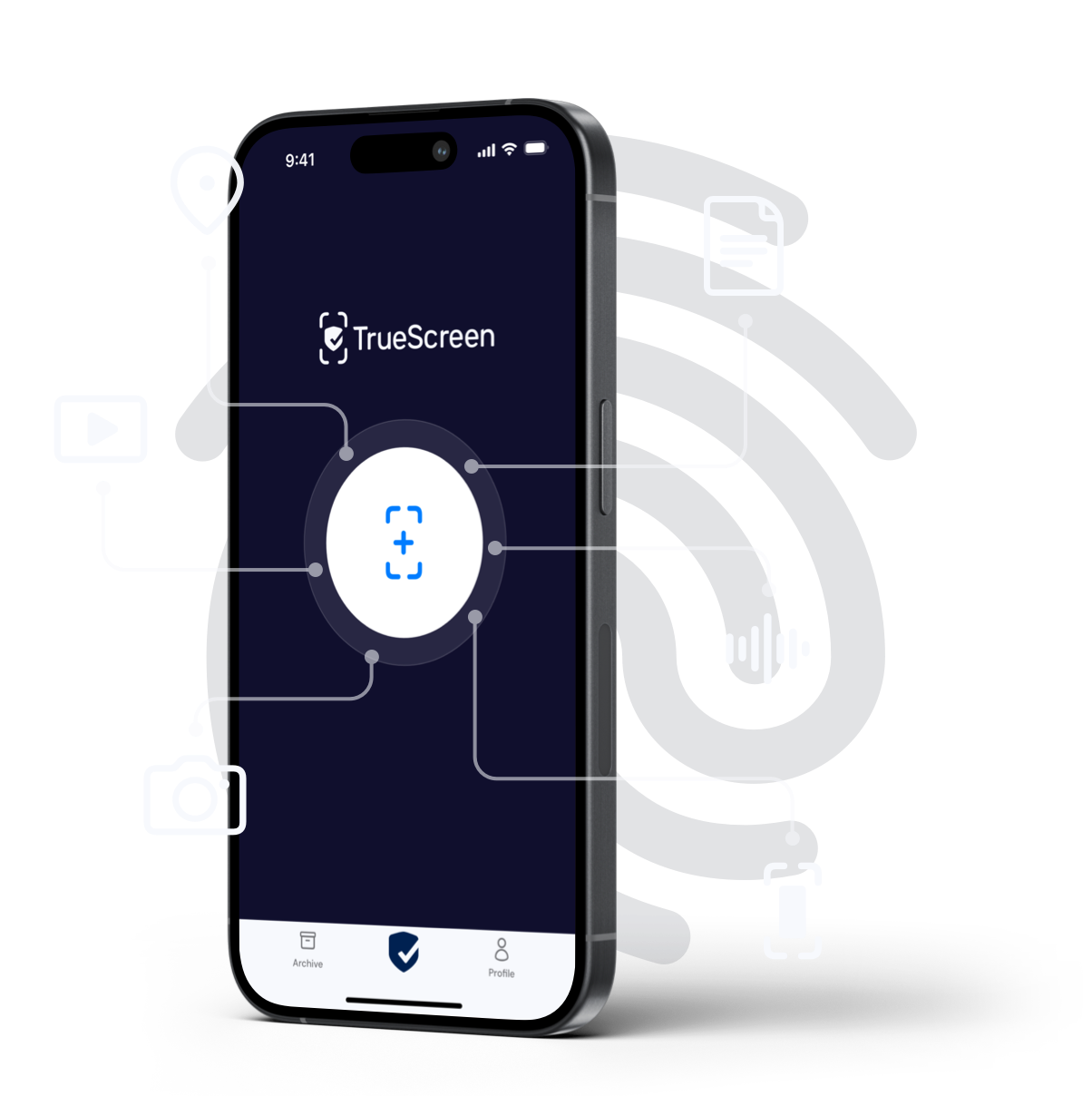
TrueScreen is the platform that captures and certifies digital content at the source with legal value. In mystery shopping it does not merely seal an existing file: it governs the whole chain, from capturing the video or audio to certification. At the moment of recording it applies the qualified timestamp and electronic seal issued by a qualified third-party QTSP integrated via API, computes the file hash and collects the questionnaire signed under eIDAS. The shopper works from the mobile app, while the platform preserves the evidence and produces a verifiable report.
The result is that the compliance function hands an inspector not a plain summary but a self-supporting proof. A network running periodic mystery shopping campaigns across its points of contact can document the real conduct of its advisers, catch the suitability assessments that were skipped and show, with an intact and dated file, that it exercises the effective control MiFID II demands.