Employment Disputes and Certified Meetings: Dismissals, Disciplinary Actions, Whistleblowing
The problem is familiar: a native Zoom or Teams recording has no cryptographic protections. It can be challenged, disputed, or questioned. And in employment law, where the burden of proof frequently falls on the employer, not having solid evidence can mean losing the case.
Online meeting certification applied to the employment context provides recordings with digital signature and qualified timestamp, creating evidence with full probative value under the eIDAS Regulation and international forensic standards.
This insight is part of our guide: Certified Online Meeting Recording: Legal Cases
Employment contexts where certification is decisive
Dismissals and disciplinary proceedings
Employment protection legislation across EU member states and internationally requires that employees be given the opportunity to be heard before disciplinary action is taken. The EU Charter of Fundamental Rights (Article 41) establishes the right to be heard, and ILO Convention No. 158 on Termination of Employment requires that workers not be dismissed without an opportunity to defend themselves against the charges made.
When disciplinary hearings take place via video conference, a certified recording documents that due process was followed: the employee had the opportunity to present their case, offer justifications, and participate actively in the discussion. In unfair dismissal claims, where the employer typically bears the burden of proving that the dismissal was justified, a certified recording of the meeting provides evidence that is extremely difficult to challenge.
Whistleblowing and internal reporting
The EU Whistleblower Protection Directive (2019/1937), transposed across member states, has strengthened protections for persons who report breaches of EU law within their organisations. Reports can be made orally, including through video calls with the designated reporting officer. Certifying these sessions protects both the whistleblower (by documenting the precise content of the report) and the organisation (by demonstrating that the report was handled according to established procedures).
In the event of a retaliation claim, the certified recording can prove that the report was made, when, with what content, and that the organisation took the protective measures required by law. The U.S. Sarbanes-Oxley Act (Section 806) and the Dodd-Frank Act provide similar whistleblower protections in American jurisdiction, where documented evidence of proper handling is equally critical.
Exit negotiations and settlement agreements
Negotiations for consensual termination of employment often take place via video conference, particularly when involving employees across different locations. During these sessions, financial terms, timelines, non-compete clauses, and confidentiality commitments are discussed. A certified recording of the negotiation documents what was proposed, accepted, or rejected, reducing the risk of subsequent disputes about the parties’ actual intentions.
How to certify employment meetings
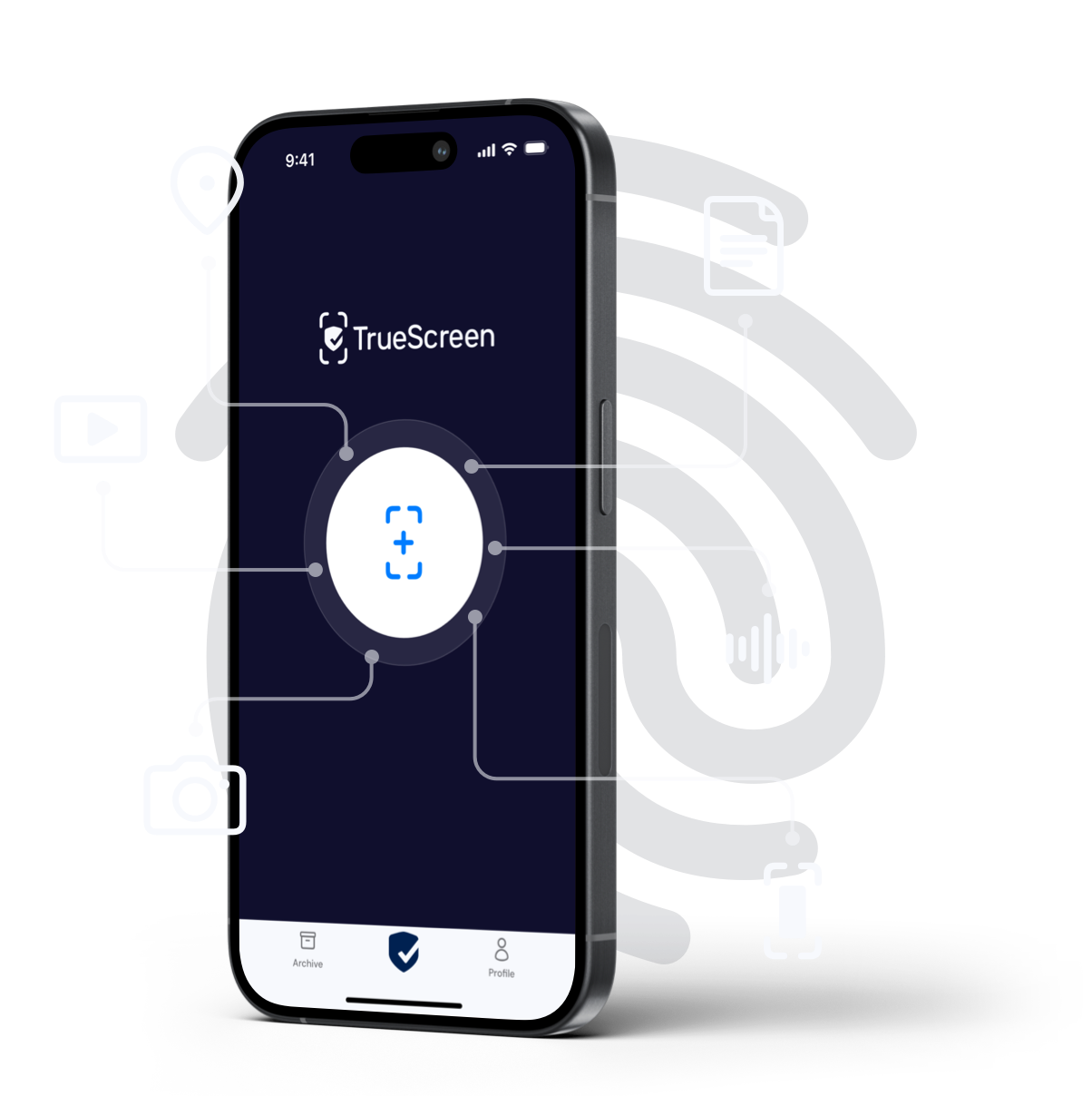
TrueScreen enables certification of any employment-related video call through certified screen recording. The HR manager, in-house counsel, or employment lawyer initiates the certified recording on their device. The screen is captured with a digital signature and qualified timestamp applied in real time.
The resulting file documents the entire session: party statements, documents shown, reactions, timelines. Immutable metadata attests to the date, time, duration, and certifier identity. The file is protected from the moment of acquisition and any subsequent modification is detectable.
The approach works on any video conferencing platform without technical integration. In most jurisdictions, a participant may record a conversation they are part of without notifying the other participants, consistent with the one-party consent principle.
Evidentiary value in employment disputes
The eIDAS Regulation (Articles 25 and 46) ensures that digital signatures have the legal equivalent of handwritten signatures and that electronic documents cannot be denied legal effects. ISO/IEC 27037 on digital evidence management reinforces this by establishing chain of custody requirements recognised internationally.
For HR departments and law firms, certifying employment meetings is a preventive protection tool: it is not just about having evidence in case of litigation, but about documenting in a verifiable manner that procedures were followed, that the decision-making process was correct, and that the organisation acted in good faith.