All content
Browse all articles and insights from the TrueScreen blog
Articles

Advanced Electronic Signature: What It Is, How It Works, and eIDAS Regulation
Advanced electronic signature (AES) under eIDAS: the 4 requirements, comparison with qualified signatures, legal validity across EU, and how to integrate AES in business workflows.
Social Media Evidence in Court: How to Capture and Authenticate Posts
Learn how to capture and authenticate social media posts for court. Forensic methods, FRE 901 requirements, and preservation tools compared.

FRE 901: How to Authenticate Digital Evidence Under Federal Rules
FRE 901 requires evidence sufficient to support a finding of authenticity. Complete guide to all 10 authentication methods, Rule 902, and proposed 901(c).
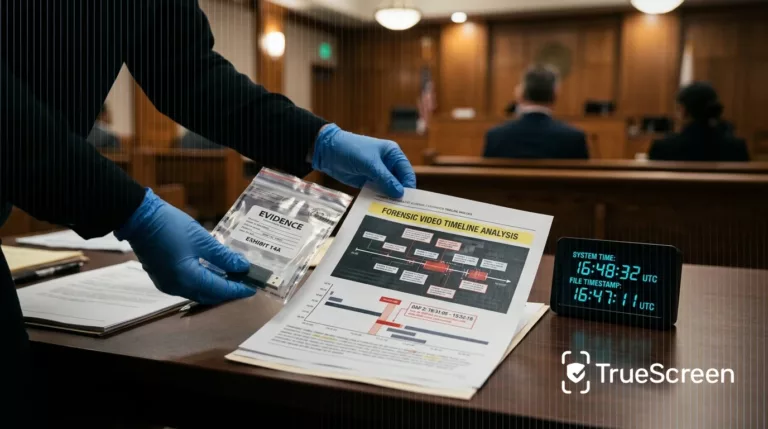
Video Evidence with Altered Timestamps: Court Admissibility Standards
How courts evaluate video evidence with modified timestamps. Forensic authentication standards, metadata analysis, and legal precedents for admissibility.
Digital Chain of Custody: What It Is and How It Protects Evidence
Digital chain of custody: what it is, ISO 27037 requirements, and how forensic acquisition protects evidence integrity from capture to court.
Screenshot Evidence in Court: How to Make Screenshots Legally Admissible
Courts reject ordinary screenshots as evidence. Learn authentication requirements under Federal Rules of Evidence 901 and eIDAS for court admissibility.
Court-Ready Blockchain Evidence: Legal Standards and Admissibility
How to make blockchain evidence admissible in court. FRE 901 authentication, chain of custody, forensic certification, and eIDAS compliance for litigators.
How to Preserve Digital Evidence for Court: The Complete Guide
Digital evidence preservation follows ISO 27037 4 phases. Learn chain of custody, forensic certification and common mistakes that cause evidence exclusion.
Photo Verification: How to Verify and Authenticate Digital Images
Photo verification methods explained: EXIF analysis, reverse search, ELA and their limits. Why certification at source beats post-hoc detection.

The digital trust gap: why every piece of data will need a trust layer
The digital trust gap is widening as AI-generated content outpaces verification. A trust layer certifies data authenticity at source, not after the fact.
The litigation cost of uncertified evidence: when a judge rejects a photo
Uncertified digital evidence costs denied claims, forensic fees and months of delay. What happens when a judge rejects a photo and how to prevent it.
How to Certify Photos with Legal Value: A Forensic Guide
How smartphone photos become admissible court evidence. Qualified timestamps, GPS metadata, cryptographic hashing, and the complete forensic workflow for digital photographs.
AI fingerprints can be removed and forged: the Edinburgh study that challenges deepfake detection
Edinburgh researchers tested 14 fingerprinting methods on 12 AI generators. Result: 80%+ removal, 50%+ forgery success. Why digital provenance beats.
eIDAS 2 and Qualified Electronic Seals: What Changes for European Businesses
Qualified electronic seals under eIDAS 2 Regulation (EU 2024/1183): QTSP requirements, EUDI Wallet deadlines, and compliance steps for European businesses.
Document Forgery in the Age of AI: Risks, Real Cases and How to Protect Yourself
Generative AI has made document forgery accessible to anyone. Analysis of AI fraud techniques, real cases, regulatory framework and source certification.
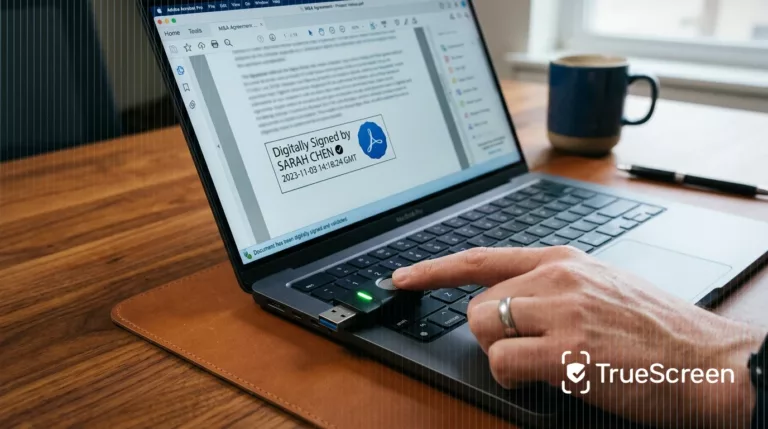
Digital Signature: Practical Example, How It Works and How to Verify It
Practical example of a digital signature on PDF documents. Learn how it works, the difference between CAdES, PAdES and XAdES, and how to verify validity.

Data Certification for AI Agents: Governance, Compliance and Legal Liability
Agentic AI governance requires data certification at 4 levels. Legal framework, AI Act art. 12 compliance and audit trail.
C2PA Standard: History, Promises and Structural Limitations
C2PA adoption in 2026: current state, deepfake detection effectiveness, structural limitations, and why content provenance alone does not solve data authenticity.

Electronic Seal: What It Is, How It Works, and Differences from Digital Signature
The electronic seal certifies data origin and integrity for legal entities. Technical architecture, eIDAS levels, and differences from digital signatures.

Content Authenticity: Why Certification at Source Is the Only Scalable Defense
Content authenticity and digital provenance: why AI detection fails systematically and how forensic certification at source protects enterprises.
Insights
AI Prompt Traceability: Why Certifying Instructions to AI Agents Matters
Deepfakes and criminal proceedings: the digital evidence crisis

Deepfake corporate fraud: why source certification is the real defense

Certifying AI Agent Outputs: Digital Evidence with Legal Value
NIS2 and AI Data Integrity: What Essential Services Must Do

E-Evidence Regulation: a practical implementation guide for European businesses

Digital Provenance in the Energy Sector: Certifying Field Inspections and Audits

Certifying the AI Agent Knowledge Base: Data Integrity and Provenance
EU AI Act Record-Keeping Requirements: A Practical Guide for Businesses
How to Make Digital Evidence Admissible: Step-by-Step Guide for Legal Professionals
Agentic AI Liability: Who Is Responsible When the Agent Fails
Chain of custody in the legal sector: a guide for lawyers and law firms

Self Check-in for Short-Term Rentals: What Changes After the Italian Ruling

Enterprise digital provenance: integrating data certification into business processes
Digital chain of custody: technical requirements for valid evidence in court
Email certification for insurance: claims, complaints and disputes
Challenging email evidence in court: authentication and preventive certification
Email certification for law firms: workflow and evidence collection
Email chain of custody: from sending to courtroom evidence