Real estate deepfake fraud and forged documents: how to protect transactions
In 2024, total losses from cybercrimes reported to the FBI Internet Crime Complaint Center reached $16.6 billion, a 33% increase from the previous year. Real estate is among the hardest-hit sectors: over 13,000 real estate fraud victims in property transactions alone, with deepfake-enabled real estate scams growing 40% year-over-year according to the Entrust 2026 Identity Fraud Report.
The problem goes beyond technology. Real estate transactions depend on trust in documents, identities, and communications that can now be forged in minutes with tools available to anyone for under $10 a month. Emails with falsified wire instructions, manipulated property deeds, AI-generated video calls impersonating sellers: every step of the transaction has become a potential attack vector. Post-hoc detection does not work in a context where timelines are tight and damages are irreversible. These real estate scams exploit the speed and trust that property transactions demand. The answer is to certify every piece of data that flows through the transaction at the source.
How deepfakes target real estate transactions
Wire fraud and Business Email Compromise
The most prevalent form of digital real estate fraud remains real estate wire fraud through Business Email Compromise (BEC). Criminals intercept communications between transaction parties and send forged emails with modified wire instructions. The FBI IC3 has documented the recovery of nearly $1 million ($956,342) in closing funds that a homebuyer had wired after receiving a spoofed email from their supposed real estate agent.
Generative AI has made these emails indistinguishable from legitimate ones. Language models produce text that perfectly replicates the style, terminology, and even the typical errors of the original sender.
Impersonation through deepfake video
Deepfake video adds a level of sophistication that traditional verification systems were not designed to handle. According to the National Association of Realtors Consumer Guide, scammers are using deepfakes to impersonate buyers, sellers, agents, and attorneys during video calls and remote identity verification.
A widely documented case involved a California woman who lost her home and life savings after being deceived by a scammer impersonating a celebrity using AI-generated content. The cost to produce such content has collapsed: what once required cinematic expertise and expensive equipment now takes a few hours with consumer-grade tools.
Forged property documents and certificates
The third category of attack targets the transaction documents themselves, enabling property fraud through forged titles, deeds, energy certificates, and appraisals. Generative AI can produce documents that appear perfectly authentic, complete with stamps, signatures, and credible reference numbers. Without a source verification system, the only defense is the professional's experience: a barrier that AI has already proven capable of breaching.
Why detection falls short in real estate
Tight timelines and irreversible damages
Unlike other sectors, real estate transactions have a characteristic that makes detection structurally inadequate: timelines are compressed and damages are irreversible. A fraudulent wire transfer executed during closing cannot be reversed. A property title transferred on the basis of forged documents requires years of litigation to correct. Deepfake detection operates after content creation, but in real estate the damage is done before any analysis can complete.
The awareness paradox
NAR has published specific guides to help consumers and professionals recognize deepfake scams. But awareness alone is not a sufficient defense. The most sophisticated deepfakes are designed to be unrecognizable to the human eye, and the time pressure of transactions reduces the capacity for critical analysis. A real estate agent who receives an apparently legitimate video call during a day of multiple closings has neither the time nor the tools to verify the video frame by frame.
Forensic certification: protecting every step of the transaction
Documents, communications, identity: all certified at the source
The alternative to detection is a structural approach: certifying at the source every piece of data that flows through the real estate transaction. If every document, every communication, and every identity verification is forensically acquired at the moment of creation, subsequent manipulation becomes irrelevant because it is immediately detectable.
This approach, based on Digital Provenance, transforms the documentary flow of the transaction: every deed, every email with wire instructions, every photographic appraisal is certified with a digital seal and qualified timestamp, creating a chain of custody verifiable by all parties.
How TrueScreen integrates into real estate workflows
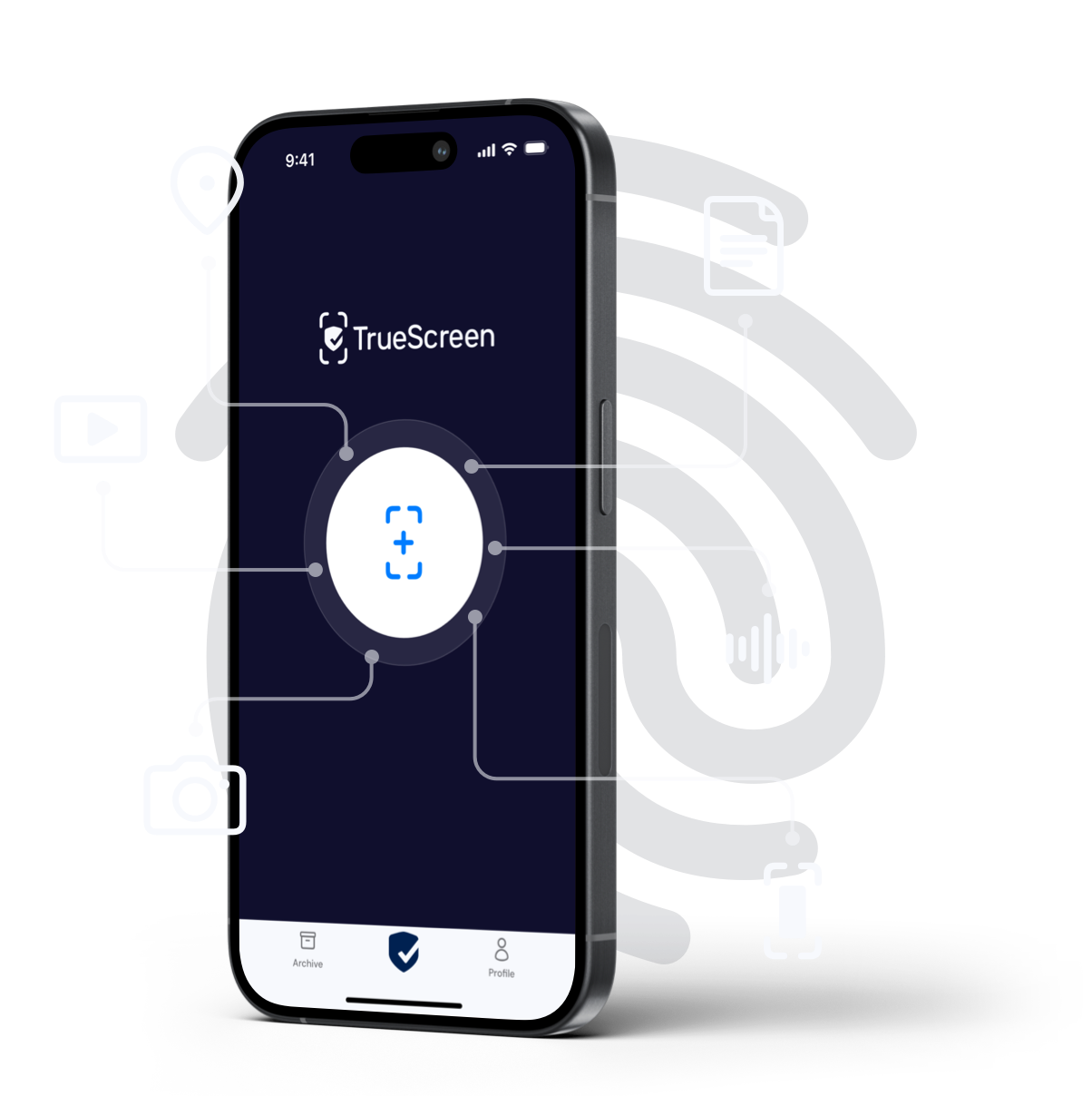
TrueScreen operates as a Data Authenticity Platform that integrates into existing real estate processes. The patented platform acquires and certifies digital content using forensic methodology compliant with ISO/IEC 27037 standards and the Budapest Convention recommendations.
A real estate agency can use TrueScreen to certify every critical step of the transaction:
- Property documents and titles: forensic acquisition with a digital seal that makes any subsequent modification immediately detectable
- Payment instruction communications: certification of emails containing wire instructions, with timestamp and chain of custody
- Identity verification: forensic certification of photos and identity documents acquired during client onboarding
- Appraisals and inspections: certified photos and videos captured via mobile app directly on site
Every piece of data certified with TrueScreen acquires full legal value at an international level. The forensic report with documented chain of custody is suitable for judicial and technical contexts, making documentary disputes resolvable quickly and objectively.