
FRE 901: How to Authenticate Digital Evidence Under Federal Rules
FRE 901 is the gateway rule for admitting digital evidence in United States federal courts. Every litigator handling electronically stored information (ESI) must satisfy its requirements before a single byte of digital evidence reaches the jury. According to the Sedona Conference, more than 85% of evidence in US civil litigation is now in electronic form.
The problem: FRE 901 was enacted in 1975. Its drafters were thinking about paper documents, analog photographs, and tape recordings. Today, federal courts apply the same rule to emails, screenshots, social media posts, videos, and AI-generated files, often reaching inconsistent results across districts. A proposed Rule 901(c) would add a burden-shifting mechanism specifically for AI-altered evidence, raising the stakes further.
The question every litigator must answer: how does FRE 901 actually work for digital evidence, and what should you be doing right now to prepare?
The answer is simpler than the ongoing jurisprudential debate suggests. FRE 901(a) requires only "evidence sufficient to support a finding" that the evidence is what its proponent claims. That is a deliberately low threshold, leaving broad discretion to the trial judge. For digital evidence, the most reliable path to satisfy FRE 901 authentication requirements is forensic certification at source: capturing the data at the moment of creation, sealing it cryptographically, and documenting the chain of custody from the origin. Authentication stops being a problem to solve after the fact and becomes a guarantee embedded in the data itself.
What FRE 901 Requires for Digital Evidence
FRE 901 is Federal Rule of Evidence 901, the authentication standard for all evidence in United States federal courts. Under Rule 901(a), a party must produce "evidence sufficient to support a finding that the item is what the proponent claims it is." The rule lists ten non-exclusive methods under 901(b), including witness testimony, distinctive characteristics, expert comparison, and process or system verification. The threshold is deliberately low: preponderance of the evidence, not proof beyond reasonable doubt.
FRE 901 sets a single requirement for admitting any evidence in federal court: the proponent must produce "evidence sufficient to support a finding that the item is what the proponent claims it is." For digital evidence, this means demonstrating that the file, message, or screenshot presented to the court matches the original content without alteration. The Advisory Committee on Evidence Rules has confirmed that Rule 901(b) methods apply fully to electronic evidence, even though none were written with digital content in mind. The threshold is preponderance of the evidence: the proponent must make authenticity more likely than not.
Rule 901(b): The Ten Methods of Authentication
Rule 901(b) lists ten illustrative methods of authentication. The list is not exhaustive: the rule itself describes them "by way of illustration only, and not by way of limitation." In practice, three methods handle the vast majority of digital evidence scenarios.
Method 901(b)(1), testimony of a witness with knowledge, remains the most commonly used. An employee confirms sending a specific email. A user recognizes their own social media post. It is the simplest path, but also the most vulnerable to challenge: human memory is fallible, and opposing counsel can always argue that the digital content was modified after transmission.
Method 901(b)(4), distinctive characteristics, is especially relevant for electronic communications. An email can be authenticated through its content, language, internal references, sender address, and circumstances of receipt considered as a whole. Federal courts have repeatedly accepted this approach for emails, text messages, and social media content.
Method 901(b)(9) is technically the strongest for digital evidence: "evidence describing a process or system and showing that it produces an accurate result." It allows authentication by demonstrating that the system which generated or captured the evidence produces accurate results. For forensic certification, 901(b)(9) is the natural pathway: a certified acquisition system that documents its process and accuracy directly satisfies this requirement.
| 901(b) Method | Description | Digital Evidence Application | Probative Strength |
|---|---|---|---|
| (b)(1) | Testimony of witness with knowledge | Email author, message sender, social media account holder | Moderate: vulnerable to memory challenges and post-transmission alteration claims |
| (b)(3) | Comparison by expert witness | Forensic analysis of metadata, hash values, system logs | High: requires qualified expert and non-trivial costs |
| (b)(4) | Distinctive characteristics and circumstances | Content, style, metadata, circumstances of receipt | Moderate-high: effective when corroborated by multiple converging elements |
| (b)(7) | Public records | Digital government records, online certificates | High: presumption of authenticity for official records |
| (b)(9) | Process or system producing accurate results | Forensic acquisition systems, certification platforms, automated logs | Very high: the system itself documents accuracy and integrity |
| (b)(10) | Methods provided by statute or rule | Industry-specific standards (HIPAA, SOX, eIDAS) | Variable: depends on the applicable statute or regulation |
The "Sufficient to Support a Finding" Standard
The FRE 901(a) standard is intentionally permissive. The proponent does not need to prove authenticity beyond a reasonable doubt, nor by clear and convincing evidence. It is enough to present evidence sufficient for a reasonable juror to conclude that the evidence is authentic. The final determination of authenticity rests with the jury, not the judge: the judge acts as gatekeeper, verifying only that the minimum threshold has been met.
What does this look like in practice? A judge may admit an email even if opposing counsel raises doubts about its integrity, so long as the proponent has provided at least a reasonable basis for authenticity. Challenges to integrity go to the weight of the evidence, not its admissibility. But the low threshold is not an invitation to be careless: a seasoned litigator knows that weakly authenticated evidence may survive a motion in limine and then lose all credibility before the jury.
Authentication Methods for Specific Evidence Types
Federal courts have applied these standards consistently across landmark digital evidence cases. In Lorraine v. Markel American Insurance Co. (2007), Magistrate Judge Grimm issued the most cited opinion on ESI authentication, mapping each FRE 901(b) method to specific digital evidence types. In United States v. Browne (3d Cir. 2016), the court admitted chat logs authenticated through distinctive characteristics under 901(b)(4) despite the defendant claiming the account was hacked. In Vayner v. Ethridge (2d Cir. 2016), the Second Circuit reversed a conviction because a social media page was admitted without sufficient evidence linking it to the defendant, reinforcing that the 901(a) threshold, while low, is not zero.
Each category of digital evidence raises different authentication problems under FRE 901. Emails require one approach, screenshots another, and social media posts raise issues that digital photographs do not share. Federal case law has developed separate standards for each type, and knowing them matters when building an evidentiary foundation.
Emails and Electronic Communications
Email authentication in federal courts typically follows the 901(b)(4) method: the distinctive characteristics of the message, combined with surrounding circumstances, create a sufficient foundation. The sender's address, the specific content of the message, consistent replies within a correspondence thread, references to facts known only to the parties involved: taken together, these elements can satisfy the 901(a) standard.
The practical concern is that emails are easily altered. Headers can be spoofed, body text modified, attachments replaced. In high-stakes litigation, opposing counsel will raise these objections. The strongest response is preventive: acquiring and certifying emails at the moment they become relevant, before any challenge arises. A documented digital provenance from the origin renders subsequent integrity objections moot.
Screenshots and Web Pages
Screenshots are among the most difficult digital evidence types to authenticate. A screenshot is a visual representation of content that can change at any moment: a web page may be edited, a post deleted, a profile removed. The court needs assurance that the screenshot accurately represents what appeared on screen at a specific point in time.
Federal case law typically accepts testimony from a person who viewed the original web page and confirms that the screenshot corresponds to what was displayed. This approach grows weaker over time, though: web content is dynamic, sites change constantly, and a witness's memory may not hold up months after capture.
Certified forensic acquisition resolves this entirely. The content is captured with a qualified timestamp, cryptographically sealed, and the report documents the URL, date, time, and exact content. What was an inherently weak screenshot becomes a verifiable legal document.
Social Media Posts
Authenticating social media evidence adds a further problem: how do you prove that a particular account belongs to a particular person, and that the post was actually published from that account? Federal courts have addressed this question with varying approaches.
What matters most is the combination of factors: the profile name and photo, content consistent with known facts, confirmation from other users who saw the post, and information provided by the platform itself. The Fifth Circuit held that the mere appearance of a post on a social media profile is not sufficient standing alone, but that the combination of content, circumstances, and external corroboration satisfies the 901(a) threshold.
The specific risk with social media is volatility. A post can be deleted, an account closed, a platform can change its display format entirely. Certified real-time acquisition, with documented chain of custody, is the only method that guarantees preservation of the content in the exact form it appeared at the moment of capture.
Photos and Video
Photographic and video evidence is where generative AI has most visibly disrupted the authentication calculus. Until a few years ago, authenticating a photo meant confirming that the photographer took it and had not altered it. That assumption no longer holds. Synthetic images and video can now be generated at a level of realism that makes visual inspection worthless as a verification method.
For photos and video with verifiable timestamps, method 901(b)(1) still works: the photographer or videographer testifies in court. But when the content comes from third-party sources or from contexts where AI may have been used, the scrutiny gets much tighter.
The cryptographic hash generated during forensic acquisition at source makes any subsequent alteration immediately detectable, no matter how sophisticated the manipulation. This is a mathematical guarantee, not an expert opinion.
Chain of Custody for Digital Evidence
Authentication under FRE 901 is inseparable from chain of custody. A digital file that cannot demonstrate an unbroken sequence of possession, transfer, and storage from creation to courtroom faces immediate challenge. Opposing counsel does not need to prove alteration occurred: they only need to show that the conditions existed for alteration to have happened.
For digital evidence, chain of custody means documenting every access, copy, transfer, and storage event from the moment the file was created or acquired. Traditional approaches rely on human logs and testimony, both vulnerable to gaps and inconsistencies. Forensic certification addresses this structurally: the acquisition system records every step automatically, and the cryptographic hash makes any break in the chain immediately detectable. The certified report serves as a self-contained chain of custody document that requires no supplementary testimony.
Self-Authenticating Evidence Under Rule 902
Rule 902 of the Federal Rules of Evidence identifies categories of evidence that require no extrinsic proof of authenticity: they are "self-authenticating." The proponent does not need to call a witness or produce additional evidence to establish authenticity. In 2017, Rule 902 was expanded with subsections (13) and (14), designed specifically for electronic evidence. The reason was straightforward: the evidentiary framework needed to catch up with how evidence actually exists in the real world.
Certified Business Records: 902(11) and 902(12)
Subsections 902(11) and 902(12) cover domestic and foreign business records, respectively. A business record accompanied by a certified declaration from the custodian of records (or a qualified person) attesting to the conditions of admissibility under Rule 803(6) is self-authenticating. No need to bring the custodian to court.
For digital evidence, this pathway is particularly useful in commercial litigation: system logs, database records, and reports automatically generated by enterprise software can be presented with only the custodian's certification, provided the records were created and maintained in the regular course of business.
Certified Electronic Records: 902(13) and 902(14)
Subsections 902(13) and 902(14), introduced in 2017, reshaped authentication for digital evidence in federal courts. Rule 902(13) applies to "certified records generated by an electronic process or system": records whose generation process is described and whose accuracy is attested by a written certification from a qualified person. Rule 902(14) covers "certified data copied from an electronic device, storage medium, or file": data whose accurate copying is verified through a digital identification process.
What this means in practice: digital evidence accompanied by a technical certification describing the acquisition process and attesting to the accuracy of the result can be admitted without additional witnesses. Two conditions apply: the certification must come from a qualified person, and it must be disclosed to the opposing party with sufficient advance notice (typically 14 days before trial) to allow a challenge.
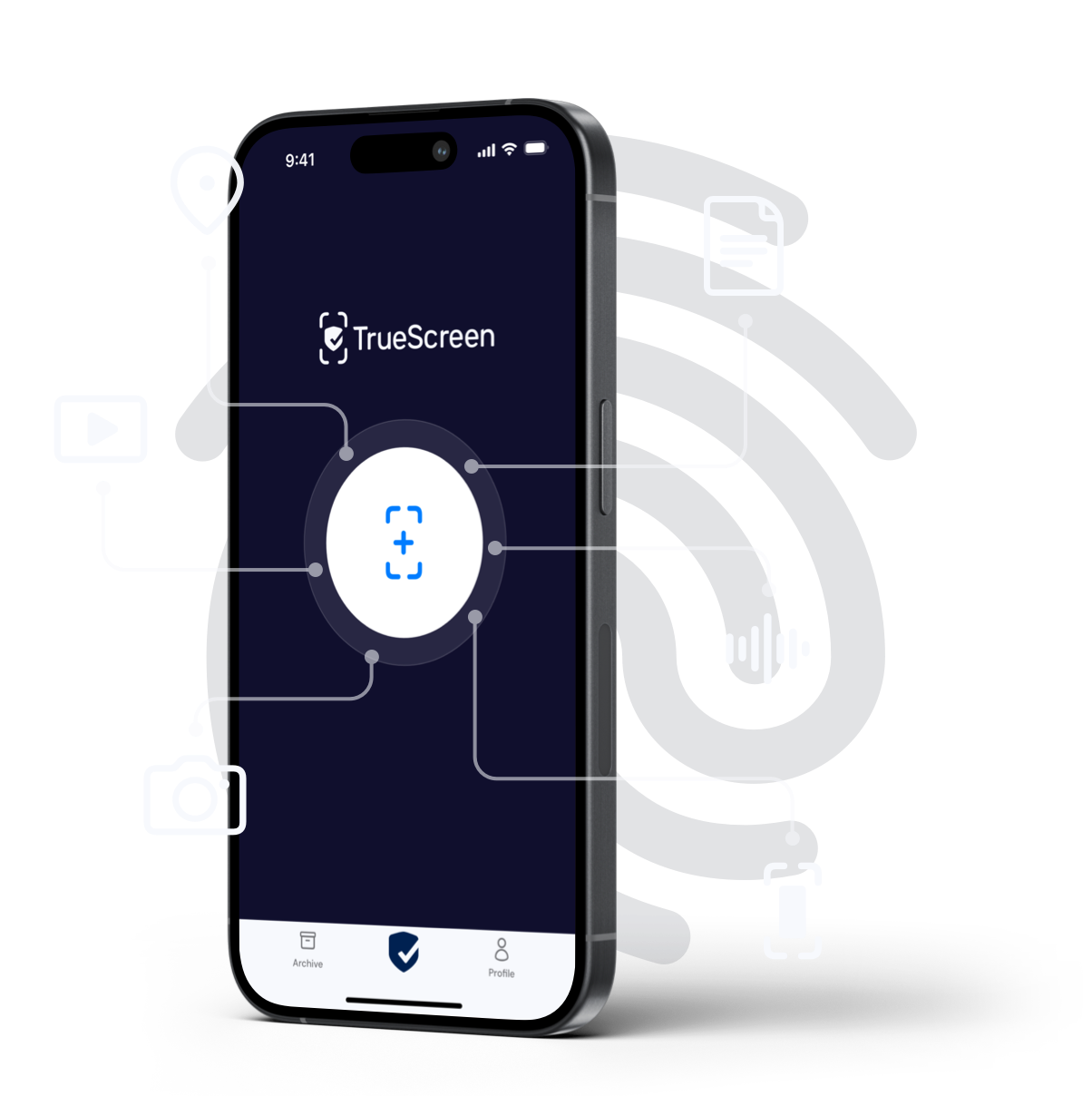
Organizations use TrueScreen to certify digital evidence at the point of acquisition, transforming screenshots, emails, and multimedia files into records that meet Rule 902(13) and 902(14) standards. The forensic report generated by the platform serves as the qualified certification required under both subsections, and the advance disclosure to opposing counsel satisfies the notice requirement.
| Feature | Rule 901 (Standard Authentication) | Rule 902 (Self-Authentication) |
|---|---|---|
| Extrinsic evidence required | Yes: witnesses, experts, supporting documentation | No: the accompanying certification is sufficient |
| Litigation costs | Higher: depositions, expert witnesses, courtroom testimony | Lower: certified declaration filed pre-trial |
| Exclusion risk | Moderate-high: the judge evaluates sufficiency of the foundation | Low: a compliant certification satisfies formal requirements |
| Applicability to digital evidence | Universal: any type of evidence | Limited to certified electronic records (13) and copied data (14) |
| Challengeability | At any point during the proceedings | Within the pre-trial notification period (typically 14 days) |
The Proposed Rule 901(c): Authentication in the AI Era
The Advisory Committee on Evidence Rules is weighing a major amendment to the Federal Rules of Evidence: the introduction of a Rule 901(c) that addresses evidence potentially altered by artificial intelligence. The proposal comes from Prof. Rebecca Delfino of Loyola Law School, who in her paper "Deepfakes on Trial 2.0" laid out a burden-shifting mechanism. The core argument is institutional: existing evidentiary rules were not designed for a world where photos, videos, and audio can be generated or altered by AI at a level of sophistication that makes retrospective detection progressively unreliable.
What Rule 901(c) Would Change
The proposal introduces a two-phase test. First, the opposing party must demonstrate that it is "more likely than not" that the evidence was fabricated or materially altered using artificial intelligence. If this threshold is met, the burden shifts: the proponent must prove by a preponderance of the evidence that the content is authentic.
The shift from the current framework is stark. Under the existing Rule 901(a), the burden rests entirely on the proponent but the threshold is low. Under the proposed 901(c), when opposing counsel successfully raises a founded doubt about AI involvement, the evidentiary burden becomes substantially heavier. The proponent can no longer rely on the "sufficient to support a finding" standard: affirmative proof of authenticity is required.
For anyone managing digital evidence in litigation, the practical implications are already present. The best defense against a challenge under a future 901(c) is documenting authenticity from the source: digital evidence that has been acquired, sealed, and certified at the moment of creation withstands any subsequent alteration challenge, because integrity is cryptographically verifiable.
Proposed Rule 707 and Deepfake Evidence
Alongside the proposed 901(c), the Advisory Committee is examining a proposed Rule 707, submitted in August 2025, that specifically addresses deepfake evidence. Rule 707 would set admissibility standards for audio, video, and photographic content generated or altered using generative AI.
The distinction between the two proposals matters: 901(c) is an authentication rule that modifies the burden of proof when doubt arises about AI involvement, while 707 would be an admissibility rule that treats deepfake evidence as a standalone category with its own requirements. The two rules would work together, not as alternatives.
For a litigation attorney, the signal is hard to miss: proving the authenticity of digital evidence is becoming an element of trial strategy, not a routine procedural step. Those who acquire and certify evidence at source will hold a concrete advantage over those relying on after-the-fact authentication.
How Forensic Certification Satisfies FRE 901 Authentication
Forensic certification at source works on a principle opposite to traditional authentication: instead of reconstructing authenticity after the fact, it embeds authenticity in the data at the moment of creation. That single inversion resolves most of the problems outlined above. TrueScreen, the Data Authenticity Platform, applies this through a six-phase process compliant with ISO/IEC 27037: device integrity verification, metadata authenticity validation, forensic environment acquisition, identity certification, technical reporting, and cryptographic sealing with a qualified timestamp issued by a Qualified Trust Service Provider (QTSP). Any party can independently verify the resulting evidence without additional experts or supporting testimony.
Why Certified Acquisition Creates Self-Authenticating Evidence
Certified forensic acquisition operates at the intersection of two regulatory pathways: Rule 901(b)(9) and Rule 902(13). Under 901(b)(9), the certified acquisition process qualifies as a documented "process or system" that "produces an accurate result." The technical report accompanying each acquisition describes the process, documents the verifications performed, and attests to the accuracy of the result. Under 902(13), the certified output from a forensic data authenticity platform qualifies as a "record generated by an electronic process or system" accompanied by a qualified person's certification.
The TrueScreen platform generates a forensic report that documents every phase: the acquisition device, the final cryptographic hash, the qualified timestamp, the digital signature. This report plus the certified data form an evidentiary package that satisfies authentication requirements on its own. No chain-of-custody reconstruction needed.
From Reactive Authentication to Proactive Certification
The traditional model for authenticating digital evidence is reactive: data is collected, stored, and only at the time of trial does anyone address the question of its authenticity. The weaknesses are obvious once you think about them. As the gap between data creation and the authentication attempt grows, proving the absence of alterations gets progressively harder. And without cryptographic sealing at source, there is simply no mathematically verifiable way to rule them out. If the proposed Rule 901(c) passes, the situation gets worse for anyone relying on after-the-fact authentication.
The proactive model flips this. Certifying at source means authenticity becomes a property of the data itself, not something attributed afterward. The TrueScreen mobile app enables certified acquisition of photos, videos, screenshots, and documents directly from the user's device, with a qualified timestamp and instant cryptographic sealing. For email certification, the process works the same way: content is acquired and certified at the moment it becomes relevant to litigation.
Consider the proposed Rule 901(c) scenario: opposing counsel raises a doubt about AI alteration of evidence. The proponent who certified the data at source responds with a forensic report demonstrating cryptographic integrity from creation. No chain of custody reconstruction. No reliance on a witness's memory. The mathematical proof speaks for itself.
FAQ: FRE 901 and Digital Evidence Authentication
What does FRE 901 require for digital evidence?
FRE 901(a) requires "evidence sufficient to support a finding" that the digital evidence is what the proponent claims. For digital evidence, this translates to demonstrating that the file has not been altered and originates from the declared source. The threshold is deliberately low: the proponent must make authenticity more likely than not, leaving the final determination to the jury.
How to authenticate emails for federal court?
Emails in federal courts are typically authenticated under Rule 901(b)(4), through distinctive characteristics: sender address, consistent content, internal references, circumstances of receipt. A stronger approach is forensic certification of the email at the moment it becomes relevant, which satisfies Rule 901(b)(9) by documenting the acquisition process and cryptographically sealing the content.
What is self-authenticating evidence under Rule 902?
Rule 902 identifies evidence that requires no extrinsic proof of authenticity. For digital evidence, subsections 902(13) and 902(14), introduced in 2017, allow admission of certified electronic records and data copied from electronic devices without additional witnesses, provided the evidence is accompanied by a qualified person's certification disclosed to the opposing party before trial.
What is the proposed Rule 901(c)?
The proposed Rule 901(c) is an initiative from the Advisory Committee on Evidence Rules that introduces a burden-shifting mechanism for evidence potentially altered by AI. If the opposing party demonstrates it is "more likely than not" that the evidence was fabricated or altered with AI, the burden shifts: the proponent must prove by a preponderance that the content is authentic. The proposal is based on Prof. Rebecca Delfino's paper "Deepfakes on Trial 2.0."
How to authenticate screenshots for court?
Screenshots are typically authenticated through testimony of a person who saw the original web page (Rule 901(b)(1)) or the distinctive characteristics of the content (Rule 901(b)(4)). The most reliable approach is certified forensic acquisition: the web page is captured with a qualified timestamp and cryptographic sealing, creating a verifiable record documenting the URL, date, time, and exact content at the moment of capture.
How to authenticate a document in federal court?
To authenticate a document in federal court, the proponent must satisfy FRE 901(a) by producing evidence sufficient to support a finding that the document is genuine. The most common methods are testimony from a person with knowledge of the document (901(b)(1)), distinctive characteristics of the document itself (901(b)(4)), and for electronic records, a certification describing the system that generated or stored the document (902(13) or 902(14)). For digital documents, forensic certification at source provides the strongest foundation: the document is sealed with a cryptographic hash and qualified timestamp at creation, making authenticity independently verifiable without additional witnesses.
Do screenshots hold up in court?
Screenshots can be admitted as evidence in federal court, but they face higher scrutiny than other digital evidence types because they are second-level representations of content that may have changed. A witness who viewed the original content can testify under 901(b)(1), but this approach weakens over time. The stronger method is certified forensic acquisition: the content is captured in real time with a qualified timestamp, cryptographic hash, and documented URL, creating a verifiable record that satisfies 901(b)(9). Courts have consistently accepted certified web captures over ordinary screenshots.
What is the difference between Rule 901 and Rule 902?
Rule 901 requires the proponent to present extrinsic evidence of authenticity: witnesses, expert testimony, or other supporting documentation. Rule 902 identifies categories of evidence that are "self-authenticating" and require no extrinsic proof. For digital evidence, the key Rule 902 subsections are 902(13) for records generated by a certified electronic process and 902(14) for certified data copies. Evidence that qualifies under Rule 902 is simpler and less expensive to admit because it eliminates the need for live testimony at trial. Forensic certification creates evidence that satisfies both pathways simultaneously.