Digital fraud in the age of AI is no longer an exception but a criminal infrastructure. According to Cybersecurity Ventures, global cybercrime damages are projected to reach 10.5 trillion dollars by 2025. A growing share involves manipulated or synthetic content: images, videos, audio and documents that look authentic but are not. Artificial intelligence has made these techniques fast, inexpensive and scalable, undermining a key business assumption: trusting what you see or hear on a screen. This article explains how AI-powered fraud works, why it weakens business processes and which principles help restore digital trust.
Why AI has transformed digital fraud
From manual manipulation to industrial scale
For years, manipulation was manual and slow. Today, generative AI can produce hyper-realistic, personalized content at scale, with near-zero marginal costs. What used to take hours now happens in seconds, making fraud faster, cheaper and harder to detect. The ENISA Threat Landscape 2024 highlights the growing use of AI-generated content and synthetic media in criminal activity, especially phishing, social engineering and disinformation.
The new trust problem: what you see is not enough
The World Economic Forum ranks AI-fueled misinformation and disinformation among the most pressing short-term risks. With face and voice deepfakes, on-demand documents, clone sites and out-of-context screenshots, the boundary between true and false is harder to perceive.
Impact on processes, compliance and disputes
Onboarding, KYC, procurement, HR, underwriting and incident response are exposed to deceptive content. As a result, fraud escalates, driving disputes and delays. In the US, the FBI IC3 2023 recorded more than 12.5 billion dollars in reported losses and 2.9 billion dollars for Business Email Compromise, often enabled by sophisticated impersonation.
Four AI-powered digital fraud categories
Fraud driven by generative AI
Generative-AI-driven fraud uses models to create emails, web pages, images and documents that convincingly imitate people and brands. The step-change is not only quality but scale. With a few public or leaked signals about a victim, AI adapts tone, language, role and context, producing a stream of “too perfect” content that bypasses many human filters. Practically, attackers aggregate online signals, generate multiple variants and iterate quickly based on responses. This has made phishing and Business Email Compromise more sophisticated, as noted by ENISA TL 2024. Defenses include authenticity by default for critical content, technical checks on integrity, timestamp and provenance, and approval processes that do not rely on a single channel or easily imitated signals.
Rebroadcasting: when the screen deceives
Rebroadcasting is the re-capture of content via photo or screen recording and its reuse as if it were an up-to-date, indisputable proof. The cognitive trap is clear: if something appeared on a “real screen”, it must be authentic. In reality, a screenshot or screen recording does not tell who captured it, when, with which device and in what context. It can be cropped, recontextualized and shared outside policy, losing a trustworthy link to origin. Effective mitigation starts with controlled capture that preserves metadata and generates verifiable attestations, with clear rules on using screenshots as evidence only if certified at source and with traceability of who captured what, when and with which device.
Metadata tampering: rewriting a file’s history
Metadata tampering is the manipulation of metadata to alter the biography of content. Changing timestamps or GPS coordinates can make a photo appear taken at a different time or place; rewriting or removing fields can hide tools or suspicious steps in the transformation chain. The result is seemingly coherent evidence detached from real context, with impacts on audits, investigations, claims and disputes. Risk reduction requires certifying content at creation with a cryptographic fingerprint and a reliable timestamp, preserving original metadata and comparing any later versions against the sealed original. Open standards for transparency, such as C2PA Content Credentials, are increasingly referenced for content provenance and are on a path toward ISO standardization.
Deepfakes: faces and voices are no longer proof of reality
Deepfakes are synthetic or heavily manipulated media that imitate faces and voices with high realism, eroding our sensory trust. In 2024, fraudsters reportedly used a deepfake on a video call to impersonate executives and obtain transfers of about 25 million dollars from a corporate office, showing the operational maturity of such attacks (Fortune). ENISA lists synthetic media among rising risks for fraud and social engineering. Countermeasures should never rely on video or voice as the only factor for identification or authorization. Provenance checks and multi-signal detection that combine forensic analysis and AI are required.
Principles for content authenticity
Controlled capture by design
The most effective defense is capturing content in a controlled environment where each step is tracked and certified. Controlled capture by design means planning the acquisition of photos, videos or documents so that native authenticity evidence is created at the moment of creation, with verifiable attestations describing when, where and how the content was produced.
Integrity, traceability and long-term verifiability
Integrity: a unique cryptographic fingerprint acts as a seal; any modification changes it, exposing manipulation.
Traceability: original metadata record the content lifecycle and the steps over time.
Verifiability: timestamps and attestations enable version-to-version comparisons, distinguishing the original from copies or derivatives and supporting probative value.
Digital provenance as a trust layer
Digital provenance demonstrates the content journey in a transparent, verifiable way, strengthening process credibility and trust. Open standards like C2PA help align how origin and integrity are communicated across platforms and stakeholders. Each use case should be assessed against legal and regulatory requirements to ensure defensibility.
How TrueScreen helps prevent, detect and prove
Certification at capture and forensic reporting
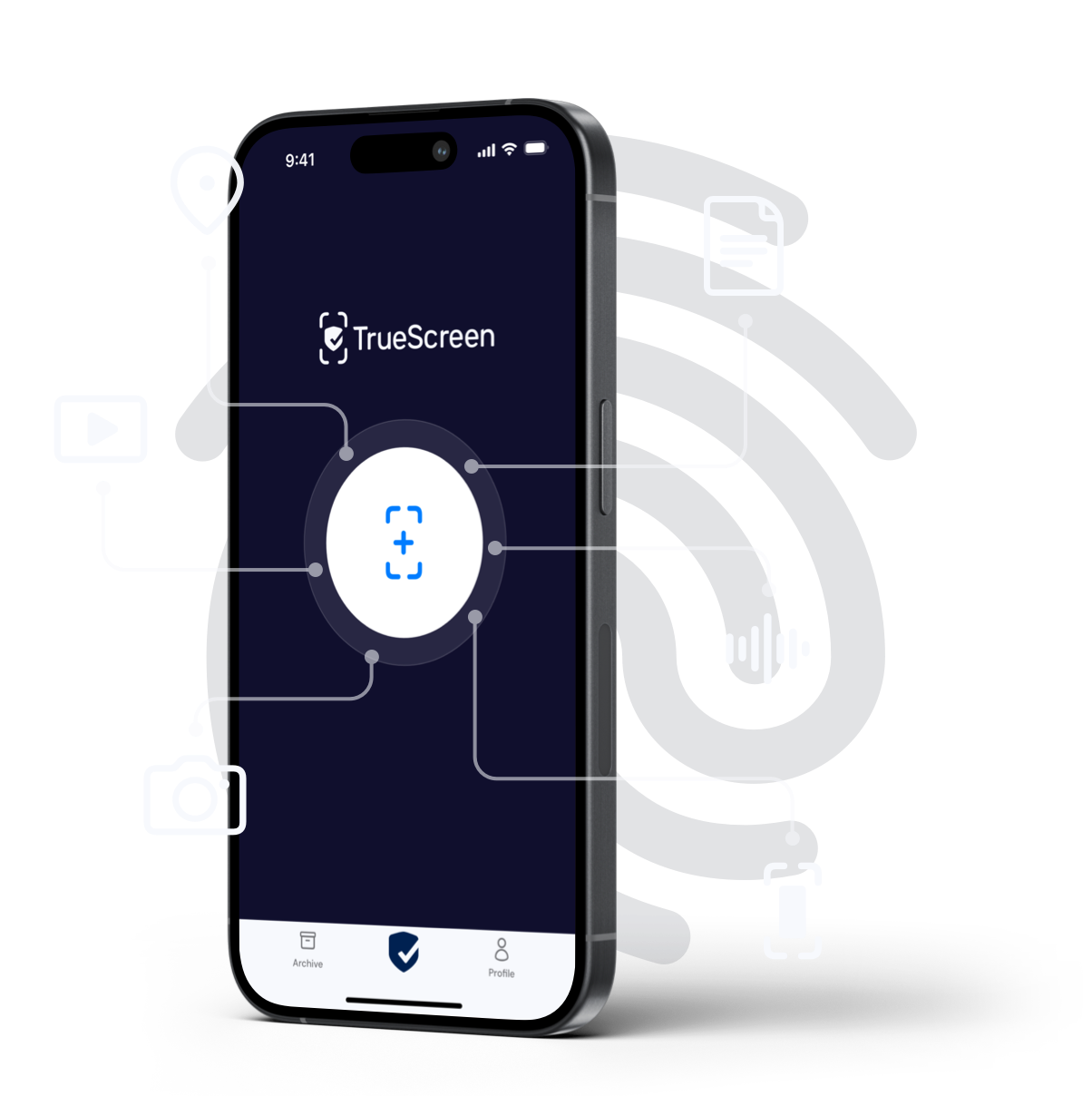
TrueScreen is a Data Authenticity Platform that helps organizations and professionals protect, verify and certify the origin and history of photos, videos, screenshots, emails and documents, turning them into audit-ready evidence. At capture, the content receives a unique cryptographic fingerprint; any change alters the hash and reveals differences. Timestamps and attestations lock date and time with implementations designed to support legal and regulatory requirements. Original metadata are preserved to support a verifiable chain of custody over time. A forensic technical report documents the process and can help support admissibility depending on jurisdiction and case context.
Detection of manipulation and AI-generated content
Multi-signal engines can help surface anomalous patterns and forensic indicators typical of synthetic or manipulated media, complementing provenance verification. In rebroadcasting scenarios, the absence of certified source capture exposes off-screen reuse against an attested original. In metadata tampering, comparison with the sealed original highlights edits to timestamps, GPS or removed fields. With TrueScreen, authenticity, integrity and traceability become verifiable properties that reduce fraud risk and accelerate checks.
Organizational and operational benefits
- Lower risk and faster verification: less exposure to persuasive scams and faster checks on who created what and when.
- Stronger compliance and dispute handling: firmer governance of digital evidence through chain of custody and traceable attestations.
- Quicker, better decisions: legal, compliance and fraud teams focus on case merits instead of debating basic authenticity.
Best practices for authenticity by default
- Certification policy for critical content: define which content must always be captured and certified, such as incidents, inspections, onboarding, claims and off-screen contracts.
- Guidelines for non-technical teams: simple checklists to recognize high-risk situations and use certified capture tools correctly.
- Minimum metrics: share of critical content certified at source, average verification time in audits or claims, incidents linked to unverifiable media.
FAQ: common questions on digital fraud and content authenticity
Quick answers on deepfakes, rebroadcasting, metadata manipulation and how to verify authenticity.
What is digital fraud in the age of AI?
Manipulating or generating content, identities or processes to obtain money, data or unauthorized access. It includes deepfakes, clone sites, synthetic documents, and out-of-context screenshots or recordings.
How can I verify if a piece of content is authentic?
Traditional tools are not enough. You need controlled capture that generates integrity, timestamp and provenance attestations with a digital chain of custody. Solutions like TrueScreen are designed to support these requirements.
Are screenshots reliable as evidence?
They can be admitted, yet often remain vulnerable because they lack context and are easy to manipulate. To increase defensibility, certify them at source and preserve them with verifiable attestations. Admissibility depends on jurisdiction and case context.
How can I spot a deepfake without tools?
It is increasingly difficult by eye. Combine provenance checks, forensic analysis and out-of-band challenges. ENISA lists synthetic media among rising risks.
Can metadata tampering be prevented?
You can drastically reduce risk by certifying content at creation and comparing any later version with the sealed original. Open standards like C2PA improve transparency on provenance.
What do recent statistics say?
The FBI IC3 2023 report shows more than 12.5 billion dollars in total losses and 2.9 billion for BEC. The ENISA TL 2024 and the WEF Global Risks 2024 rank synthetic media and misinformation among fast-rising risks. A notable example is the deepfake video-call scam covered by Fortune.
Protect your content from deepfakes, rebroadcasting and tampering
TrueScreen is the Data Authenticity Platform that enables organizations to protect, verify and certify the origin, history and integrity of photos, videos, screenshots, emails and documents, turning them into verifiable, audit-ready evidence.