When important information is published on a web page, you often realize its “weight” only later.
A product page that changes, a policy updated with no public version history, content removed after a dispute, a contractual condition visible only in a restricted area, a public statement that ends up under audit: everything can depend on what was online, when, in what form, on which URL, and in what context.
The real issue is that, in many cases, a simple screenshot of a web page is not enough, because it can be challenged. Whoever produces it must be able to prove integrity, provenance, and correctness of that content.
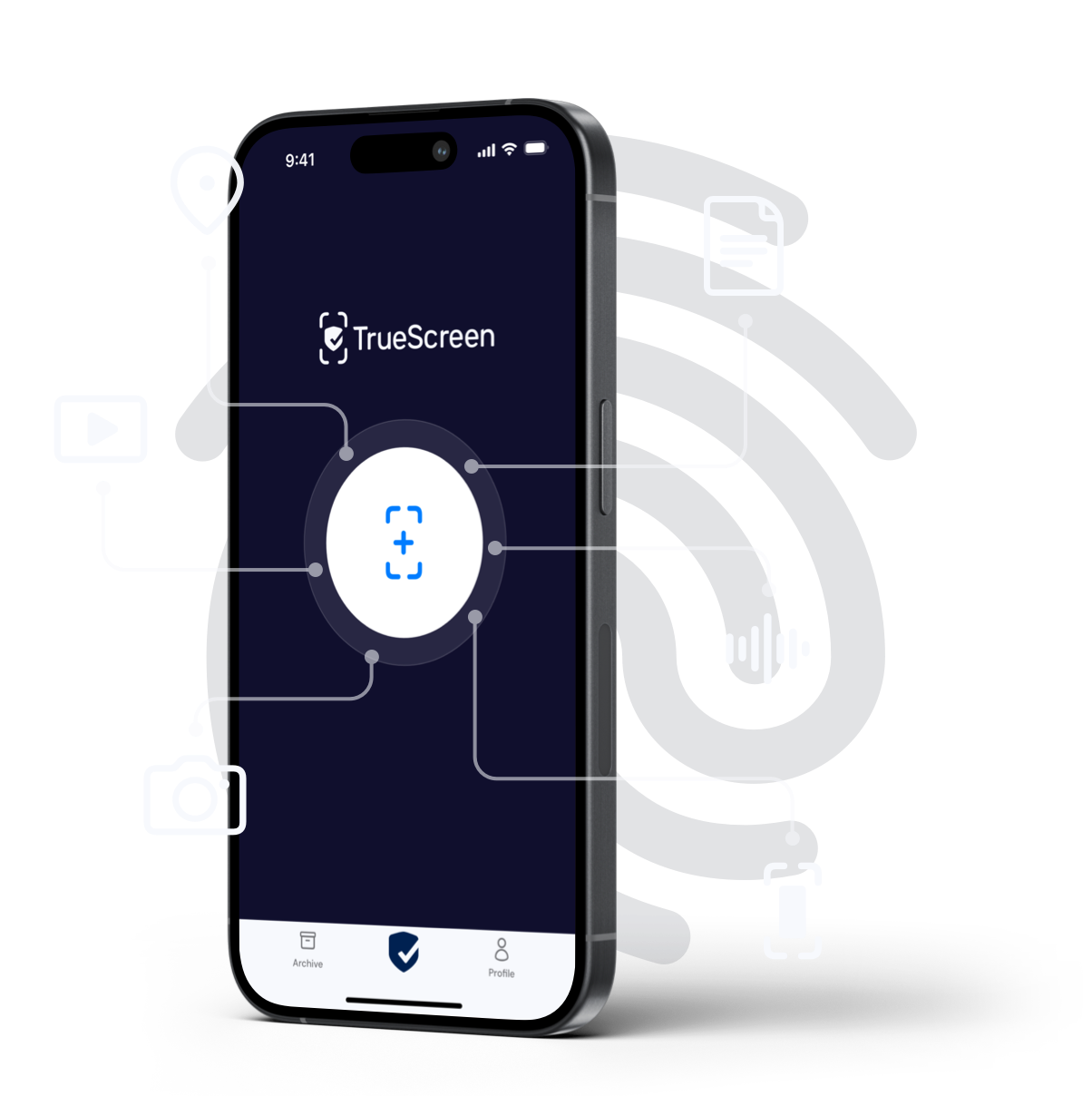
In this article we explain clearly what web page certification with legal value is, what it is for, and how it works with TrueScreen.
Why proving a web page is harder than it seems today
In a dispute or an internal review, a web page is often a combination of elements that change over time and may be presented differently to different users:
- dynamic content such as scripts, real-time components, and personalization;
- frequent updates with no public history;
- variants such as A/B testing or content tailored by country, profile, or session;
- external assets such as images, stylesheets, widgets, and embeds;
- authenticated areas such as customer/supplier portals, intranets, back offices;
- removals, redirects, and link rot such as “the page is no longer reachable” or “it’s not the same page anymore”.
And when a dispute arises, the key question becomes: “can you prove the page looked exactly like that, at that time, in that context?”.
The key role of provenance, integrity, and context
To build stronger digital evidence, what matters most is the ability to preserve and demonstrate three aspects:
- Integrity: what you captured has not been altered.
- Provenance: where the evidence comes from (URL, domain, session, access context).
- Chain of custody: a verifiable trail of how that content was acquired and preserved over time.
This approach is consistent with common digital forensics logic and with good practices described by ISO/IEC 27037, which emphasizes auditability, repeatability, and preservation of digital evidence integrity.
What it means to certify a web page
Certifying a web page means turning it into defensible evidence: a capture that does not simply show content, but freezes it together with the elements needed to reconstruct context (for example URL and timestamp) and prove integrity.
The goal is to raise the quality of the evidence and reduce the ambiguity typical of web proof: pages that change, disappear, get replicated, or are displayed differently to different users.
6 practical use cases
- Brand protection: product pages on marketplaces or third-party sites can change quickly. Certifying the page helps build a more structured dossier of what was published (text, images, price, claims, terms) before it is edited or removed.
- Procurement and vendor management: requirements, documentation, progress status, or operating conditions may be available only in authenticated portals. Certification can help freeze the version seen in a specific phase, reducing retroactive disputes.
- Audit and compliance: procedures, notices, policies, and communications published on the web or on intranets may be updated. If a review requires what was in force on a certain date, you need evidence that is not just a printout made afterwards.
- Legal and pre-litigation: in many disputes, the key point is not debatable, it is documentary. Certification supports collecting more defensible proof of statements, offers, comparisons, terms, and messages published online.
- B2B customer operations: portals and support systems display statuses, logs, responses, timings, attachments. When a case becomes contentious, being able to prove content and context reduces time spent on discussions and challenges.
- Security and “document-based” fraud: fake pages, login clones, fictitious terms, communications published on similar-looking domains. In these scenarios the web accelerates fraud. Having certified web evidence helps reconstruct the event and work with more verifiable proof.
How web page certification works with TrueScreen
The certification process is very simple:
- identify the page to certify, public or behind authentication depending on the scenario;
- start the capture via app or web;
- TrueScreen certifies the evidence and generates a technical report with the data needed to support reviews, audits, and disputes.
This makes the capture traceable, with a verifiable and shareable output.
With TrueScreen, a web page becomes traceable evidence
Instead of relying on fragmented and easily challengeable materials, with TrueScreen you can work from a shared baseline of certified content, with traceability that supports timeline reconstruction.
If your work depends on web pages that change often, introducing a simple certification mechanism can turn a typical weakness of the web, volatility, into something manageable: verifiable integrity and provenance, with a report ready to use in case of audit or dispute.
FAQ: the most common questions about web page certification
In this section you will find concise answers to the most common questions about web page certification, digital evidence, and disputes.
1) What makes a web page “defensible” over time?
Traceable proof: URL, timestamp, captured content, and a repeatable procedure with a log of steps (who did what and when).
2) What is the most costly mistake when collecting web evidence?
Relying on screenshots without context and without a chain of custody, only to discover too late that the page has changed.
3) What should I preserve beyond the “visible” content?
Verifiable context: URL, acquisition date and time, any access path (for restricted areas), linked elements, and a minimal log of the steps taken.
4) Why does provenance matter as much as authenticity?
Because even when you cannot prove manipulation with 100% certainty, you can often prove when and where the content appeared and in what form it was available.
Make your digital evidence indisputable
TrueScreen is a Data Authenticity Platform that helps companies and professionals protect, verify, and certify the origin, history, and integrity of any digital content, turning it into evidence with legal value.