When an important communication happens via email, you often realize its real “weight” only later.
A dispute over an invoice, a change agreed with a supplier, a formal notice, a request for clarification during an audit: everything can come down to what was written, when, by whom, and with which attachments.
The real issue is that, in many contexts, simply printing an email or taking a screenshot is not enough, because they can be challenged. Whoever produces them must be able to demonstrate integrity, provenance, and proper preservation.
In this article, we clearly explain what email certification with legal value is, what it is used for, and how it works with TrueScreen.
Why proving an email is harder than it looks today
In a dispute or an internal review, an email is not just text and usually includes:
- attachments (PDFs, purchase orders, photos, signed documents, spreadsheets)
- forwarding chains and replies that change the context
- metadata (date/time, sender, recipients, message-id, technical headers)
- possible different versions of the same attachment or content
Even when everyone acts in good faith, it can be difficult to prove that “that email” and “that attachment” were exactly the ones available at that moment, with no later changes.
The key role of provenance, integrity, and context
To obtain digital evidence that can withstand scrutiny, what matters most is the ability to preserve and demonstrate:
1. Integrity: the content has not been altered.
2. Provenance: who generated or transmitted it and where it comes from.
3. Chain of custody: a trace of how that content was acquired and preserved over time.
This approach is consistent both with common digital forensics principles and with guidelines such as ISO/IEC 27037, which describes good practices for the identification, collection, acquisition, and preservation of digital evidence, with a focus on integrity and traceability of the steps.
What it means to certify an email
Email certification is a process that turns an email from a simple electronic communication into certified documentation, supported by a forensic technical report that demonstrates what was sent (content and attachments), when (timestamp), and that the content has not been altered (verifiable integrity).
The main goal is to increase the quality and defensibility of the evidence, reducing ambiguity.
Standard email vs PEC
In Italy, PEC is often the natural tool for formal communications. In day-to-day operations, however, many critical communications still take place via standard email, mixed chains, and fast exchanges that become “important” only later.
But when they end up in a dispute, both PEC and traditional emails can be challenged on content, provenance, attachments, and timeline.
For this reason, it is good practice to make electronic communications evidence with forensic characteristics.
What email certification is used for: 8 concrete use cases
-
Invoice and payment disputes
Typical scenario: “the invoice was not compliant,” “an attachment was missing,” “we never received that request.” Certifying the email and the attached documentation helps clarify what was sent and when. -
Procurement: order confirmations and changes
It is common for a change (timing, quantities, terms) to be agreed by email. Certification can help lock the confirmation text and attachments (order, revised specs, updated offer). -
Formal notices, default notices, and pre-dispute exchanges
PEC is not always used consistently, especially in international supply chains. In pre-dispute phases, reducing ambiguity around content and attachments can avoid unnecessary steps and speed up internal handling. -
Audits and inspections: “sensitive” requests and responses
During internal or external audits, many pieces of evidence travel by email: statements, documents, screenshots, extracts. Certifying key communications helps preserve integrity and context. -
Administrative HR: sensitive communications and traceability
Without getting into legal specifics, some HR-related exchanges require special attention to date/time, attachments, and the specific version of the document sent. -
Complaints and customer operations (B2B)
In some industries, the customer’s complaint and the company’s response include attachments, images, logs, or reports. Certification can support a more orderly case file management. -
Field service and delivery: evidence sent via email
Photos, reports, and service records are often shared via email among teams and suppliers. If a case becomes contentious, verifiable evidence is required. -
Governance and compliance: reducing manipulation risks
When a company builds workflows where information is verifiable, it reduces errors, fraud, and verification time.
How email certification works with TrueScreen
It only takes a few simple steps to certify an electronic communication:
- Prepare your email as usual, including text, attachments, and recipient;
- Add the TrueScreen address in CC;
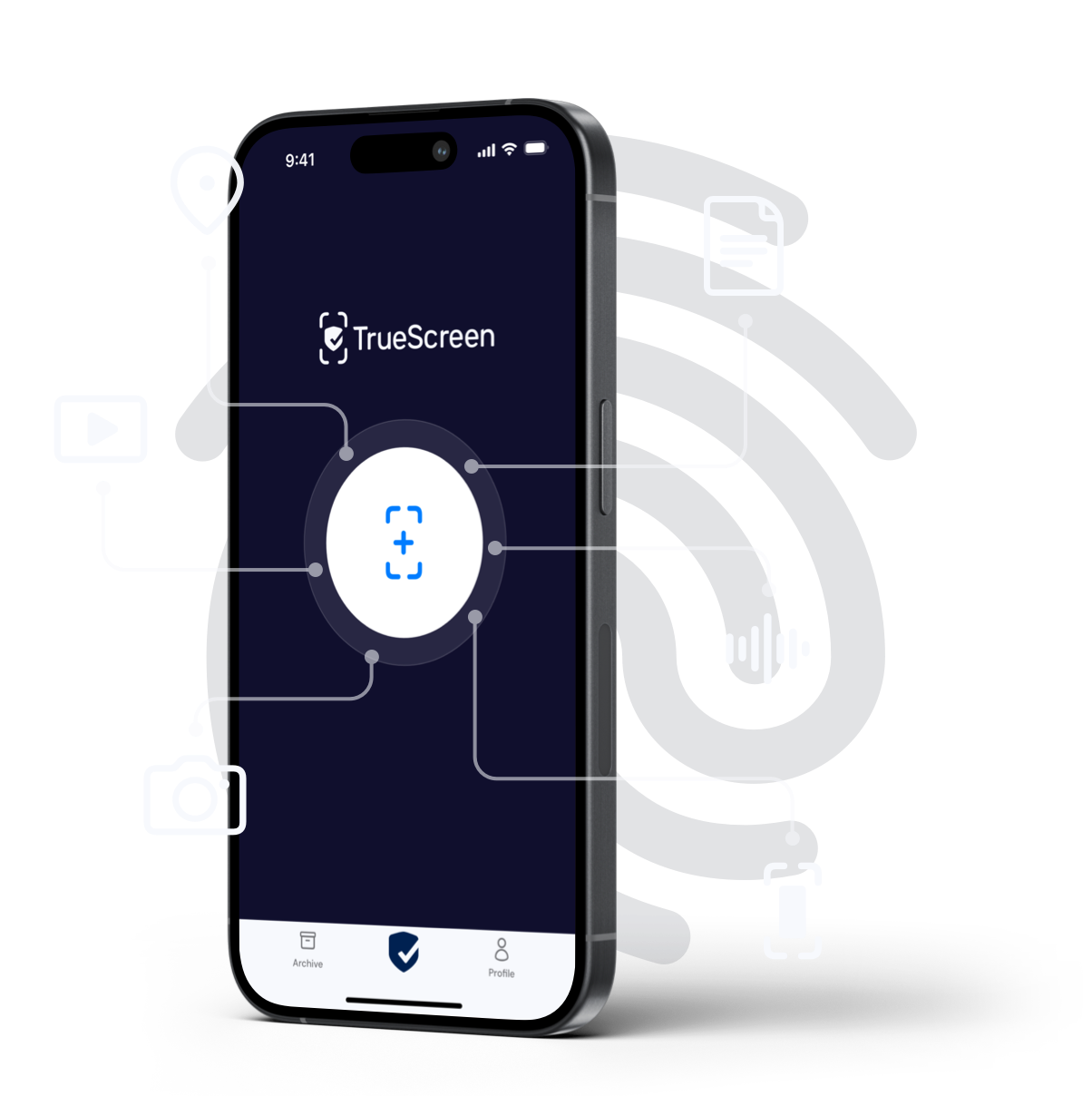
- Send the email: after a few seconds, the system certifies content and attachments with a timestamp and a digital seal, and immediately returns a technical report containing data and metadata for the email and its attachments, ready for legal needs or disputes.
Email certification with TrueScreen is a practical way to reduce ambiguity, speed up case handling, and build stronger evidence when a communication becomes relevant.
If your work often depends on email exchanges with attachments, changes, and approvals, introducing a simple certification mechanism can turn a typical weakness, the contestability of email, into a strength: verifiable provenance and integrity, with a report ready to use.
The value of certification lies in making your documentation position more robust, reducing room for disputes and making it easier for third parties to verify that the evidence is intact.
FAQ: most common questions about email certification with legal value
Here you’ll find concise answers to the most common questions about email certification with legal value, what it includes, and how it fits into daily workflows.
1) Can I certify an email without changing my email client?
Yes. You just add the dedicated TrueScreen address in To/CC/BCC.
It is designed to be a minimal step in your daily workflow.
2) Does the certification include attachments as well?
Yes, both the email content and its attachments are certified.
3) What do I receive after certification?
A technical report with data and metadata for the email and its attachments, ready for archiving and use in case of disputes or legal needs.
4) Can I automate certification for certain categories of emails?
Yes. It can be automated through mail server rules and integration options (including APIs) for more structured scenarios.
5) Is it the same as PEC?
No. PEC and email certification address different needs and often coexist. PEC is a specific legal instrument; certification aims to make an email communication (including standard email) more robust and verifiable in terms of integrity and traceability.
Make your emails verifiable digital evidence
TrueScreen is a Data Authenticity Platform that helps companies and professionals protect, verify, and certify the origin, history, and integrity of any digital content, turning it into evidence with legal value.